-

What kind of bean variety is the Golden Taro Tea Bean?
Since last year, the Hangzhou Xiaoshan District Dryland Crop Non-Grain Development Collaborative Group began the introduction, trial planting and breeding of the "Tea Bean", and the "Golden Taro" bred this year has performed well. According to trial planting by Hangzhou Yizheng Agricultural Development Co., Ltd., it has vigorous growth, good marketability, excellent quality and high yield. According to investigation: the number of effective pods per plant increased by 6.85 pods compared with "Taiwan 75", the bean yield rate increased by 16.7% compared with "Taiwan 75", and the taste is sweet, crisp and glutinous, with a delicate fragrance, and the quality is better than "Taiwan 75". The "Tea Bean" is named for its tea-colored seed coat when mature,
-
How should the four common bean diseases be prevented and controlled?
1. Root drowning: Beans prefer moisture and tolerate drought but not waterlogging. Therefore, on the basis of ridge cultivation, small amounts of water should be applied to avoid water accumulation in the field, which prevents the roots from breathing and causes plant death. Control measures: Avoid flood irrigation. If there is heavy rain, drain the water promptly. After the weather clears, if conditions permit, appropriate shallow hoeing can be done to increase soil permeability and improve root vitality. 2. Phytophthora blight: It mainly damages the stems and vines, and sometimes the leaves and pods are also affected. It constricts at the base of the stem, causing the upper part to wilt and die. When humidity is high, white mycelium is produced on the diseased part.
-
Intercropping soybeans with yew can increase the survival rate
Recently, 2.46 million rooted cuttings of Maire yew (Taxus media) cultivated at a yew nursery in Youxian County, Zhuzhou, Hunan, have been growing rapidly in Tongshan Village, Yajiangqiao Town in that county, and passed expert inspection at the end of August. The nursery's new seedling-raising method of "intercropping with soybeans" has raised the survival rate of yew seedlings to more than 95%. It is reported that the successful introduction and propagation of Maire yew not only helps protect the precious wild Chinese yew (Taxus wallichiana var. mairei) resources, but also opens up broad prospects for developing this "golden plant." At present, the nursery is engaged in forestry
-
High-yield and high-benefit "garlic with beans" planting achieves two plantings and three harvests
Interplanting garlic with soybeans is one of the resource-saving agricultural cultivation models currently promoted by the Fujin City Agricultural Technology Extension Center. It rationally matches and combines crops according to their growth patterns and habits, forming a mutually beneficial symbiotic relationship: the nitrogen fixation by soybean rhizobia increases the soil's nitrogen content, so the garlic does not suffer nutrient deficiency, which benefits the garlic's later growth and bulb enlargement. The garlic plants, especially the garlic roots, have a strong pungent taste in the soil, which strongly inhibits and kills various soybean pests, viruses and pathogens. Because
-

Analysis of the Characteristics of Legume Vegetables and Their Pesticide Residue Situation
Do you like eating legumes? Do you know whether they have pesticide residues? Inspections have found that the pesticide residue failure rate of legume vegetables such as green beans, peas and common beans is as high as 63%. Among the pesticide residues detected were chlorothalonil and acetamiprid
-
Wheat-cotton-mung bean three-crop-per-year, three-harvest planting model
For the cotton variety, select a marker hybrid insect-resistant cotton with a loose plant type, chicken-claw-shaped leaves, good ventilation and light penetration, and strong boll-setting ability. For the wheat variety, select the high-yield, disease-resistant variety Han 4564. For the mung bean variety, select Zhonglu 1. Choose a plot with good water and fertility conditions for the planting pattern, harvest the autumn crops in time to clear the stubble, and sow while there is soil moisture; if there is no moisture, irrigate the land to create moisture. Apply more than 4 cubic meters of high-quality farmyard manure, 25 kg of diammonium phosphate, 20 kg of potash fertilizer, and 15 kg of urea per mu. Plow deeply to 25 cm and harrow 3-4 times. Make beds 200 cm wide, with a bed ridge width of 60 cm and a bed surface width of 1
-
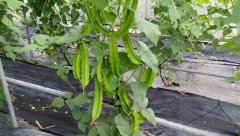
How do you get winged beans, and can you eat them raw? Everything explained in one article
Have you ever seen a bean with wings? If not, let's get to know it together. This kind of bean is not only better looking than ordinary beans, but its tender pods are emerald green, with an excellent pod shape and a crisp, fresh taste. Spring cropping can produce high-quality tender pods. Can winged beans be eaten raw? It should
-
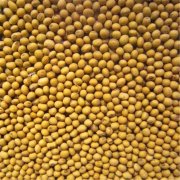
High-Yield Cultivation Techniques for the Super High-Yield Soybean Variety Tainan No. 6
New Soybean Variety "Tainan No. 6" for Both Cover Crop and Green Manure: Do you know the new soybean variety "Tainan No. 6"? Do you know its characteristics and the benefits of this variety? If not, but you still want to grow it, then let's take a look together. This variety was developed through hybrid breeding
-
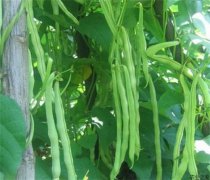
What plant is the common bean? Common bean planting and cultivation management methods
Organic common bean cultivation and management techniques (1) Environmental selection and coordination of related measures. Practice crop rotation. Carry out soil diagnostic analysis. Soil improvement. No soil, air or water source pollution in the surrounding environment. (2) Weed control methods. Use manual or mechanical inter-row cultivation and weeding, do not use chemical
-

Detailed Explanation of Field Management Techniques for Green Beans
Field Management Techniques for Green Beans
条件筛选