-
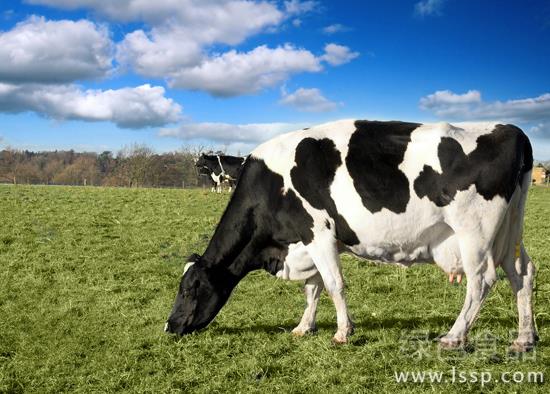
Be cautious when feeding silage to dairy cows in spring: master these feeding key points
Be cautious when using silage in spring: key points for feeding silage to dairy cows
-

How to prevent and control frost damage to young and newly planted tea trees? These seven methods must be mastered
1. Apply winter manure. Young and newly planted tea trees have relatively weak cold resistance, so before overwintering, a heavy application of winter manure should be combined with earthing up and mounding around the base. The fertilizer should mainly be farmyard manure, stable manure and biogas residue, which have a certain heat-preserving effect, along with a certain amount of cake fertilizer, superphosphate and potassium sulfate fertilizer. Winter manure can not only preserve heat and prevent freezing and enhance the tea trees' freeze resistance, but also lay a good foundation for the tea trees' growth the following year. 2. Earth up and mound around the base. Preventing the root crown from freezing is a key measure for protecting young and newly planted tea trees from frost. Therefore, before young and newly planted tea trees overwinter, they should
-
Technical key points for restoring tea production after snow disaster and freezing damage to tea plants
This year, some tea regions across the country experienced severe weather such as heavy snow and low-temperature freezing that had not occurred in decades, causing tea branches to break, leaves to discolor and dry up, and branches to die, resulting in varying degrees of snow disaster and freezing damage. In order to restore tea production as quickly as possible and reduce the economic losses of tea farmers, the following technical key points are proposed according to the disaster conditions. 1. Pruning 1. Mild freezing damage (only leaves damaged): do not prune or lightly prune as appropriate. 2. Moderate freezing damage (production branches damaged) and severe freezing damage (framework branches damaged): prune when the boundary between the frozen-dead part and the healthy part is clear,
-
How to fertilize cotton during the seedling stage? Master the right method to grow strong seedlings
During cotton sowing, seedling raising and transplanting, fertilization should be done correctly to ensure full, even and strong seedlings. Seedbed base fertilizer should be refined and moderate in amount. Cotton plants are small during the seedling stage and need few nutrients, so the amount of seedbed base fertilizer should not be too much, with emphasis on being refined and moderate. Organic fertilizer must be fully decomposed, and weed roots and stems should be removed. If bio-organic fertilizer is used, the amount per 10 sq m of seedbed should not exceed 5 kg, and the amount of compound fertilizer should not exceed 1 kg. If decomposed human manure and urine are used, apply them 20 days in advance, then plow and mix thoroughly with the soil. Urea cannot be used as seedbed base
-
How to grow lilies? Master these cultivation key points
Lilies are perennial herbaceous plants, and their underground bulbs are formed by dozens of scale leaves wrapped together. Lilies are divided into two major categories, sweet and bitter. Bitter lilies are mainly used for medicinal purposes, while sweet lilies are mostly used as food (the main varieties include Longya lily, etc.). Sweet lilies have a sweet flavor and are rich in nutrients. They can be processed into dried slices or lily powder, etc. Regular consumption has effects such as moistening the lungs and relieving coughs, and calming the mind and soothing the nerves. The products sell well domestically and abroad. Planting lilies can yield more than 1000 kg per mu, with considerable economic benefits. The main cultivation technical measures are as follows: 1. Land preparation
-
How to increase the yield of lilies? Master these four methods
Lily, also known as white lily and lily garlic, has effects such as moistening the lungs and stopping cough, clearing the heart, and calming the mind. It is an economic crop suitable for both medicinal and vegetable use, with relatively high planting benefits. Under conventional cultivation and management, farmers can adopt the following four methods to achieve the goal of increasing yield and efficiency. 1. Chemical regulation method. When lily seedlings grow to 18-20 cm tall, carry out chemical regulation: per mu use the plant growth regulator paclobutrazol 20-50 grams, or mepiquat chloride 10-15 grams, or daminozide (B9) 5-10 grams, or mepiquat chloride 5-10 grams, choose any one, add water 50-
-
How to prevent and control garlic viral disease? These methods you must master
Mr. Sun of Xingyang City, Mr. Song of Sheqi County, Mr. Zhao of Biyang County and other readers called the newspaper's science and technology 110 hotline to ask how to prevent and control garlic viral disease. A reporter of this newspaper interviewed relevant experts from the newspaper's expert advisory group on this issue. Experts pointed out that the viral sources of garlic viral disease are mainly garlic mosaic virus and garlic latent virus. The virus mainly attaches to the bulbs to overwinter and becomes the primary infection source. When virus-carrying bulbs are sown, the seedlings can be infected after emergence, and through aphids, sap contact or farm operations in field management to healthy host
-
How to store garlic scientifically? These methods you need to master
I. Simple storage methods. These mainly include hanging storage, rack storage, cool shed storage, cellar storage, etc. To store garlic by these methods, it must first be pre-stored. After harvesting, arrange the garlic on dry ground and sun-dry it for 2-4 days, so that the leaf sheaths, scales and bulbs are fully dried and dehydrated, reaching about 70% dryness, and when the pseudostem becomes soft, it can be braided, or the root whiskers and pseudostem can be cut off and the heads packed loose. 1. Rack storage. Choose an indoor space with higher ground and good ventilation, place wooden ladders or racks, and hang the braided garlic strings or loose garlic heads in layers on the ladders or racks, taking care to ventilate.
-
How to prevent fish from oxygen deprivation in winter? These methods you must master
In winter, although the feeding activity of fish in ponds decreases, they still need a certain amount of dissolved oxygen to maintain slow breathing. The dissolved oxygen in a pond mainly comes from the photosynthesis of phytoplankton and from oxygen in the air dissolving directly into the water. However, in the cold winter, once the pond surface freezes over, oxygen in the air can no longer dissolve into the fish pond. When heavy snow covers the ice surface, sunlight cannot shine directly into the pond water, so the green plants in the water cannot carry out photosynthesis to produce oxygen. Moreover, in winter most fish gather at the bottom of the water,
-
Technical Service Information for Tea Plant Frost Resistance and Post-Disaster Recovery
I. Remedial measures for tea plants after a disaster: 1. Scientific pruning: Because tea gardens with different varieties, different altitudes, and different slope aspects have different degrees of frost damage to their tea plants, generally tea gardens with large-leaf varieties, high altitude, and north-facing slopes suffer more severe frost damage to the tea plants. Timely and reasonable pruning should be carried out according to the degree of frost damage. After the temperature rises and stabilizes, observe the frost damage to the tea plants. For lighter frost damage, use light pruning, that is, cut about 3 cm below the leaf surface. For more severe frost damage, carry out deep pruning, cutting off 1/2-1/3 of the plant. For particularly severe frost damage
条件筛选