-

The Latest High-Yield Planting Techniques and Methods Tutorial for Anemarrhena asphodeloides
Anemarrhena asphodeloides, also called hairy Anemarrhena, is cultivated throughout our country. It has strong drought and cold resistance, is a perennial herbaceous plant, and can grow in dry, rain-scarce barren hills, deserts and wasteland. It is the first choice variety for greening mountainous areas and wilderness, and it can be sown in all seasons
-
Origin Distribution and Latest Producing Areas of Anemarrhena asphodeloides
Anemarrhena asphodeloides is also known as rabbit oil grass, large reed water, mother grass, garlic clove grass, goat beard root, ground ginseng, etc. It is a perennial herbaceous plant of the genus Anemarrhena in the Liliaceae family. Its rhizome is a famous traditional Chinese medicine, and it is divided into "hairy Anemarrhena" and "Anemarrhena flesh". Its producing areas are widely distributed, and it is cultivated throughout the country.
-
What are the latest propagation methods for Anemarrhena asphodeloides?
Anemarrhena asphodeloides, also called hairy Anemarrhena, is a perennial herbaceous plant of the genus Anemarrhena in the Liliaceae family. It is mostly propagated by seed and can be sown in all seasons throughout the year, mainly in spring or summer. In recent years, in order to shorten the growth cycle, many places have also adopted the division propagation method. Below, let us
-
Latest precautions for growing Anemarrhena asphodeloides
Anemarrhena asphodeloides is also called hairy Anemarrhena asphodeloides. It is a perennial herbaceous plant, grown throughout China, with extremely strong adaptability. It has the effects of treating warm-heat diseases, high fever, cough, constipation and so on, and is a very good heat-clearing medicine. The main producing areas of Anemarrhena asphodeloides in China are Hebei
-
A Detailed Guide to the Latest Pest and Disease Control Methods for Anemarrhena asphodeloides
Anemarrhena asphodeloides is a perennial herbaceous plant and a traditional Chinese medicinal material. It is cultivated throughout the country. It has strong drought and cold resistance and can grow normally in arid deserts and wastelands, with extremely strong vitality. However, during cultivation, due to improper management, pests and diseases
-
Latest Technical Method Tutorial for Field Management of Anemarrhena asphodeloides
Anemarrhena asphodeloides is a perennial herb of the Liliaceae family. Its rhizome can be used as medicine and has the effects of clearing heat and purging fire, relieving cough and eliminating phlegm, and calming the fetus. Current market demand is very large, and it is one of the major medicinal materials in China. With the depletion of wild resources, the trend of artificially cultivating Anemarrhena asphodeloides is growing.
-
A Detailed Guide to the Planting Time and Cultivation Techniques of Anemarrhena asphodeloides
Abstract Cultivation techniques: It is best to choose well-drained sandy loam or neutral soil rich in humus, plant horizontally and flat in furrows 4-5cm deep at a row spacing of 18-20cm and a plant spacing of 5-7cm, remove weeds promptly when the seedlings grow to 3cm, apply nitrogen fertilizer during the growing period, and apply additional nitrogen and potassium fertilizer later, once every year
-
Detailed Guide to Anemarrhena asphodeloides Cultivation Techniques and Per-Mu Profit Analysis
Abstract Land preparation and fertilization: For Anemarrhena asphodeloides, choose humus soil with good drainage and loose texture, apply sufficient base fertilizer, then deep plow and make beds. Propagation methods: seed propagation or root division propagation can be used. Later management: after sowing, keep the soil moist; when the seedlings grow to 7-
-
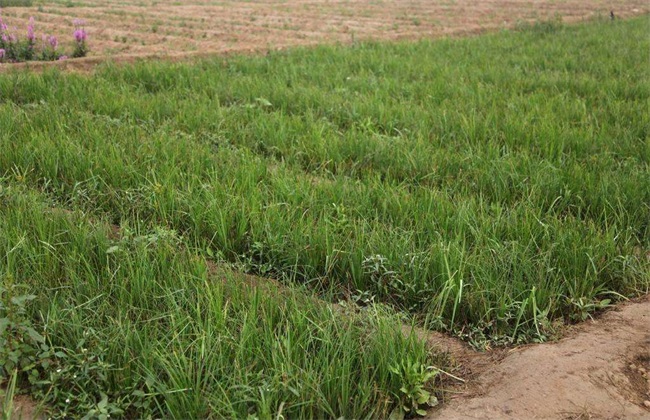
When to Harvest Anemarrhena asphodeloides? Analysis of the Best Harvest Time
When to Harvest Anemarrhena asphodeloides
-
Planting the Chinese medicinal herb Anemarrhena asphodeloides: field management is key
When growing the Chinese medicinal herb Anemarrhena asphodeloides, field management is key
条件筛选