-
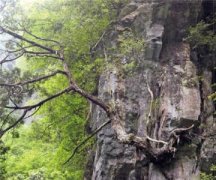
What Tree Species Is the Chinese Arborvitae? A Complete Collection of Wild Chinese Arborvitae Pictures and a Price Overview
What tree species is the Chinese arborvitae? The Chinese arborvitae is a shrub or tree of the Cupressaceae family, genus Thuja; it generally grows in the crevices of cliffs at an altitude of 700-2100 m, in areas with shallow soil and rock; but now this tree has become an endangered species. It is mainly produced in Sichuan, China
-
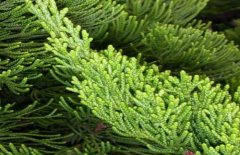
Chinese Arborvitae Leaf Benefits and Uses, Differences Between Chinese Arborvitae and Cliff Cypress with Pictures, and Sapling Prices
Chinese arborvitae is a cypress plant, and people often call this kind of cypress cliff cypress, but in fact these two cypresses are very different. In what ways do they differ? What are the benefits and uses of Chinese arborvitae leaves? How much does one cypress sapling cost? Chinese arborvitae is a very easy-to-grow kind of cypress.
-
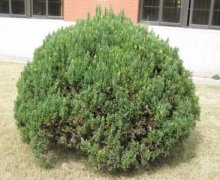
What kind of plant is Chinese juniper? Blooming time and differences from Chinese arborvitae
Chinese juniper is a type of cypress, an evergreen tree, mainly distributed in the northeastern and northern regions of our country, and its current distribution range is relatively wide, in areas south of Inner Mongolia, and it is found in Sichuan and Yunnan. So do you know when the blooming period of Chinese juniper is? Chinese juniper and
-

Methods for Bending Chinese Arborvitae Bonsai and Pruning Techniques for Chinese Arborvitae Bonsai
As a slow-growing evergreen tree of the subphylum Gymnospermae, Chinese arborvitae (Platycladus orientalis) is deeply loved by people because it stays green all year round and is not large in size, and it is often kept indoors as a bonsai. The wood of Chinese arborvitae is medium in hardness, and in cultivation the bonsai pruning and bending
-
Detailed Explanation of the Key Cultivation Techniques for Rootless Chinese Arborvitae
Chinese arborvitae is a genus of shrubs or trees that can be used for root carving, landscaping, ornaments and bonsai, and is distributed in Sichuan and North China. It can be planted as seedlings or grown as rootless cultivation, and below we will introduce its rootless cultivation techniques. Rootless Chinese Arborvitae Cultivation Techniques Rootless Chinese Arborvitae
-
How to grow a Chinese arborvitae (Thuja sutchuenensis) bonsai? Detailed explanation of cultivation techniques
Dig up the Chinese arborvitae stump around the Start of Spring. After digging it up, treat and wrap the root system, then trim away the excess and rotten roots before potting it up; do not bury the roots too deep when potting. In the year of planting, place it in a partially shaded spot, and water it so that it stays on the slightly dry side
-
How much is Chinese arborvitae seed kernel per jin? A detailed look at market prices and growing techniques
Chinese arborvitae seed kernel, also known as bai shi or cebai zi, is the mature seed kernel of the cypress family plant Chinese arborvitae (Platycladus orientalis). Because it has calming, laxative and intestine-moistening effects, it is widely used as a medicinal herb, and it is now grown in many regions. So how much is Chinese arborvitae seed kernel per jin on the market? How do you grow it? 1. Chinese arborvitae
-
Chinese Juniper Seedling Prices Per Plant, Differences from Chinese Arborvitae, and Bonsai Care
Chinese juniper, also called spiny juniper, juniper, gui, or guibai, is an evergreen tree; the branchlets bearing scale-like leaves are round or nearly square. It is used for hedges and street trees, and can also serve as material for stump bonsai and bonsai. So how much does a Chinese juniper seedling cost per plant? What is the difference from Chinese arborvitae? How should bonsai be cared for?
-
Detailed Explanation of the Latest Appreciation Standards for Chinese Arborvitae Root Carving
Chinese arborvitae is a type of cypress. What the market calls Chinese arborvitae handicrafts are actually Oriental arborvitae (Platycladus orientalis) rather than the botanical Chinese arborvitae (Thuja sutchuenensis). Because Chinese arborvitae is extremely rare in existence, with naturally wondrous forms and beautiful natural grain, and its oil content and hardness are both of the highest grade, it is the foremost material for root carving, so Chinese arborvitae
-
How to Plant Arborvitae Seed Kernels? Detailed Explanation of the Latest Cultivation Techniques
Arborvitae seed kernels are the dried, mature seed kernels of the Cupressaceae plant Chinese arborvitae (Platycladus orientalis). They can be harvested twice a year, in autumn and winter. At present, arborvitae seed kernels are mainly distributed in Guangdong, Shaanxi, Guizhou and other parts of China. Arborvitae seed kernels have effects such as nourishing the heart and calming the mind, and moistening the intestines to relieve constipation. They can
条件筛选