-
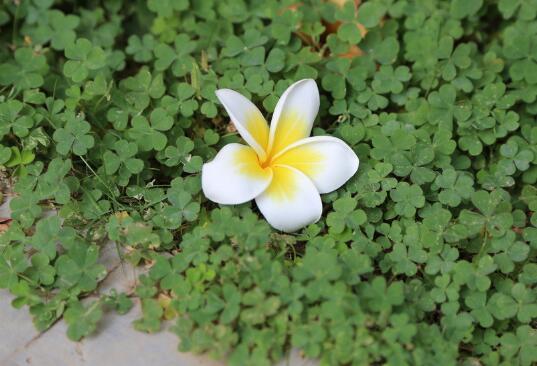
How to fertilize plumeria? Master precautions such as diluting before application
Among the functions and effects of plumeria, its ornamental value is the most familiar one, but if you want it to be ornamental, then you cannot be careless in the process of cultivation, and fertilization is a relatively important part of it. So how do you fertilize plumeria? What are the precautions for fertilizing plumeria
-
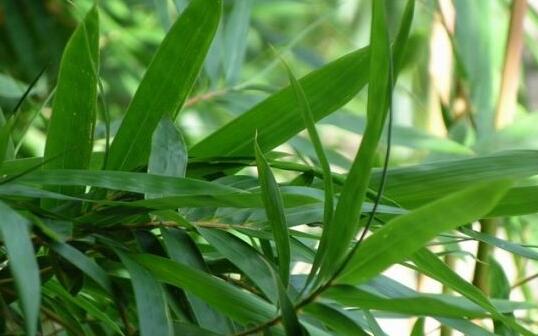
How to Fertilize Bambusa multiplex (Fairy Bamboo)? A Detailed Guide to Fertilizer Selection and Application Methods
When growing Bambusa multiplex, fertilization is essential. It not only provides the nutrients the bamboo needs for growth but also boosts its resistance to disease. However, fertilization should be neither too little nor too much. So how do you fertilize Bambusa multiplex? Let us give you the answer.
-

Key Technical Points for Landscape Application of Pentas
Pentas has excellent height, plant form and color, and can be combined with petunias or French marigolds to create summer color. It is heat-tolerant and drought-tolerant, can overcome scorching heat and humidity, and keeps blooming continuously until frost arrives. - Little five-pointed-star-shaped flowers scattered throughout large flower clusters create a very strong color impact.
-

Application Methods of Baijiu in Sericulture Production
Baijiu is made by fermenting grain or certain fruits, has a bactericidal effect, and is commonly used as a disinfectant, cleaning agent and preservative. At the same time, it is also a traditional Chinese medicine that can promote blood circulation, lift the spirits and enhance the action of medicines, and is known as the "chief of a hundred medicines." Therefore it is also widely used in sericulture, both preventing disease and increasing yield. 1. Egg surface disinfection. Soak silkworm eggs in 60-proof baijiu, and after about 60-70 seconds immediately remove them, shake off the excess liquid, spread out the silkworm eggs and let them hatch. This allows the ants to emerge earlier, and the ants emerge uniformly, grow robustly and suffer fewer diseases. 2. Mulberry leaf surface
-
Detailed Explanation of the Characteristics and Practical Applications of Euonymus japonicus
Euonymus japonicus, also known as Japanese spindle, is native to Japan. It prefers a warm, humid environment with plenty of sunlight, has strong cold resistance, tolerates shade, and withstands drought and poor soil. It grows best in fertile, loose sandy loam. Propagation is commonly done by cuttings, and rooting is fastest when cuttings are taken during the plum rain season. Select semi-lignified mature branches, 12-15 cm long, and insert them into a seedbed made of half sand and half soil; they root 20-25 days after insertion. Transplanting of seedlings should not be carried out in spring from March to April. Small seedlings can be planted bare-rooted, while large seedlings need a soil ball. Planting
-
Application Methods of Phytase in Pig and Poultry Diets
Phytic acid or phytate is commonly present in plant feedstuffs, and most of the phosphorus in them exists in the form of phytate phosphorus. Phytic acid can form stable complexes called phytates with metal ions such as calcium, iron, zinc, and copper ions, and can also bind with proteins and starch, reducing the activity of endogenous amylase, protease, and lipase, and significantly lowering the digestibility of various nutrients. Phytic acid is not absorbed by monogastric animals and is mostly excreted in feces, which not only greatly reduces phosphorus utilization but also causes environmental pollution, especially water pollution.
-
A detailed guide to the application technology of phenthoate: master the correct method of use
50% Miechonglu emulsifiable concentrate (phenthoate) is an organophosphorus insecticide with moderate toxicity (only 1/30 that of methamidophos). It also has stomach-poison and contact-killing effects, and gives good control of various pests on many crops such as rice, cotton, vegetables and fruit trees. It is especially outstanding against rice stem borers, and no pest has yet developed resistance to it. The application technology of this insecticide is described below: 1. Use technology: 1. To control rice striped stem borer and rice yellow stem borer, use 50% Miechonglin emulsifiable concentrate per mu
-
Propagation Methods and Landscaping Applications of Celastrus flagellaris
Celastrus flagellaris, also known as pricklyleaf bittersweet and prickly bittersweet, is a deciduous climbing plant in the genus Celastrus of the family Celastraceae. 1 Botanical Characteristics: A climbing shrub, growing in clumps or singly, creeping along the ground or twining up tree trunks, 10-15 m long, bark reddish-brown, green when young. Branchlets smooth, with hard hooked prickles 1.5-2.5 mm long. Branchlets have short hooked-spine-like stipules, curving downward. Leaves alternate, elliptic, ovate or round, 4-8 cm long and 3-5 cm wide, apex relatively broad, with a short point
-
Engineering Applications and Management Methods for Hokkaido Boxwood
Hokkaido boxwood is an excellent landscaping material, but because it was introduced and promoted relatively late, many design units are still not familiar enough with its growth habits and characteristics, and it is used sparingly or configured inaccurately in design applications. As a result, nursery growers feel lost about how to cultivate and prune it: they plant a whole field of seedlings but do not know how to manage them, and after several years pass, they are left sighing in dismay! Based on several years of research and practice at this nursery, the following cultivation trial methods are considered effective. 1. Single-trunk small tree. When the seedling grows to 1.8-2 m, pinch out the growing tip at the top, keep the upper 30 cm for branching, and remove all branches below so that it concentrates on developing the upper part into a crown.
-
Planting Performance and Application Prospects of Different Simplified Rice Cultivation Methods
1 Planting performance of several simplified rice cultivation methods 1.1.1 Actual harvested yield. The actual harvested yield was highest for machine-transplanted rice, with an average yield of 9000 kg/hm2; followed by hand-transplanted rice, with an average yield of 8850 kg/hm2; third was seedling-throwing rice, with an average yield of 8700 kg/hm2; fourth was wheat-intercropped rice, with a yield of 8400 kg/hm2; direct-seeded rice had the lowest yield, averaging 8250 kg/hm2. 1.1.2 Number of panicles per unit. Direct
条件筛选