How to fertilize plumeria? Master precautions such as diluting before application
Among the functions and effects of plumeria, its ornamental value is the most familiar one, but if you want it to be ornamental, then you cannot be careless in the process of cultivation, and fertilization is a relatively important part of it. So how do you fertilize plumeria? What are the precautions for fertilizing plumeria? Let the editor take you through it below.
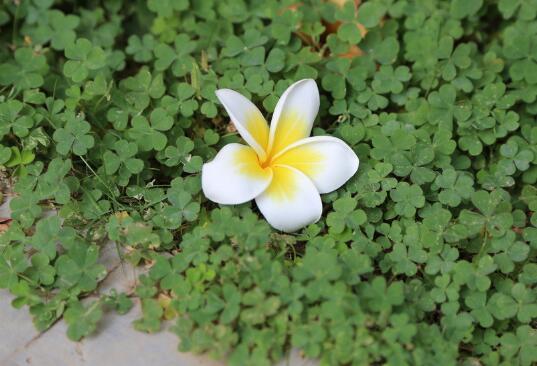
I. How to fertilize plumeria
Fertilizer is one of the main nutrients in the growth process of plumeria, so the demand is still relatively large. So how do you fertilize plumeria? In fact, the demand is different in each period, and there are many things to note. The specific details are below, let us continue reading.
1. Fertilizer selection
Before fertilizing plumeria, we first need to know what fertilizer suits it. In terms of fertilizer, it is generally best to use compound fertilizer, which contains more nutrient elements and can let plumeria grow better.
2. Fertilizing before sowing
Regarding how to fertilize plumeria, each period is actually different. First, when sowing plumeria, we need to apply a little base fertilizer to the soil, which can lay a good foundation for the growth of plumeria and also let the seeds germinate faster.
3. Fertilizing during the growing period
After plumeria enters the growing period, the demand for fertilizer is very large. Basically, compound fertilizer needs to be applied once every ten days to half a month, which can make plumeria grow more robustly.
4. Fertilizing before flowering
Regarding how to fertilize plumeria, the application before flowering is also very important, because plumeria consumes a large amount of nutrients when flowering. If nutrients are insufficient, it will lead to fewer flowers and a shortened flowering period, so sufficient fertilizer must be applied before flowering, and then it can also produce more flowers.
II. Precautions for fertilizing plumeria
Above, the editor talked with you about how to fertilize plumeria in each period. Next, the editor will take you through the points to note when fertilizing. When fertilizing plumeria, the most important thing to remember is that before fertilizing you must remember to dilute with water first. Only after dilution can it be absorbed. If it is not diluted, it is very easy to burn the plant and cause phenomena such as yellowing leaves.
How to fertilize clivia, fertilizing clivia with eggs for rapid growth/egg shells plus vinegar
As the saying goes, “For crops to bloom, it all depends on fertilizer.” If you want clivia to grow well, fertilizing is very important. In daily life, there are many flower lovers who grow clivia. In order to make their clivia grow better, many of them poured many things on it, including eggs! It is said that fertilizing clivia with eggs makes it grow rapidly. Is that true? How to fertilize clivia, let the editor explain below.
I. How to fertilize clivia, the method is very important
Anyone who has grown clivia knows its effects. It is not only good-looking, but can also improve home feng shui. However, if you want clivia to look good, fertilizing is key. As for how to fertilize clivia? Generally, applying liquid fertilizer in spring, autumn, and winter is good, but it should be in proper amount; in summer, no fertilizer should be applied. In addition, eggs can also be used to fertilize clivia.
II. Fertilizing clivia with eggs for rapid growth
When fertilizing clivia, there are many points to note, such as the concentration cannot be too high, otherwise it is easy to burn the roots. Therefore, many flower lovers take a different approach and use eggs as fertilizer. It is said that fertilizing clivia with eggs can make it grow rapidly! So how do you use eggs to fertilize clivia? The editor summarized three methods, as follows:
(1) Egg white
Egg white can be used to fertilize clivia: break the egg, remove the shell and keep the egg white, dilute the egg white of one egg with 1 liter of water, and then use it to water clivia. If you have two pots of clivia, you can use egg white on one pot and not on the other. After a period of time, the change will be very obvious, because fertilizing clivia with eggs makes it grow rapidly.
Precautions: The editor has only tried this method on clivia. Everyone should use it cautiously and not use it on other flowers; secondly, it is recommended that you had best use it when the temperature is low, so as to avoid insufficient dilution causing the potting soil to smell bad.
(2) Egg shells
Besides using egg white to fertilize clivia, you can also use egg shells: collect the egg shells that would normally be thrown away and dry them in the sun, then crush them; put the crushed egg shells into a bowl and pour in white vinegar, just enough to cover the egg shells in depth. The vinegar reacts with the egg shells, releasing calcium ions to supplement plant growth.
Precautions: When using egg shells, do not directly water flowers with the egg shell liquid, because the concentration is too high and it is easy to cause seedling burn. It must be diluted before use. In addition, you can also directly grind the egg shells into powder and put it into the flower pot. This can improve the state of the soil and make the clivia root system grow more robustly.
(3) Bury eggs at the bottom of the flower pot
Fertilizing clivia with eggs for rapid growth: besides using egg white and egg shells, you can also use the whole egg: poke a small hole in the egg shell with a toothpick, then bury it at the bottom of the flower pot, and then plant the clivia. The egg will slowly ferment inside the shell and produce nutrients to supply the plant's growth needs.
Fertilizing clivia is a technical job. Too much or too concentrated is not good, but using eggs avoids these problems. After reading the above content, I believe everyone knows how to use eggs! Fertilizing clivia with eggs for rapid growth is something many people have already verified, so flower lovers who grow clivia might as well give it a try~
80 kinds of flowers that must be paid attention to when fertilizing. These 80 kinds of flowers cannot be grown well without fertilizing
Flower Bonsai Network guide: What Flower Bonsai Network editor shares with you today is an article about 80 kinds of flowers that must be paid attention to when fertilizing, and these 80 kinds of flowers cannot be grown well without fertilizing. Flower lovers who like them should take a look.
Have many flower lovers worried about the flowers at home? The same flowers, why do other people's grow with lush branches and leaves and large, brightly colored blooms, while the ones you grow have small, thin leaves and may not even bloom? In fact, the main difference lies in fertilizing. Today Huahua has prepared fertilization methods for 80 kinds of flowers for you. As long as you learn them, your flowers can also grow with lush branches and leaves, and let others envy them!
1 Gardenia
Gardenia greatly likes fertilizer. When planting gardenia, rotted bean cake fertilizer can be added to the soil as base fertilizer. During the growth period of gardenia, it needs to be fertilized once a week. The fertilizer can be moldy soybeans, sesame paste residue, peanut bran, etc. after being fully decomposed and then watered onto the gardenia in a 1:10 ratio. These fertilizers are acidic after fermentation and are suitable for gardenia growth. During the bud stage, topdressing is needed 1-2 times per month. In addition, you can also spray a 0.2% potassium dihydrogen phosphate solution onto the gardenia leaves, making the gardenia large and brightly colored with a rich fragrance.
2 Rose
Roses like fertilizer, and potted roses especially need frequent fertilization. During the growing period, apply thin fertilizer water about once every 10 days. The fertilizer can be made by adding water to decomposed cow dung, chicken manure, bean cake residue, oil residue, etc. and composting them. In summer, when the temperature is high, roses enter the dormant period and do not need separate fertilization; just mix a small amount of fertilizer into the water when watering. In winter, before the dormant period in December, apply decomposed organic fertilizer once to ensure that the roses can safely overwinter.
Before sprouting in early spring, roses should be given one application of liquid fertilizer with a relatively high concentration. Before flowering in May, after flowering in June, and before the second flowering in October are the best periods for fertilizing. Topdressing is essential, and more nitrogen-containing fertilizer should be applied, such as decomposed animal manure. After each flowering, apply nitrogen fertilizer 1-2 times to promote the plant's recovery and vigor.
3 Money Tree
The money tree likes fertilizer and has a large demand for it. You can choose to mix leaf mold soil, garden soil, bone residue, and bean cake residue as nutrient soil, but it must be fully decomposed before use, otherwise it is easy to burn the leaves yellow. Apply organic fertilizer to the roots once a week, which can make the money tree's branches and leaves lush. The fertilizer can be bean cake fertilizer, decomposed chicken manure fertilizer, etc., and the concentration is best around 1:10. When watering, add a little urea and ferrous sulfate, which can promote the money tree to grow new buds.
(Author: chocolate matiruei Source: Money Tree Bar)
4 Kalanchoe
During the vigorous growth period of kalanchoe, apply thin compound liquid fertilizer about once every 15-20 days, which can make kalanchoe grow robustly and bloom more. In summer, kalanchoe needs to go dormant, so no fertilizing is needed. In November, after the flower buds form, apply 0.2% potassium dihydrogen phosphate solution or 0.5% superphosphate solution 1-2 more times, which can make kalanchoe large and brightly colored with a long flowering period.
(Author: My Little Dream Source: Kalanchoe Bar)
5 Pothos
Pothos fertilization is mainly based on nitrogen fertilizer, supplemented by potassium fertilizer. Before the spring growing period of pothos, apply ammonium sulfate or 0.3% urea about once every 10 days, and spray a 0.5‰~1‰ urea solution as foliar fertilizer. This can not only meet the growth needs of pothos, but also keep the leaves green and glossy. In the winter in the north, pothos is in the dormant period, so fertilization should be reduced or stopped. Before winter begins, liquid inorganic fertilizer can be applied about once every half a month. After winter begins, mainly spray foliar fertilizer and use the stomata of pothos to absorb the fertilizer.
6 Clivia
When repotting clivia, place some charcoal and broken bricks at the bottom of the pot, and bury three pieces of horse hoof, or use cooked sesame, sunflower seeds and other oil crops as base fertilizer. Then place it in a ventilated place with scattered light, and apply thin liquid fertilizer about once every half a month.
Usually, decomposed bean cake fertilizer or decomposed liquid fertilizer made from animal hair, horns, etc. can be applied, diluted about 20-30 times before use, which can promote leaf growth. Before flowering in winter and spring, it is suitable to apply phosphorus and potassium fertilizer. Fish bones, chicken bones, flax seeds, etc. can be composted to make it, which can promote abundant flowers and bright colors. Stop fertilizing when the weather is hot.
7 Asparagus fern
During the growing period, apply thin nitrogen-containing liquid fertilizer 1-2 times per month. Decomposed bean cake fertilizer and Chinese medicine residue are both fine, promoting lush branches and leaves of asparagus fern. Do not apply too much fertilizer during the flowering period. In May-June and September-October, topdress with liquid fertilizer 2 times respectively.
8 Spider plant
During the growing period, apply thin liquid fertilizer once every 10-15 days, mainly nitrogen fertilizer. Organic fertilizer can be made by composting egg shells, bone meal, bean residue, etc., and used after full fermentation. Varieties such as golden-edge spider plant and silver-edge spider plant should be given less nitrogen fertilizer, otherwise the leaves are prone to fading.
When fertilizing spider plants, lift up the leaves to avoid fertilizer touching the leaves and scorching them. After fertilizing, it is best to spray clean water to wash the leaf surfaces to prevent fertilizer splashing.
9 Mint
Mint does not have a very large demand for fertilizer. It is enough to fertilize about once every 20-30 days. The fertilizer can be decomposed bean cake fertilizer, Chinese medicine residue, or bone residue, etc.
(Author: Lang Lang Lang Lang Ni Ge Lang Source: Mint Bar)
10 Copper coin grass
Copper coin grass has a relatively large demand for fertilizer. During the vigorous growth period, it needs to be fertilized once every 2-3 weeks; if planted in a container, the amount of fertilizer should be reduced, such as quick-acting fertilizer Huabao No. 2, which can maintain fertilizer efficiency in water for a longer time and can also keep the water slightly acidic.
If it is hydroponic copper coin grass, you can also add nutrient solution to the hydroponic bottle, or directly use rice washing water to water the flowers, which can also make copper coin grass grow vigorously.
11 Aloe
1. Base fertilizer is generally mixed with potting soil in a 1:10 ratio, and after stirring it is used as the nutrient soil needed by aloe. The bottom fertilizer can be moldy peanuts and soybeans after full decomposition. The fertilizer must be fully decomposed, otherwise it is easy to burn the roots.
2. In spring and autumn, aloe grows fast, so organic fertilizer can be applied 1-2 times per month. Decomposed chicken manure fertilizer and bean cake fertilizer are both fine, and the concentration is best 1:10. In winter, growth is slow, so fertilize once every 30 days. When spraying foliar fertilizer on aloe, the fertilizer concentration cannot exceed 0.2%.
12 Radermachera
During the growing period, apply quick-acting liquid fertilizer 2-3 times per month. The liquid fertilizer can be made by composting decomposed bean cake fertilizer, etc., or you can bury a few slow-release compound fertilizer granules into the pot each time.
After the Mid-Autumn Festival, topdress with 0.2% potassium dihydrogen phosphate solution 2-3 times, which can increase the cold resistance of radermachera and help it overwinter safely. Stop fertilizing when the summer temperature is high.
(Author: Zhenyi1 Source: Radermachera Bar)
13 Bougainvillea
Starting in May, bougainvillea needs to be fertilized once every 15 days. The fertilizer can be 10%~15% decomposed bean cake liquid fertilizer to promote the development of bud tips.
In the high-temperature weather of July-August, evaporation is large and consumption is large, so apply 10% liquid fertilizer once every 10-15 days, or a small amount of compound liquid fertilizer. After September, apply less nitrogen fertilizer and more 0.2% potassium dihydrogen phosphate solution to promote better-looking flower buds.
(Author: Ordinary JKM Source: Bougainvillea Bar)
14 Jasmine
Potted jasmine is mainly based on organic fertilizer. It is best to use decomposed human excrement and urine, or use human excrement and urine mixed with chicken manure, pig manure, bean cake, etc. to compost into organic fertilizer. The best time to fertilize is when the potting soil has just turned white and dry cracks have appeared in the soil around the pot wall.
During the vigorous growth period, fertilize once every 3-5 days. After that, with each flowering, the concentration of fertilizer water can gradually decrease. Before flowering, 0.2% potassium dihydrogen phosphate can be sprayed on jasmine, which can make the jasmine flowers more fragrant.
15 Snake plant
1. Snake plant fertilization is best mainly based on compound fertilizer, applied 1-2 times per month. If the fertilizer is uneven, it is easy to cause its leaf markings to become lighter. You can also bury 2 holes of cooked soybeans 5cm away from the surface potting soil, with 5-7 grains in each hole, and do not let the soybeans touch the root system.
2. You can put bean cake or sesame cake in a plastic bucket, then add rice washing water and let it ferment to become liquid fertilizer suitable for snake plant growth. However, snake plant does not like fertilizer with high concentration, so it needs to be diluted to about 1:20 before use.
(Author: Held in Water Is Sunlight Source: Snake Plant Bar)
16 Lucky bamboo
For hydroponic lucky bamboo, fertilize about once every 30 days. Compound fertilizer is fine, and you can also add an appropriate amount of nutrient solution to the bottle. Both can promote the leaves of lucky bamboo to be glossy and spread out.
(Author: zonezheheng Source: Lucky Bamboo Bar)
17 Christmas cactus
Christmas cactus cannot use chemical fertilizer, as it is easy to cause flower and bud drop. It is best to use self-composted decomposed liquid fertilizer, which can be made by adding water to bone residue, Chinese medicine residue, etc. and sealing it for composting. From early autumn to the flowering period, fertilize about once every 10 days to promote flower bud differentiation and the formation of flower buds.
18 Orchid
In spring and autumn, when orchids grow vigorously, apply decomposed alum fertilizer water about once every 7 days. Fertilizing should be chosen on sunny days; do not fertilize during high summer temperatures or cold winter weather.
During the vigorous growth period, spray foliar fertilizer once about every 15 days. You can buy special foliar fertilizer for orchids. If the orchid leaves are found to be glossy, then it is not lacking fertilizer and does not need fertilizing. Fertilize again when the leaf surfaces are dull and lusterless.
19 Anthurium
The leaves of anthurium have a waxy layer, so spraying foliar fertilizer is not easily absorbed. Therefore, the root drenching method should be chosen for fertilizing. Generally, apply thin liquid fertilizer once every 4-7 days. In summer, when the temperature is high and evaporation is large, apply liquid fertilizer once every 3-5 days. Two hours after fertilizing, it is best to spray water on the leaf surfaces to wash off the fertilizer remaining on the leaves, keep the leaf surfaces clean, and reduce bacterial infection.
(Author: Xueyu Source: Anthurium Bar)
20 Aglaia
Aglaia likes fertilizer and can be fertilized 1-2 times per month. The fertilizer is mainly organic fertilizer and phosphorus-potassium fertilizer. You can use fully decomposed peanut cake fertilizer mixed with water in a 1:50 ratio to water it, or use 0.2% potassium dihydrogen phosphate solution to spray the leaves to increase phosphorus and potassium fertilizer.
Be sure to fertilize when the potting soil is slightly dry, so that the fertilizer is easily absorbed. The fertilizing time is generally chosen in the evening, and the next morning water thoroughly once, which can prevent root burn caused by excessive fertilizer concentration. Fertilizing must be done on sunny days; do not fertilize on rainy days.
(Author: 1guoxingang Source: Aglaia Bar)
21 Rose
Potted roses have relatively strict fertilizer requirements, and compound fertilizer is generally the first choice. This is because the nitrogen, phosphorus, and potassium in compound fertilizer are evenly proportioned. About 20 grams per rose plant each time is enough. When fertilizing, dig open the potting soil around the edge of the pot by about 10cm, bury the fertilizer in, and then cover it with soil.
22 Peace lily
During the growing period, apply liquid fertilizer once every 1-2 weeks. Compound fertilizer and fully decomposed bone residue fertilizer are both fine. When the winter temperature is low, stop fertilizing. Before flowering, apply more phosphorus and potassium fertilizer. You can spray 0.2% potassium dihydrogen phosphate solution on the leaf surfaces, about once every half a month.
(Author: Lilac Only Source: Peace Lily Bar)
23 Lily
Lilies do not need fertilizing within 3-4 weeks after planting. Wait until the bulbs sprout and the plants emerge from the soil and reach 20-30cm before starting fertilization. Lilies have a large demand for nitrogen fertilizer and potassium fertilizer. During the growing period, apply nitrogen-containing fertilizer once every 10-15 days. Because too much phosphorus fertilizer will cause leaves to wither and yellow, only apply 0.2% potassium dihydrogen phosphate solution 1-2 times during the flowering period.
(Author: Tea Rhyme Orchid Fragrance Source: Lily Bar)
24 Massangeana cane
From spring to early autumn, massangeana cane can be given thin cake fertilizer water once a month. After early autumn, topdress with phosphorus-containing fertilizer 2 times, such as potassium dihydrogen phosphate. In winter, massangeana cane enters the dormant period, so fertilization should be stopped to prevent root damage.
25 ZZ plant
During the growing period of the ZZ plant, fertilize about once every 10 days. Water-soluble fertilizer is recommended, and decomposed Chinese medicine residue, bean residue, etc. can be diluted 50 times with water before use.
26 Geranium
In spring and autumn, fertilize about once every 10 days. The fertilizer can be decomposed human excrement and urine or bean cake fertilizer, with a fertilizer-to-water ratio of 1:50. From flower bud formation to before flowering, topdress with 0.2% potassium dihydrogen phosphate solution 2-3 times about every 7 days to promote large and brightly colored flowers. July-August is the dormant period for geranium, so no fertilizing is needed.
(Author: lhx Bamboo Leaf Green Source: Geranium Bar)
27 Rubber plant
Rubber plants grow rapidly. Apply nitrogen-containing fertilizer 2-3 times per month, which can promote vigorous plant growth. Some varieties with colored markings should be given less nitrogen fertilizer and more phosphorus and potassium fertilizer, otherwise the markings will gradually disappear. In September, only phosphorus and potassium fertilizer should be applied, not nitrogen fertilizer, which can improve the plant's cold resistance. During the winter dormant period, fertilization should be stopped.
28 Hydrangea
Hydrangea likes fertilizer. During the growing period, apply fully decomposed thin cake fertilizer water once every 15 days. In order to maintain soil acidity, 1% ferrous sulfate can be added to the fertilizer and used together. When fertilizing, avoid high-temperature weather, otherwise it will attract pests and damage the root system.
Frequently watering hydrangea with alum fertilizer water can make the plant lush with branches and leaves. During the bud stage, apply 0.2% potassium dihydrogen phosphate solution 1-2 more times, which can make hydrangea large and brightly colored.
29 Azalea
During the vigorous growth period in spring and autumn, azaleas can be given thin liquid fertilizer water about once every 10 days. It can be made by composting and fermenting rice washing water, fruit peels, tea leaves, etc., with a concentration of 1:10. After flowering in May, as new buds sprout, the fertilization concentration can be increased somewhat.
Autumn humidity is suitable for azalea growth, so some phosphorus and potassium fertilizer needs to be added. It can be made by mixing chicken and fish innards with rice washing water, sealing, and fermenting. Fertilizing is not suitable in high summer temperatures or cold winter weather.
(Author: Old Tree Shadow Source: Azalea Bar)
30 Rosa multiflora
Rosa multiflora likes fertilizer. The base fertilizer is mainly organic fertilizer. Decomposed cow dung, chicken manure, bean cake, oil residue, etc. can be used as base fertilizer. During the vigorous growth period, apply decomposed nitrogen-containing liquid fertilizer 1-2 times per month to promote lush branches and leaves. Before flowering in April-May, apply 0.2% potassium dihydrogen phosphate solution 2-3 times to promote more buds and more flowers in Rosa multiflora. After flowering, apply nitrogen-containing fertilizer once more.
(Author: Love That Splash of Purple and Red Source: Rosa Multiflora Bar)
31 English ivy
During the growing season, apply a dilute cake fertilizer solution about once every 15 days, or spray the leaves with a 0.2% potassium dihydrogen phosphate solution to make the leaf color more attractive. When fertilizing, do not let it touch the leaves, otherwise it can easily cause the leaves to dry up.
(Author: weedsx Source: English Ivy Tieba)
32 Moth orchid
During the growing season of the moth orchid, apply a compound fertilizer with a nitrogen-phosphorus-potassium ratio of 1:1:1 once a month. Starting in August, apply a dilute liquid fertilizer about once every 15 days. Starting in September, increase the application of a 0.2% potassium dihydrogen phosphate solution as a root drench, so that the moth orchid can form flower buds and produce more blooms.
(Author: daqiaozhongxin Source: Moth Orchid Tieba)
33 Osmanthus
Potted osmanthus needs light but frequent fertilization. You can use fermented soybean cake fertilizer, human and livestock manure and urine, sesame cake, and so on after composting and fermentation, diluted with water at a ratio of about 1:50. It is best to fertilize in the evening, and continue watering after fertilizing. Do not fertilize at noon in summer, as it can easily burn the roots.
(Author: Cangshan Old Wang Osmanthus Source: Osmanthus Tieba)
34 Wax begonia
During the spring and autumn growing season, apply fully decomposed and fermented soybean cake water, rapeseed cake water, or livestock manure water about once every 15 days. In summer and winter, stop fertilizing as much as possible to avoid rot diseases caused by the stems and leaves having low heat and cold resistance.
(Author: Yanghua345 Source: Wax Begonia Tieba)
35 Camellia
From early spring until before flowering, camellia can be given a liquid fertilizer mixed with nitrogen and phosphorus, applied about 1-2 times a month, to prevent bud drop. In September-October, a dilute fertilizer high in phosphorus can be applied, such as decomposed chicken manure fertilizer, to strengthen the buds. In winter, camellia goes dormant, so stop fertilizing.
36 Bowl lotus
Bowl lotus likes fertilizer but cannot tolerate heavy fertilization. Generally, when planting, add a small amount of cake fertilizer powder to the growing soil as a base fertilizer, and this can meet its needs for the whole year, so no additional topdressing is needed. To extend the flowering period, in summer you can use a piece of decomposed cake fertilizer powder about the size of a peach pit as topdressing, and simply push it directly into the pond mud.
(Author: Lingxue Coffee Source: Bowl Lotus Tieba)
37 Japanese honeysuckle
In winter, bury some decomposed and composted dry chicken manure, soybean cake fertilizer, or compound fertilizer in the soil around Japanese honeysuckle as the base fertilizer for the year. After buds appear, spray 1-2 times with a 0.2% potassium dihydrogen phosphate solution. If you plan to pick the flowers to drink, then do not spray it.
After flowering, apply a relatively concentrated liquid fertilizer once. You can use soybean residue and moldy beans, boil them, put them in a bottle to ferment fully, then dilute with water and use at a concentration of 1:10.
38 Amaryllis
Amaryllis likes fertilizer, and some superphosphate can be added as a base fertilizer. During the growing season, apply a dilute liquid fertilizer once every half month. The fertilizer can be made by composting decomposed soybean cake fertilizer, bone scraps, Chinese medicine residue, and so on. Stop fertilizing during the flowering period, then continue fertilizing after flowering, mainly with phosphorus and potassium fertilizers, and reduce the nitrogen content.
39 Fuchsia
Fuchsia grows very quickly and blooms correspondingly more often, so during the growing season it needs light but frequent fertilization, applying fully decomposed soybean cake fertilizer or compound fertilizer about once every 10 days. Before fertilizing, keep the potting soil on the dry side. After fertilizing, spray water again with a fine nozzle to prevent the leaf surface from being contaminated by fertilizer water and rotting.
40 Baby's breath
Baby's breath grows quickly and easily fills the pot, and it consumes nutrients quickly too, so apply a dilute liquid fertilizer or compound fertilizer about once every 7-10 days, and water thoroughly once after fertilizing.
That is all Huahua will introduce for today.
Actually, the fertilizing methods Huahua introduced to you
are only a rough guide.
When you gardeners fertilize specifically,
you still need to decide based on the size of the flowerpot and the environment at home.
Do not fertilize blindly.