-
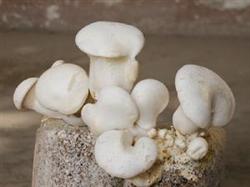
How to prevent deformed mushrooms in white king oyster mushrooms? Cause analysis and solutions
1. Unreasonable room and shed structure. White king oyster mushroom cultivation sites are divided into indoor mushroom rooms and outdoor mushroom sheds. Because of unreasonable design, air often does not circulate and severe oxygen deficiency occurs, causing the aerobic white king oyster mushroom to develop deformities. An ideal mushroom shed should face south from the north or face east from the west. The room or shed should not be too large. Generally, a rectangular shed room should hold 300... per shed.
-

What to Do When Hollow Mushrooms Appear? Causes and Solutions
This condition is often accompanied by thin, small fruiting bodies, thin caps, and sparse fruiting. It mostly occurs in the late fruiting stage, and is caused by insufficient water in the substrate, insufficient nutrients, low humidity, a relative air humidity staying below 80% for a long time, and disrupted cell elongation within the stipe. Prevention methods: after harvesting the first flush, promptly inject water and nutrient solution into the growing bags, or carry out soil casing cultivation again. The mushroom shed should be shaded to lower the temperature, and when spraying water, spray lightly and frequently, raising the relative air humidity to around 90% to prevent it.
-
What to do if the second flush of mushrooms does not appear? Causes and solutions
Normally, after the first flush of mushrooms is harvested, the second flush will begin to appear in about 10 days. In some cases, no mushrooms appear for a long time. The main reasons are, first, a high yield in the first flush and too long a growing period, causing a serious shortage of water content in the growing medium; second, temperature that is too low or too high, affecting the timing and yield of the next flush. The solution is to soak the growing medium bags in clean water for 1-2 hours, adding to the water 1% white sugar, 0.3% potassium dihydrogen phosphate, 0.5%-1% magnesium sulfate, 0.1% urea, and 0.1% zinc sulfate
-
What to Do If Edible Mushrooms Do Not Form Primordia? Causes and Solutions
In edible mushroom cultivation, it is common to see mycelium growing too vigorously, neither forming primordia nor producing mushrooms. Moreover, the mycelium keeps increasing and forms a thick layer of mycelial film, seriously affecting edible mushroom production. Once this happens, you can use a bamboo strip to tap lightly on the growing mycelium to break up the overgrown mycelium and press it firmly against the substrate. In this way, after 2 to 3 days, the mycelium will form primordia and produce mushrooms, without affecting the yield.
-
Reasons for Slow Mycelial Growth in Oyster Mushrooms and Solutions
During the cultivation and management process, it is necessary to understand the biological characteristics of different varieties and the requirements of the mycelium during its growth and development stages for nutrients, moisture, temperature, light, pH, and other environmental factors. After inoculation (at a 10%-15% inoculation rate), mycelium extending outward from the spawn block can be observed in the culture room within 2-3 days, growing 3-5 cm in 7-10 days, fully colonizing the bag in 20-30 days, and producing mushrooms in 35-45 days. If these standards are not met, the reasons are: (1) The raw materials have been stored for too long and are highly acidic,
-
Preparation Methods and Application Techniques of Mushroom Topdressing Solutions
To achieve high mushroom yields, appropriate topdressing of fertilizer is essential. Based on practical experience, several preparation and application methods for mushroom topdressing solutions are introduced below: 1. Mushroom Root Soup: Collect the mushroom stems and broken mushrooms cut off during harvesting and processing, wash them clean, cut them into thin slices, add 1 to 1.5 kg of water per kg of material, boil for 15 minutes, take the filtered liquid and dilute with water to 10 to 15 kg, and spray on 30 to 40 sq m of mushroom beds. Using this during the peak fruiting period can make the fruiting bodies plump and extend the peak fruiting period. 2. Cattle and Horse. Urine Water: Take
-
Preparation Methods and Key Points for Using Mushroom Topdressing Solutions
To achieve high mushroom yields, appropriate topdressing must be applied. The author now introduces the preparation and use methods of several mushroom topdressing solutions as follows: 1. Chemical fertilizer solution. Use a 0.1%-0.2% urea solution or a 0.5% ammonium sulfate solution, spraying once every 2-d (days), just enough to moisten the bed surface. This has the effect of making the fruiting bodies produced in the mid-to-late stage plumper and thicker. Dissolve 0.5kg of superphosphate in 15kg of water, take the filtrate, add 50g of ammonium bicarbonate or 150ml of ammonia water to neutralize it into ammonium phosphate, then spray it on the bed surface. This can make the mushrooms plump and thick, increasing yield by 15%-20%.
-
Detailed Guide to Preparing and Using Mushroom Topdressing Solutions
Mushroom Stem Soup: Collect the mushroom stems and broken mushrooms cut off during harvesting and processing, wash them thoroughly, cut them into thin slices, add 1 to 1.5 kg of water per kg and boil for 15 minutes, then take the filtered liquid and add water to make 10 to 15 kg, and spray it on 30 to 40 sq m of mushroom beds. Using it during the peak fruiting period can make the fruiting bodies thick and plump and can prolong the peak fruiting period. Chemical Fertilizer Solution: Use a 0.1% to 0.2% urea solution or a 0.5% ammonium sulfate solution, spraying once every 2 to 3 days, preferably until the bed surface is moist; for mushrooms fruiting in the middle and late stages
-
Analysis of High-Yield Cultivation Techniques for Edible Fungi and Key Points for the Correct Use of Nutrient Solutions
Key Points for the Correct Use of Nutrient Solutions for Edible Fungi
条件筛选