-

10 provinces and regions launch pilot projects for converting grain to forage, industry calls for deeper progress
For grain farmers, the 2015 autumn grain harvest season was a bit cold: as soon as the new corn hit the market, it suddenly encountered relatively sharp grain price fluctuations, and not only did the income they had expected shrink, but in some areas it also became difficult to sell grain. Yet amid the cold winter, a glimmer of brightness also appeared.
-
Improving the Agricultural Support and Protection System: An Overview and Interpretation of Deepening Rural Reform
Improving the Agricultural Support and Protection System: Interpreting the Comprehensive Implementation Plan for Deepening Rural Reform. The support and protection system is the core of agricultural policy in a modern country, and is also an inevitable requirement for developing modern agriculture in our country. In recent years, national fiscal investment in agriculture, rural areas and farmers has grown rapidly
-
An Overview of the Current State of Agricultural Markets and Informatization Development Nationwide
Currently, agricultural market and informatization development is playing a revolutionary role in agricultural and rural development. The application of information technology can change traditional combinations of production factors to achieve cost savings and efficiency gains, and the development of information resources can innovate traditional agricultural management methods, integrate the traditionally fragmented segments of agriculture, expand marketing channels for agricultural products, and increase farmers' incomes.
-
An Overview of the Current Status of Germplasm Resource Protection and Utilization in China
Since the Seed Law of the People's Republic of China came into effect in 2000, it has played an important role in raising the level of variety breeding, cultivating diverse entities for seed production and operation, and regulating the order of the seed market. However, with the development of the socialist market economy, China's seed production
-
What Are the Institutional Dilemmas of Farmland Transfer? A Detailed Explanation
I. Brief Overview and Research Perspective From the perspective of new institutional economics, existing studies on the institutional factors affecting farmland transfer have mainly been carried out in the following aspects: farmland property rights, farmland legal system, rural social security system, and farmers' rational choice. For example,
-
Analysis of the Current State of Branded Agriculture Development in China
Based on differences in resource endowments and levels of economic development across regions, agricultural brand development can be broadly grouped into three major categories: first, regions with dual advantages in both resources and economy. Second, regions with medium levels of both resources and economic development, or medium regions where resources and economic development levels are complementary. Third, regions with particularly weak resources or particularly weak economies.
-
China's Edible Oil Market Presents a New Landscape in 2015
An overview of our country's edible oil market: after many years of development, it has gone through an industry growth process from a proliferation of small brands to a landscape dominated by major brands, where the big fish eat the small fish. Today, the domestic edible oil market continues to advance toward branding, standardization, and health consciousness. As for the current
-
How the New Agricultural Operating System Will Affect the Future of Chinese Agriculture
An overview of the world shows that household farming has become the dominant choice of agricultural operating form in most countries. Some countries have attempted to replace household farming with corporate-style agricultural operations, but on the whole this has not achieved success of general significance. However, to simply deny the general trend of accelerated development of corporate-style agricultural operations and their comparative advantages in specific fields would also be unrealistic.
-

What Tree Species Is the Chinese Arborvitae? A Complete Collection of Wild Chinese Arborvitae Pictures and a Price Overview
What tree species is the Chinese arborvitae? The Chinese arborvitae is a shrub or tree of the Cupressaceae family, genus Thuja; it generally grows in the crevices of cliffs at an altitude of 700-2100 m, in areas with shallow soil and rock; but now this tree has become an endangered species. It is mainly produced in Sichuan, China
-
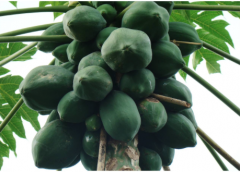
What Are Hawaiian Papayas Like? A Brief Introduction to Production and Prices
Hawaiian papaya is a papaya variety grown in Hawaii. Have you ever learned about this kind of papaya? Would you like to know the production and prices of Hawaiian papaya? Let's take a look together! Hawaii's papaya industry in Hawaii, papaya has been cultivated for more than a
条件筛选