-

Eat these five vegetables regularly: they lower blood lipids and blood pressure and also help prevent cancer
1. Artemisia selengensis (Indian wormwood) Every 100 g of Artemisia selengensis contains 0.24 g of fat and 4.2 g of protein, making it a healthy vegetable that is high in protein and low in fat. At the same time, Artemisia selengensis...
-
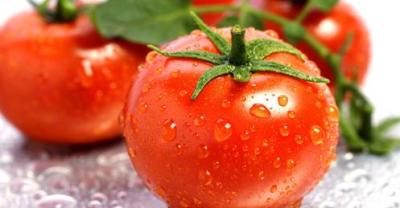
This common vegetable on the dinner table is especially delicious, fights aging, nourishes the stomach and also tonifies the kidneys
TCM Yang Run In summer, with sustained high temperatures, every time I walk on the road after work, I do not know what I should eat; the sustained high heat even takes away my appetite,...
-
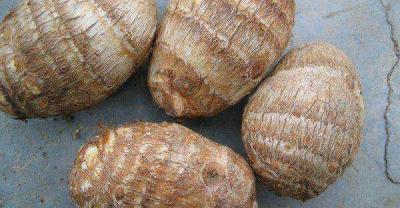
Vegetables can also be used to kill pests, so you might want to give it a try
In daily life, we can use vegetables to make homemade pesticides for killing pests and sterilizing. Homemade pesticides have low cost, good effect and are harmless to people. You might want to give it a try...
-
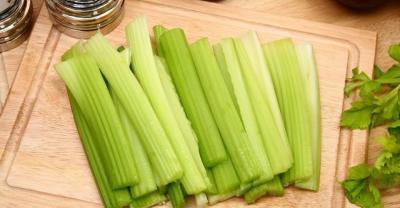
Can eating vegetables also nourish the kidneys? Don't miss these kidney-nourishing vegetables
What is good to eat for nourishing the kidneys in winter? In winter, everyone needs to nourish the body through food therapy even more, especially those friends with kidney deficiency. Combining food therapy to nourish the kidneys is essential...
-

Eating the right vegetables can also supplement calcium; underestimating vegetables makes it easy to miss out
When it comes to calcium-rich foods, many people first think of milk. Milk is highly praised for being simple and convenient to consume, which also troubles some people who cannot drink milk...
-
Lycoris radiata, also called cockroach flower and crow garlic, what kind of plant is it?
Aliases: cockroach flower, crow garlic Family and genus: Amaryllidaceae, Lycoris Morphology: perennial herbaceous plant, underground bulb thick, broadly elliptical, covered with a purplish-red membrane. Leaves linear, emerging from the base after the flowering period, 5-6 leaves, leaves emerge in winter and wither in summer. Flower scape emerges from August to September, 30-60 cm tall, bearing 4-12 flowers, in an umbel at the top; flowers bright red, tube very short, about 5-6 mm long, segments narrow oblanceolate, curling outward. Ovary inferior, does not set seed after flowering.
-
Why is the nipplefruit also called "five generations under one roof" and "golden fruit"
Aliases: five generations under one roof, golden fruit, five sons paying birthday respects. Family and genus: an evergreen small shrub of the genus Solanum in the family Solanaceae. Morphological characteristics: the fruit of the nipplefruit is golden yellow with a peculiar shape; its flowering and fruiting period is summer and autumn, and the fruiting period is long, especially after leaf fall in early winter, because its fruit does not change color or shrink, making it unique and attractive. It is an upright branching small shrub, usually grown as an annual, with a plant height of 0.5--1.5 m, relatively sparse leaves, and the whole plant covered with waxy yellow flat spines. Its flowering and fruiting period is summer and autumn; before flowering, the flower buds often droop, and when fully open they are slightly upright, with 5 purple flowers
-
Onion skin soaking liquid can also be used as fertilizer
The solution made by soaking onion skins not only contains a substance that can kill pathogenic microorganisms in the soil, but also contains a variety of trace elements, so it can be used as fertilizer for crops. 1. If onion skin soaking liquid is used as fertilizer for indoor flowers, the branches grow luxuriantly and the flowers become more vivid. 2. Yellowed cucumber seedlings are especially suitable for spraying with onion skin soaking liquid; after spraying, the vines turn from yellow to green, grow vigorously, and soon bloom and bear fruit. Method for making onion skin soaking liquid: use 100 g of onion skins, add 25
-
Reinwardtia indica, also known as golden-flowered flax and yellow flax, have you ever seen this plant?
Scientific name: Reinwardtia trigyna. Common names: golden-flowered flax, yellow flax. Family and genus: Linaceae, Reinwardtia. Origin: native to southwestern China, Vietnam, India and Indonesia. It is now cultivated in various places in the south. Growth habit: it likes a warm environment with ample sunlight and good ventilation, and prefers fertile, well-drained soil. It likes to grow in low-altitude calcareous soil and is not cold-tolerant. Morphological characteristics
-
Ginger Lily, also known as Butterfly Lily: Characteristics and Growing Methods
Variety origin: Native to southern and southwestern China, India, Malaysia and Australia, and further developed into a cut flower variety through multiple generations of selection. Variety distribution: Cultivated in all counties, cities and districts on the outskirts of Guangzhou, with the highest output in Fangcun District. Variety characteristics: A perennial bulbous flower, with underground stems resembling ginger, and the above-ground part growing in clumps, with a single stem that does not branch. Plant height 1-1.5 m, with 8-10 leaves. The terminal spike-type pinecone-shaped inflorescence has green bracts containing 2-3 white flowers, extremely fragrant, with a flowering period from May to November. Variety characteristics
条件筛选