-
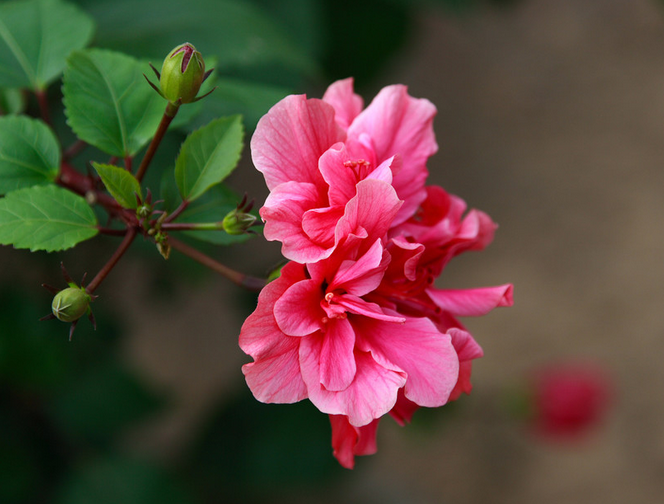
How to grow Turk's cap mallow? A detailed guide to its cultivation methods
Turk's cap mallow is a famous flower in China, with large blooms and many colors. Although each flower opens in the morning and fades by evening, it blooms continuously, has a long flowering period, and flowers most profusely in summer and autumn. Many people want to grow Turk's cap mallow themselves. Below, let's take a detailed look with the editor of Yiqizhuangxiu.com at what cultivation methods there are for Turk's cap mallow.
-
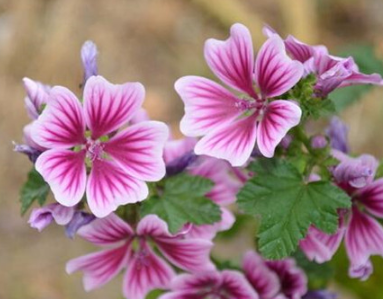
Mallow cultivation methods, precautions, and differences from hollyhock
Mallow is a beautiful flower with a rather distinctive flower shape and lovely colors. Cultivating mallow requires good daily care, and neither watering nor fertilizing can be neglected. Mallow cultivation methods and precautions. Mallow cultivation methods: Soil, mallow has low requirements for soil, and sandy soil can be chosen.
-

How to cultivate Chinese tallow tree for high yields? Key technical points explained
High-yield cultivation techniques for Chinese tallow tree
-

Detailed Explanation of Black Swallow-wort Planting Techniques and Cultivation Management Methods
Planting Techniques for Black Swallow-wort
-

Comprehensive Utilization Techniques for Fish Fingerling Ponds During the Winter Fallow Period
Using Winter-Fallow Fingerling Ponds to Raise Marketable Fish Raising a crop of marketable fish in winter-fallow fingerling ponds can both increase production and help regulate the "summer shortage" in the aquatic product market. Because the rearing period is relatively short and temperatures are low, the following techniques should be adopted: 1. Stock early, that is, stock immediately after the fingerlings are concentrated in ponds, so as to make full use of the growing period. Based on a maximum water depth of 2 m, the usual stocking rate is 125-150 kg per mu. The usual stocking ratio is about 40% silver carp, about 10% bighead carp, about 30% grass carp and bream, and about 20% black carp and common carp. Stocked fish
-
Identification and Control of the Angelica Swallowtail Caterpillar Pest
The angelica swallowtail, also known as the fennel swallowtail, belongs to the order Lepidoptera, family Papilionidae. 1. Damage situation: The larvae cause damage, feeding on leaves at night, creating notches, and in severe cases eating all the leaves so that only the petioles and veins remain; they also feed on flowers and fruits. This insect has a large appetite, seriously affecting the growth of angelica and reducing yield. 2. Morphological characteristics. Adult: A large butterfly, with spring and summer forms. The summer form has a body length of about 25 mm and a wingspan of 90 mm; the spring form is slightly smaller. The body is yellow, with black stripes running longitudinally along the back. Both forewings and hindwings are yellow,
-
Key Technical Points for Mushroom Cultivation and Management in Winter Fallow Fields
Using winter fallow fields to cultivate mushrooms with rice straw and manure as the main raw materials can greatly increase income, and the spent substrate after cultivation can be returned directly to the field or used as raw material for bio-organic fertilizer. The winter fallow field mushroom cultivation technique is introduced as follows: Substrate formula: when stacking materials, calculated per square meter of mushroom bed, use 12.5-13.5 kg of dry rice straw, 0.8 kg of rapeseed cake powder, 0.45 kg of gypsum powder, 0.45 kg of superphosphate, 0.45 kg of compound fertilizer, and 0.45 kg of lime powder. Per mu
-
Growing button mushrooms (Agaricus bisporus) in winter-fallow rice fields delivers good returns
In 2004, our county carried out cultivation demonstrations of growing button mushrooms (Agaricus bisporus) in winter-fallow rice fields across 16 townships. After the late rice harvest, rice straw and other materials were used as the main raw materials and composted and fermented into growing substrate, making use of the winter temperature and light resources and the idle winter season of the rice fields; open-field cultivation of button mushrooms achieved notable returns. Chen Yeru, a farmer at the Lixian Institute of Agricultural Sciences, is a button mushroom cultivation demonstration household, with a family of 4 people and 2 laborers, and had never previously cultivated edible fungi. After technical training at the Lixian Edible Fungi Research Institute, he set up on his own contracted field
-
How to Cultivate Mushrooms in Winter Fallow Fields? Detailed Technical Points
Using winter fallow fields to cultivate mushrooms is a good way to increase income. At the same time, it helps to build soil fertility and increase grain yields. The technical points are: 1. Material preparation. For every 100 sq m cultivated, prepare 1250 kg of rice straw, 1750 kg of cow manure, 45 kg of peanut bran (select well-composted), 15 kg of urea, 40 kg of lime, 25 kg of superphosphate, and 25 kg of gypsum. 2. Pile composting and fermentation. Generally, start piling the material 1 month before sowing, that is, around early October, and the composting period is about 1 month,
-
Main-culture techniques for freshwater pomfret (piaractus brachypomus) in shallow ponds
Among existing ponds, shallow ponds still account for a very large proportion. Such ponds are shallow, lack matched drainage and irrigation systems, and some are formed by seasonal flooding; when traditional fish species are farmed in them, fish yields are low and returns are very poor. To explore ways to increase production, income and efficiency in such ponds, for two consecutive years from 1993 to 1994, we conducted a "trial of main-culture of freshwater pomfret in shallow ponds" in three ponds with a total area of 9.7 mu and a maximum water depth of 1 m. Without aeration facilities, satisfactory results were achieved: in 1994 the average yield per mu was 227 kg
条件筛选