How to grow Turk's cap mallow? A detailed guide to its cultivation methods
Turk's cap mallow is a famous flower in China, with large blooms and many colors. Although each flower opens in the morning and fades by evening, it blooms continuously, has a long flowering period, and flowers most profusely in summer and autumn. Many people want to grow Turk's cap mallow themselves. Below, let's take a detailed look with the editor of Yiqizhuangxiu.com at what cultivation methods there are for Turk's cap mallow.
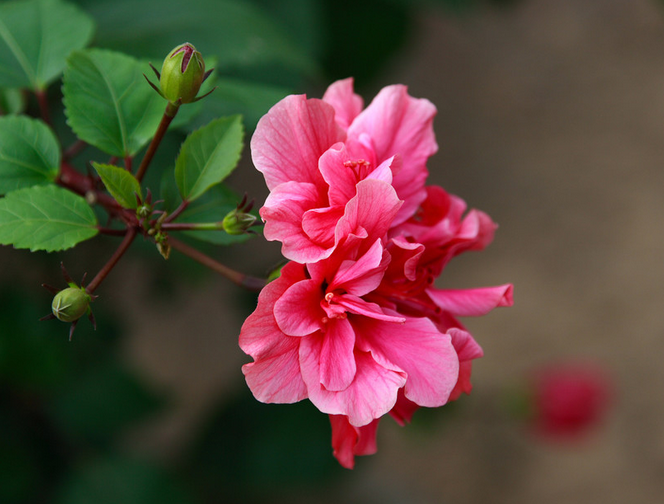
An analysis of the cultivation methods for Turk's cap mallow
Cultivation methods for Turk's cap mallow
1. Because Turk's cap mallow is a sun-loving flower, it should be placed in a spot with long hours of sunlight so it can fully receive sunshine. In summer it can be given full light. Insufficient light easily causes flower buds to drop, flowers to become smaller, and flower color to fade.
2. Both excessive dryness and excessive moisture will affect flowering. During the peak flowering period in summer, depending on the temperature and how dry or moist the potting soil is, water 1 to 2 times a day, but make sure to water thoroughly only after the soil has dried out, to prevent root rot caused by waterlogging at high temperatures. Watering is best done before 9 a.m. or after 5 p.m., to minimize the temperature difference between the air and the water. At midday, you can spray water on the leaves and around the flowerpot to lower the leaf surface temperature and maintain air humidity. The flowers of Chinese hibiscus are very delicate, so water must not be sprayed directly on the flowers, otherwise it can easily scorch them.
3. Repot every year, using decomposed bean cake and poultry manure as base fertilizer. Afterward, apply a compound fertilizer that is well absorbed and quick-acting. Every 7 to 10 days, spray the leaves once with 0.2% monopotassium phosphate to promote green leaves and produce more flower buds.
4. Chinese hibiscus is not cold-tolerant, so whether it can safely overwinter is key. In winter the temperature should be kept at 12 to 15°C; below 5°C it is very easily killed by frost. But note that the temperature should also not exceed 20°C; too high a temperature will cause leggy growth of branches and leaves, affect dormancy, and result in poor flowering the following year. In winter the potting soil should maintain about 30% relative humidity, and it must not be watered heavily. Generally no fertilizer is needed in winter; if applying any, use only a small amount of liquid fertilizer.
5. Prune in spring, leaving the thick, strong branches to ensure nutrients are concentrated and flowering is more abundant.
Propagation methods for Turk's cap mallow
1. Cuttings of Turk's cap mallow
Cuttings are the most commonly used method for propagating Turk's cap mallow. They can be taken at any time from early spring to late autumn, with the highest survival rate during the plum rain season; in winter they can only be done in a greenhouse. The best cuttings are one-year-old semi-lignified ones, about 10 cm long. Remove the lower leaves, keep the top leaves, make the cut smooth, and insert into a sand bed, misting daily to maintain high air humidity. They root about three weeks after insertion, and after 45 days of growth they can be potted up. Generally, Turk's cap mallow propagated from cuttings in the same year will bloom the following year.
2. Air layering propagation of Turk's cap mallow
This is mainly for lignified branches and is relatively common among woody plants. Turk's cap mallow can also be given a try. Compared with cuttings, air layering is safer, at least it will not die, haha. Below is a sample image of air layering; the plant in the image is not Turk's cap mallow.
3. Layering propagation
This is also very simple: just bend the branches of Turk's cap mallow down into the soil and let them root. Once rooted, cut them off. The principle is similar to air layering, just with slight differences depending on the actual situation. All three methods are very simple and highly practical, and fellow flower growers can all give them a try.
An analysis of the cultivation methods for Turk's cap mallow: teaching you to grow Turk's cap mallow with ease
Turk's cap mallow is a famous flower in China, with large blooms and many colors. Although each flower opens in the morning and fades by evening, it blooms continuously, has a long flowering period, and flowers most profusely in summer and autumn. It is deeply loved by people, and many want to grow Turk's cap mallow themselves but do not know how. Below, let's take a detailed look with the editor of Yiqizhuangxiu.com.
An analysis of the cultivation methods for Turk's cap mallow: teaching you to grow Turk's cap mallow with ease
Cultivation methods for Turk's cap mallow
1. Because Turk's cap mallow is a sun-loving flower, it should be placed in a spot with long hours of sunlight so it can fully receive sunshine. In summer it can be given full light. Insufficient light easily causes flower buds to drop, flowers to become smaller, and flower color to fade.
2. Both excessive dryness and excessive moisture will affect flowering. During the peak flowering period in summer, depending on the temperature and how dry or moist the potting soil is, water 1 to 2 times a day, but make sure to water thoroughly only after the soil has dried out, to prevent root rot caused by waterlogging at high temperatures. Watering is best done before 9 a.m. or after 5 p.m., to minimize the temperature difference between the air and the water. At midday, you can spray water on the leaves and around the flowerpot to lower the leaf surface temperature and maintain air humidity. The flowers of Chinese hibiscus are very delicate, so water must not be sprayed directly on the flowers, otherwise it can easily scorch them.
3. Repot every year, using decomposed bean cake and poultry manure as base fertilizer. Afterward, apply a compound fertilizer that is well absorbed and quick-acting. Every 7 to 10 days, spray the leaves once with 0.2% monopotassium phosphate to promote green leaves and produce more flower buds.
4. Chinese hibiscus is not cold-tolerant, so whether it can safely overwinter is key. In winter the temperature should be kept at 12 to 15°C; below 5°C it is very easily killed by frost. But note that the temperature should also not exceed 20°C; too high a temperature will cause leggy growth of branches and leaves, affect dormancy, and result in poor flowering the following year. In winter the potting soil should maintain about 30% relative humidity, and it must not be watered heavily. Generally no fertilizer is needed in winter; if applying any, use only a small amount of liquid fertilizer.
5. Prune in spring, leaving the thick, strong branches to ensure nutrients are concentrated and flowering is more abundant.
Propagation methods for Turk's cap mallow
1. Cuttings of Turk's cap mallow
Cuttings are the most commonly used method for propagating Turk's cap mallow. They can be taken at any time from early spring to late autumn, with the highest survival rate during the plum rain season; in winter they can only be done in a greenhouse. The best cuttings are one-year-old semi-lignified ones, about 10 cm long. Remove the lower leaves, keep the top leaves, make the cut smooth, and insert into a sand bed, misting daily to maintain high air humidity. They root about three weeks after insertion, and after 45 days of growth they can be potted up. Generally, Turk's cap mallow propagated from cuttings in the same year will bloom the following year.
2. Air layering propagation of Turk's cap mallow
This is mainly for lignified branches and is relatively common among woody plants. Turk's cap mallow can also be given a try. Compared with cuttings, air layering is safer, at least it will not die, haha. Below is a sample image of air layering; the plant in the image is not Turk's cap mallow.
3. Layering propagation
This is also very simple: just bend the branches of Turk's cap mallow down into the soil and let them root. Once rooted, cut them off. The principle is similar to air layering, just with slight differences depending on the actual situation. All three methods are very simple and highly practical, and fellow flower growers can all give them a try.
An analysis of the cultivation methods for Chinese hibiscus: enjoy pictures of Chinese hibiscus
Chinese hibiscus was already a popular ornamental plant in ancient times, and today a large number of new hybrid ornamental Chinese hibiscus are widely popular around the world. Today we introduce the cultivation methods for Chinese hibiscus. Chinese hibiscus was previously unknown to Europeans. When they first saw it, they thought that because it was double-flowered and red, it came from China, so they called it the China rose. This shows how delicate and colorful it is. Want to know more about it? Take a look at the content below and enjoy some beautiful pictures of Chinese hibiscus together!
Cultivation methods for Chinese hibiscus
Chinese name: Chinese hibiscus
Scientific name: Hibiscus rosa-sinensis L.
Aliases: Red hibiscus,
Family: Malvaceae
Genus: Hibiscus
Cultivation methods for Chinese hibiscus
Origin and distribution: native to southern China, distributed in the provinces and regions of Fujian, Guangdong, Guangxi, Yunnan, and Sichuan.
Morphological characteristics: an evergreen shrub, can reach up to 6 m tall; when planted in gardens and courtyards it is generally pruned by people to about 1 m tall. The stems of Chinese hibiscus are straight and much branched, with green alternate leaves. The leaf shape is broadly ovate to narrowly ovate, similar to mulberry leaves, with coarsely serrate or lobed leaf margins. The flowers are large in size, and the flower stalks may either droop or point straight up. The flowers are solitary in the upper leaf axils, and a distinctive feature of the flower is a long staminal column growing out from the center. The flowers come in many colors, and the flowering period lasts all year, most profusely in summer and autumn.
Cultivation methods for Chinese hibiscus
Cultivation methods for Chinese hibiscus
Enjoying pictures of Chinese hibiscus
Cultivation methods for Chinese hibiscus
1. Growth habits: Chinese hibiscus grows in sparse mountain forests. It likes warm, humid climates, is not cold-tolerant, and requires ample sunlight. Chinese hibiscus grows easily, has strong resistance, and has very few pests and diseases. It grows well in areas with an average temperature above 10°C. It is suited to slightly acidic soil rich in organic matter with a pH of 6.5-7.
2. Propagation methods: Chinese hibiscus is commonly propagated by cuttings and grafting. Cuttings can be done except in winter, and the survival rate is high during the plum rain season. The best cuttings are one-year-old semi-lignified ones, 10 cm long. Keep the top leaves, make the cut smooth, and insert into a sand bed; they root about 3 weeks after insertion. Grafting is mostly used for double-flowered varieties that are difficult to root from cuttings, using single-flowered Chinese hibiscus as the rootstock.
3. Repotting and soil changing: For potted plants, use loose, fertile sandy loam. Repot every year in early spring before moving them outdoors in April. When repotting, do three things: first, replace with new growing medium; second, cut away some of the overly dense, curled fibrous roots; third, apply sufficient base fertilizer, adding a little phosphate fertilizer at the bottom of the pot.
4. Pruning and shaping: In order to keep the Chinese hibiscus tree shape beautiful and the number of flowers abundant, and based on the strong branching and sprouting ability of Chinese hibiscus, pruning and shaping can be carried out around early spring before it is moved out. For each branch, leave 2-3 buds at the base and cut off all the upper part. Pruning can promote new branches, make growth more vigorous, and also make the plant shape more attractive. After pruning, because the aboveground part consumes less, water and fertilizer should be appropriately controlled.
5. Pest and disease management: The main pests of Chinese hibiscus are aphids, scale insects, cottony cushion scale, and mites (commonly known as red spiders). After aphids and mites appear, insecticides such as, and can be diluted to a certain ratio and sprayed on the leaves to kill them, once a week; generally 2-3 times can basically eliminate them. Scale insects and cottony cushion scale can damage leaves and epidermis; generally imidacloprid-type products or their improved formulations can be diluted to a certain ratio and sprayed on the affected parts to kill them. In severe cases, apply once every 10 days, and 3 times can basically eliminate them.