-

What are the cultivation conditions for Agrocybe aegerita? Detailed explanation of the growing environment requirements
Cultivation conditions for Agrocybe aegerita
-

Yesizhan: Main Agronomic Traits and High-Yield Cultivation Techniques of a High-Quality Conventional Rice
Yesizhan is a temperature-sensitive, early- and late-season dual-purpose, high-quality, high-yield variety bred by the Foshan Institute of Agricultural Sciences through sexual hybridization of Xiyepzhan 10 and Zhong'er Ruanzhan, and was approved by the Crop Variety Approval Committee of Guangdong Province in March 2005. Its main agronomic traits and high-yield cultivation techniques are introduced as follows: 1 Main agronomic traits. Yesizhan is early to mid-early maturing in the early season, with an average full growth period of 127 days; it is early maturing in the late season, with an average full growth period of 108 days. The plant is short and sturdy, with strong tillering ability, green leaf color, narrow and upright leaves, and the capacity to hold many panicles, with large panicles and dense grains, and good grain filling
-
Detailed Explanation of Agronomic Supporting Techniques for Drip Irrigation Under Plastic Mulch in Cotton
Drip irrigation under plastic mulch is a technique that combines drip irrigation technology with plastic film mulching cultivation technology. Water is supplied through a controllable pipeline system; after water and fertilizer are mixed, they are delivered drop by drop evenly, at set times and in set amounts, moistening the crop root development zone and always keeping the root-zone soil loose and at optimal moisture. It reduces evaporation between crops and improves water use efficiency. 1. Irrigation regime. For subsurface drip irrigation, total water use was 175.48 million cubic meters. Dripping was done 9 times. For precision drip irrigation, total water use was 177.84 million cubic meters. Dripping
-
New upland rice variety developed in Shandong, agronomist Xu Defang successfully breeds it
In the golden autumn season, a new upland rice variety carefully cultivated over 3 years by Xu Defang, an agronomist at the Dongying Branch of the Shandong Academy of Agricultural Sciences, has achieved a bumper harvest. According to calculations, it yields more than double that of the current upland rice variety 297, with a yield of 600-650 kg per mu, marking a breakthrough in China's upland rice breeding. Xu Defang used more than 30 ancestral lines provided by Professor Li Zichao of China Agricultural University, discovered a dwarf-stalk mutant line from the tall-stalk line 33-1, and from it selected a group of 9 lines, namely early-maturing, glutinous, early
-
Formulation trial for cultivating Agrocybe aegerita (tea tree mushroom) with mulberry sawdust
At present, Fujian, Jiangxi and other places mostly use hardwood sawdust and cottonseed hulls to cultivate Agrocybe aegerita, but the yield is relatively low. This trial aims to explore suitable formulations for cultivating Agrocybe aegerita with mulberry sawdust and silkworm excrement, in order to make full use of local resources, save costs and improve economic returns. 1 Materials and methods 1.1 Test strain Agrocybe aegerita No. 1, provided by the Kexing Edible Fungi Research Institute of Gutian, Fujian. 1.2 Test formulations (1) cottonseed hull 82%, wheat bran 18%; (2) cottonseed hull 36%, mulberry sawdust 36%, rice straw powder 10%, silkworm excrement
-

How to grow Agrostemma githago (corn cockle)? Detailed guide to growing methods and precautions
Light: Agrostemma githago is not a flower that needs elaborate care; it loves sunlight very much, so during the plant's growing season, let it receive enough light so it can grow healthily. But in summer, remember to shade the plant to prevent the sun from scorching the leaves. Do not shade it excessively either, otherwise the plant will become leggy.
-
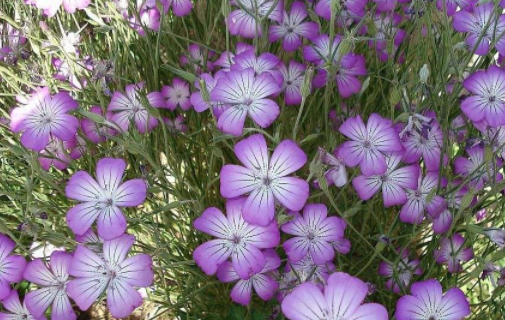
What are the precautions for growing Agrostemma githago?
Potting When potting, you need to place some broken tiles at the bottom of the flower pot to help with drainage, then add a layer of decomposed fertilizer, and finally add the soil. That is all for today's content. I hope this article can help friends who want to grow Agrostemma githago, so they can grow plenty of healthy Agrostemma githago.
-
Agronomy Market Challenge 01: What Else Do Consumers Expect Besides Eco-Friendly Produce?
The Agronomy Market Challenge 01 | Besides eco-friendly produce, what do consumers expect from agronomy markets?
-
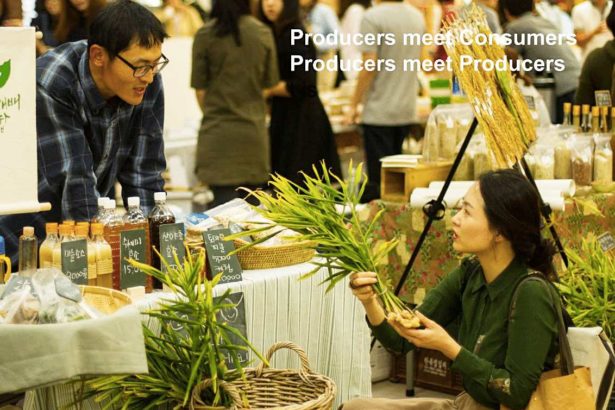
Where is the niche for farmers' markets? The agronomy market 02: taking on big distribution channels in the fight for the organic market
The challenges of agronomy markets 02 | When big distribution channels compete for the organic market, where is the niche for farmers' markets?
-

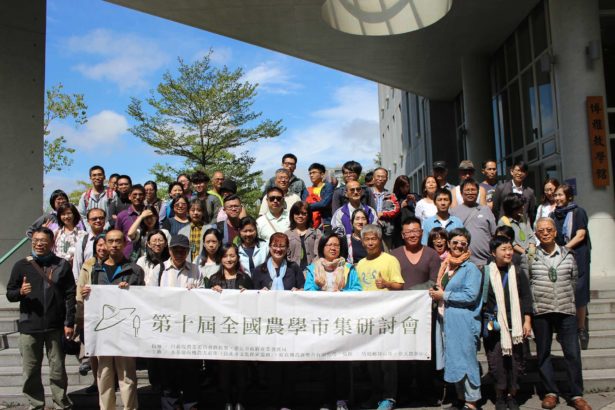
Introduction to the keynote topics of the 10th National Agronomy Market Symposium and the Food and Agriculture Circle grand appearance
[10th National Agronomy Market Symposium] 10th Food and Agriculture Circle grand appearance | Keynote topic introduction
条件筛选