-
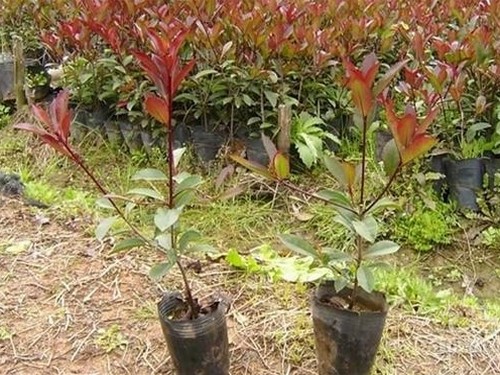
Detailed Guide to Making and Managing Red-Leaf Barberry Bonsai
Red-leaf barberry blooms with yellow flowers in spring and bears red berries in autumn; it is an ornamental shrub beautiful in leaf, flower and fruit alike. It is suitable for use in gardens as a flowering hedge, planted in groups at the corners of garden paths, edging large flower beds, or pruned into symmetrical spherical shapes for companion planting. It can also be dotted among rocks or beside ponds. It can also be made into bonsai; widely used in landscaping, it delivers excellent greening results.
-
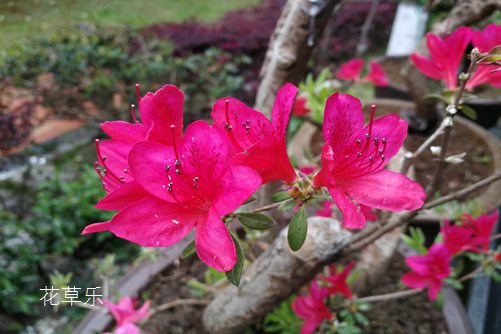
How to grow azaleas: the key to azalea cultivation is managing them well before and during the flowering period
Azalea, also known as yingshanhong, has funnel-shaped corollas in red, yellow, apricot-red and white. It is one of China's ten traditional famous flowers and a woody flowering plant grown mainly for its blooms. To grow azaleas that produce brightly colored flowers, besides strengthening routine daily care, what should you pay attention to in azalea cultivation?
-
Dental implants have deadly enemies too, and these behaviors are the most damaging to dental implants
Dental implants have been widely recognized by society because they have incomparable inherent advantages: 1. Improve quality of life. Compared with traditional dentures, dental implants make it eas...
-

How to prevent premature aging in cotton? Strengthening fertilizer and water management is key
Recently, some cotton field plants have shown a trend of premature aging, and countermeasures must be taken early to ensure a bumper cotton harvest. The main signs are red stems reaching the top of the cotton plant, with hard, inelastic stalks; prominent main stem growing points, making it difficult to extend new fruit branches and fruit nodes; faded leaf color and small new leaves; reddish-brown spots appearing on the middle and lower leaves of the cotton plant, with basal leaves withering; scorched leaf margins, and in severe cases, premature shedding. Causes of premature aging (1) Unfavorable weather. This year, cotton experienced severe drought in the early growth stage and waterlogging in the middle stage, resulting in poor root growth and a weak ability to absorb fertilizer
-
Pruning Methods and Technical Points for Aging Tea Plants
1. Heavy pruning: Heavy pruning is suitable for semi-aged tea plants and for tea plants that decline before their time; their age is not necessarily very great, and most main branches still retain a certain capacity for growth. For such tea plants, heavy pruning can be carried out to renew and rejuvenate them, generally cutting away 1/3 to 1/2 of the canopy. 2. Frame cutting: For very aged tea plants, even increased fertilizer application can hardly raise yields. Such tea plants are better renewed by frame cutting, that is, around Great Cold (Major Cold) sawing (or cutting) off all branches and trunks at a height of about 15 cm above the ground and regrowing the bush. Tea plants subjected to frame cutting or heavy pruning should all be treated on the basis of deep plowing and sufficient basal fertilizer.
-
Cotton is prone to premature aging during the dog days, so growers should be on guard
Once cotton shows premature aging, remedial measures are of little use, and prevention is what matters. Early August is the peak period of cotton flowering and boll setting; if vegetative growth and reproductive growth are well coordinated, premature aging is unlikely. The earlier premature aging occurs, the more severe the yield loss. In severe years, some fields show premature aging in mid-to-late August. How to prevent cotton premature aging and increase yield is an urgent problem in cotton production. Below are several measures to prevent cotton premature aging. Pay attention to the watering method. Summer drought causes cotton premature aging, so if there is no rain during the dog days, water promptly. Alternate-furrow irrigation is preferable,
-
What are some practical measures to prevent premature aging in cotton?
Right now is the critical period for managing cotton buds and bolls. To avoid premature aging, fellow growers should strengthen management and pay attention to spraying foliar fertilizer. The specific method is: 2 liang of urea, 1 liang of monopotassium phosphate or 20-30 grams of potassium fulvate, 3-5 milliliters of naphthalene acetic acid, and 30 grams of Tianyi. To prevent burning the leaves, the above fertilizers and chemicals should first be dissolved in a small amount of water to make a mother liquor, then placed in the sprayer and diluted with water for spraying. Spray two sprayer loads per mu, once every 7-10 days, until around September 20 on the Gregorian calendar.
-
What are the key measures for managing cotton during the flowering and boll-setting stage?
The main goals of cotton management during the flowering and boll-setting stage are: preserve bolls, increase boll weight, and prevent premature senescence. 1. Apply heavy flowering and boll fertilizer: The flowering and boll-setting stage is the period when cotton needs the most fertilizer throughout its entire growth period. For cotton fields with high soil fertility, abundant rain and good soil moisture, and vigorous cotton plant growth, topdressing can be done at the full flowering stage; for cotton fields with average soil fertility, drought and poor soil moisture, and weak cotton plant growth, early and heavy application should be done, with topdressing at the initial flowering stage. Generally, apply 15-20 kg of nitrogen-potassium compound fertilizer per mu. Continue to do a good job of intertillage and loosening the soil, following the principle of shallow rather than deep cultivation. 2. Water during drought, drain during waterlogging
-
Detailed Explanation of Key Techniques for Planting and Managing Jujube Trees
Orchard Site Selection In principle, jujube trees have strong environmental adaptability and low soil requirements, and can be planted in saline-alkali land or wasteland. However, if grown as an economic crop, to achieve higher yields and better quality, it is best to choose a better growing environment for the plants. Flat and open terrain
-
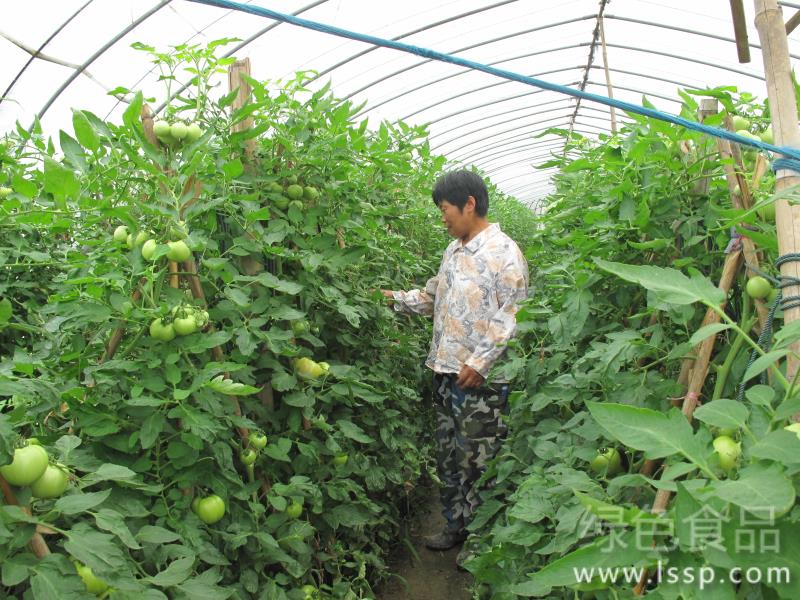
How to prevent premature aging in fruit vegetables? Six tricks every vegetable grower must learn
Six tricks every vegetable grower must learn to prevent premature aging in fruit vegetables
条件筛选