-
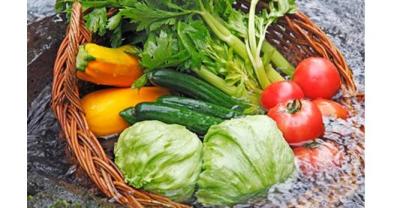
Ripening agents and growth promoters aren't that scary - an old professor reveals the truth about hormone pesticides
Nowadays, online discussions about the heavy use of pesticides on fruits and vegetables, especially hormone-type drugs, are getting more and more heated, and many people say they no longer dare to eat fruit. Especially...
-

How is reagent-grade starch made from potatoes?
Using potatoes, reagent-grade starch can be produced with low cost and high economic benefit. Production method 1. Washing and making potato pulp: Wash the potatoes with water 2 to 3 times, remove all mud and sand, and cut away potato pieces with hoe injuries and rotten holes. Start the crusher, feed in the washed potato pieces, and the potato pulp will flow out immediately. Because fresh potatoes themselves contain about 75% water, no additional water is needed when pulping. 2. Filtering the pulp and rinsing the starch: Filter the potato pulp by machine or by hand, and store the starch milk (water containing starch) in a tank to clarify. Wait for the starch in the tank to settle to the bottom
-
What are the precautions for using pear fruit swelling agent?
Pear fruit swelling agent is a plant growth regulator developed and utilized in recent years. Its effect is to promote fruit cell enlargement, especially when used on early and mid-season pears, where the swelling effect is obvious. However, improper use of pear fruit swelling agent will not only fail to achieve the ideal effect, but also cause side effects. Therefore, for pear trees using swelling agent, water and fertilizer must be kept up, especially full-element chemical fertilizers, to ensure sufficient nutrients to meet the needs of fruit growth and development, so as to achieve the ideal effect. In addition, harvest at the right time
-
Biological agents developed for pest and disease control throughout the goji growing season
With the creation of 4 compound pure biological agents formulated by the "Research on Biological Control Technology for Major Goji Pests and Diseases" team at the Institute of Plant Protection of the Ningxia Academy of Agriculture and Forestry Sciences, the pests and diseases constraining the development of Ningxia's goji industry have finally met their greatest "natural enemy." The use of these agents will achieve biological control of pests and diseases throughout the entire goji growing season, not only reducing the number of control applications but also improving goji quality. Goji is a traditional medicinal herb cultivated in Ningxia and is also a leading industry designated by the autonomous region's Party committee and government. However, the occurrence of goji pests and diseases is extremely complex,
-
The function and application method of the automatic mounting-cluster agent for ripe silkworms
(1) Brief introduction "Automatic mounting-cluster agent for ripe silkworms" is a new type of silkworm medicine that promotes uniform maturity of silkworms and automatic mounting of ripe silkworms onto clusters; at the same time, unripe silkworms, diseased silkworms and weak silkworms do not climb onto the clusters, improving cocoon quality and reducing the rate of inferior cocoons. (2) Advanced nature of the technology "Automatic mounting-cluster agent for ripe silkworms" passed appraisal organized by the Guangdong Provincial Higher Education Bureau in 1993, and experts unanimously considered that the result reached the domestic leading level. In China, molting hormone is used to make silkworms mature uniformly; when they are ripe, they are picked up one by one by hand and placed on clusters, or unripe and ripe silkworms are picked up together with both hands and placed on clusters.
-
Correct methods for using cotton seedling protection agent
I. Methods for using cotton seedling protection agent The cotton seedling protection agent consists of three bags: large, medium and small. The specific seed soaking steps are: 1. Soak 5 kg of cotton seeds in clear water mixed with three parts hot (about 70°C) and one part cold for 5 minutes, remove the cotton seeds and squeeze out excess water. 2. Dissolve the small bag of reagent in 0.5 kg of clear water, pour it into the cotton seeds soaked in the three-hot-one-cold clear water, stirring while pouring, and after thorough stirring leave for 24 hours (stirring 2~3 times during this period). 3. Dissolve the medium bag of reagent in 1.54 kg of clear water, pour it into the cotton seeds soaked with the small bag of reagent
-
Key Technical Points for the Use of Different Chemical Control Agents on Cotton
Chemical control of cotton means using chemical regulation methods to shape cotton into an ideal plant type and create a high-photosynthetic-efficiency population. In this way, plants can grow vigorously, pest and disease occurrence can be reduced, cotton yield can be increased, and quality can also be improved. However, there are currently many chemical control agents, and correct application techniques should be adopted according to different agents to achieve better results. 1. Mepiquat chloride. At present, mepiquat chloride is widely used in cotton chemical control, and its effect is also relatively ideal. It can reduce cotton plant height, decrease the number of fruiting branches, promote the shift of photosynthesis toward reproductive growth, reduce cotton boll
-
How to prepare a yield-increasing agent for edible fungi? Detailed method shared
Applying this agent can increase the yield of edible fungi by 15%-30%. 1. Raw material ratio (by weight): 1 part naphthaleneacetic acid, 14 parts boric acid, 20 parts zinc sulfate, 26 parts magnesium sulfate, 39 parts starch. 2. Preparation method: grind the above raw materials into fine powder, mix well, and package in glass bottles or plastic bags in 50-gram portions. 3. Usage (using black fungus as an example): before the fruiting bodies of black fungus form, dilute each 50 grams with 50 kg of water, and spray it onto the mushroom bed or bag substrate with a sprayer, preferably until the surface of the substrate is moistened. This agent is suitable for wood ear fungus, straw mushroom, button mushroom, shiitake, and others.
-
Tea seed cake can be used as a pond-clearing agent
Pond clearing and disinfection generally use quicklime or bleaching powder, but if the pond is used for shrimp farming, using tea seed cake to clear the pond has effects that other agents cannot replace, with better results. Tea seed cake, also called tea seed meal, is a purplish-brown granular residue left after oil is pressed from the fruit of plants in the Theaceae family. Tea seed cake contains saponin, also called saponin glycoside, which is a hemolytic toxin that can dissolve the red blood cells of fish, so it can kill various wild and trash fish such as loach, as well as snails, river mussels, frog eggs, tadpoles and some aquatic insects. Saponin is easily
-
Mushroom fermentation agent helps mushrooms achieve high yield, high quality, and time savings
Using a fermentation aid to make edible mushroom growing substrate allows fast and thorough fermentation, working at both high and low temperatures, greatly shortening the fermentation production time, reducing labor intensity, and lowering production costs. It also has the characteristics of broad-spectrum fermentation and strong adaptability (it can ferment almost all organic matter that needs fermentation, and has relatively loose requirements for environmental conditions), and can be widely used for button mushroom (white mushroom), Agaricus edulis (double-ring mushroom), oyster mushroom (Pleurotus), Hypsizygus marmoreus (small oyster mushroom), straw mushroom (rice-straw mushroom, Chinese mushroom), silver-thread straw mushroom
条件筛选