-

The advanced deeds of Huang Zunyi, a leader in helping farmers get rich
Huang Zunyi: A leader in helping farmers get rich
-
Comprehensive reform of agricultural water prices must be actively and steadily advanced
Actively and steadily advance comprehensive reform of agricultural water prices
-
Rural reform and development must be based on stability and advanced steadily
Advancing rural reform and development must be based on "stability"
-
Industrial development cannot be pursued as a Great Leap Forward; it must be advanced steadily and surely.
Developing industries cannot be pursued as a "Great Leap Forward."
-
-
What are the advanced methods for transplanting rice seedlings?
1. Improved intensive cultivation: transplant young seedlings at the 3-leaf to 4-leaf 1-heart stage early. Fields with good water sources should be planted early; fields with poor water sources can be planted slightly later. Both dry-raised and water-raised seedlings are suitable, but sufficient base fertilizer should be applied, the field should be deeply plowed and harrowed level, strong seedlings should be selected as much as possible, and transplanting should be done in shallow water; both the row spacing and hill spacing are 1 chi 3 cun, with three single plants per hill spaced 3 cun apart in a triangular arrangement. This transplanting method has density within sparseness and sparseness within density, minimizing competition among plants for nutrients and sunlight to the greatest extent, which benefits individual plant development and can therefore increase yield considerably. It is the most advocated
-
A Detailed Explanation of Eight Advanced Rice Transplanting Methods
1. Improved Intensive Cultivation: Transplant young seedlings early at the 3-leaf to 4-leaf 1-heart stage. Fields with good water sources should be transplanted early, while fields with poor water sources can be transplanted slightly later. Both dry-raised and water-raised seedlings are suitable, but basal fertilizer must be applied in full, the soil deeply plowed and leveled, strong seedlings selected as much as possible, and transplanting done in shallow water; both row spacing and hill spacing are 1 chi 3 cun, with three individual plants per hill spaced 3 cun apart in a triangular arrangement. This transplanting method has density within sparseness and sparseness within density, minimizing competition among plants for nutrients and sunlight to the greatest extent, which benefits individual plant development and thus can greatly increase yield. It is the most advocated transplanting method today. Two
-
A Detailed Explanation of 8 Advanced Rice Transplanting Methods
1. Improved intensive cultivation: Transplant young seedlings early at the 3-leaf to 4-leaf 1-heart stage. Fields with a good water source should be planted early, while fields with a poor water source can be planted slightly later. Both dry-raised seedlings and water-raised seedlings are suitable, but in all cases sufficient basal fertilizer should be applied, the soil should be deeply plowed and harrowed level, strong seedlings should be selected as much as possible, and transplanting should be done in shallow water; both row spacing and hill spacing are 1 chi 3 cun, with three single plants per hill spaced 3 cun apart in a triangular arrangement. This transplanting method has density within sparseness and sparseness within density, reducing competition among plants for nutrients and sunlight to the greatest extent, which is beneficial to the individual development of the plants and can therefore greatly increase yield. It is the most advocated transplanting method today.
-
Garlic sowing time should not be advanced; mastering the right sowing time is key
Garlic prefers cool conditions and has a dormant characteristic. If sown too early, the emergence time is prolonged, and after emergence the temperature cannot drop, so the leaves tend to turn yellow and form weak seedlings, ultimately affecting quality and yield. If sown too late, before overwintering the seedlings are small and have weak cold resistance, and the following year they easily form large-headed garlic. By summarizing the experience of growers and the author's trials, it is recommended that garlic in our province be sown in late September. At this time the garlic dormancy period has passed, and 13 days after sowing the seedlings can emerge uniformly. After emergence, the seedlings are in the cool autumn season, which is favorable for their growth, and before overwintering they can grow enough 6 leaves, with enhanced cold resistance.
-
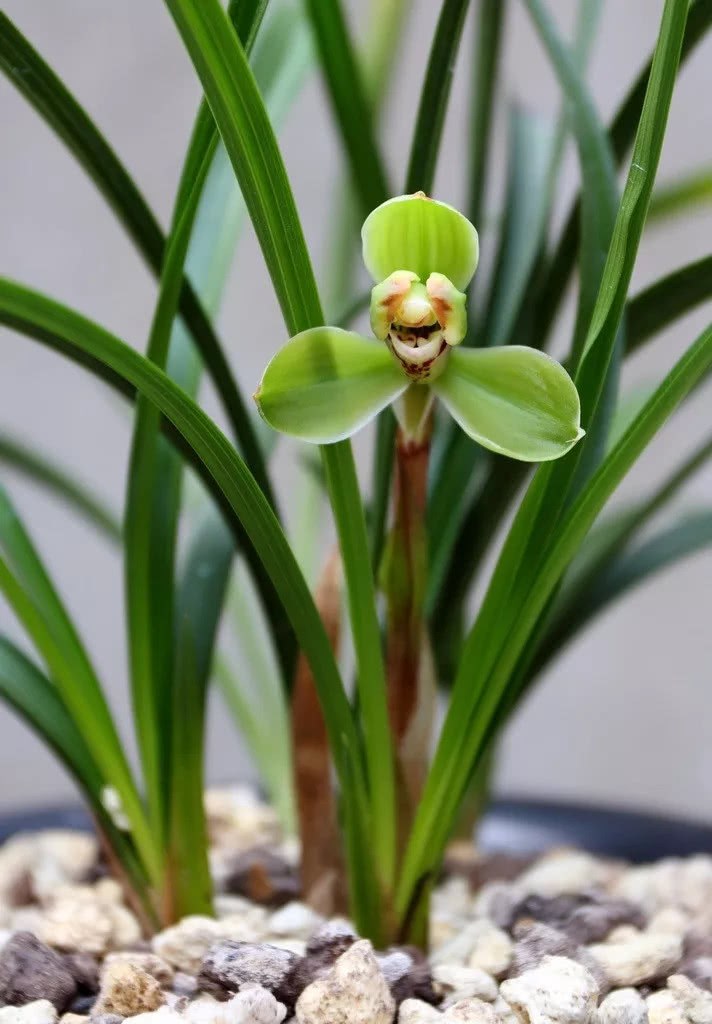
Orchid Appreciation Handbook Issue 2: A Full Breakdown of Advanced Appreciation Techniques
Cymbidium goeringii (Wanzi) After briefly discussing Western orchid culture, the term "foreign orchids" needs some explanation. "Foreign orchids" is not a professional term, but rather a word we created based on different cultural differences, so Chinese orchids...
条件筛选