Orchid Appreciation Handbook Issue 2: A Full Breakdown of Advanced Appreciation Techniques
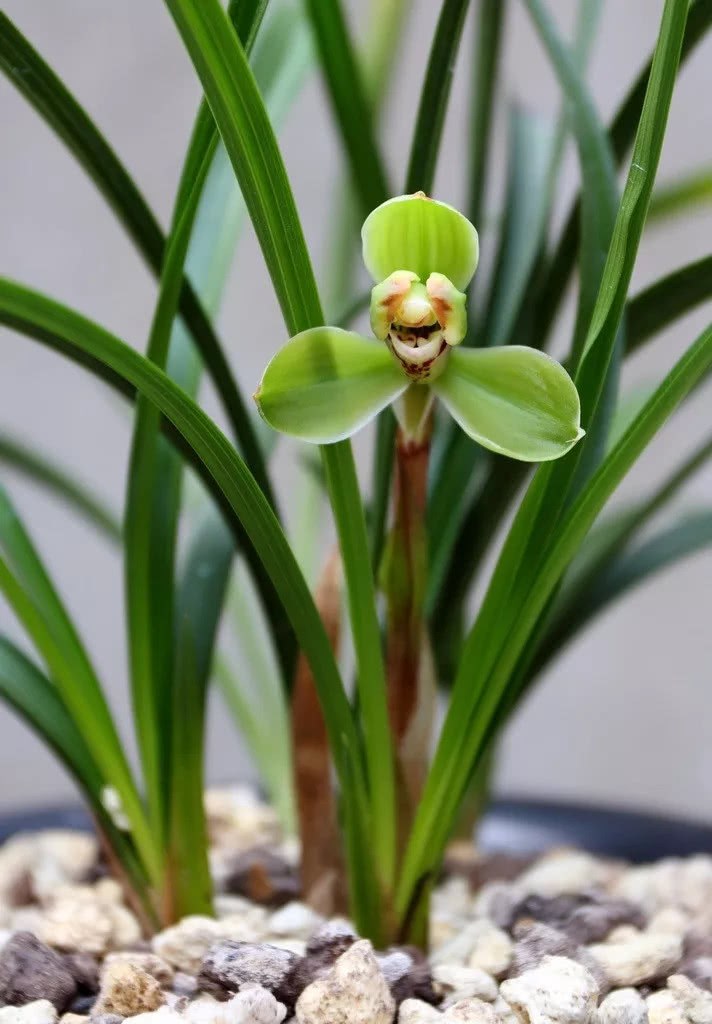
Cymbidium goeringii (Wanzi)
After briefly discussing Western orchid culture, the term "foreign orchids" needs some explanation. "Foreign orchids" is not a professional term, but rather a word we created based on different cultural differences, so Chinese orchids and foreign orchids are both a distinction in culture and aesthetics
Cymbidium faberi (Peony)
Today we are going to talk about Eastern orchid culture, which we call Chinese orchids. First of all, in ancient China, the orchid was called one of the Four Gentlemen, but was the orchid mentioned in ancient times necessarily the orchid we know today? Actually, not necessarily. Some modern scholars have verified that the "lan" of earlier times may have referred to Eupatorium of the Asteraceae family, rather than the Chinese orchids we speak of today
Cymbidium tortisepalum (Red Lotus)
Chinese orchids may only have a history of cultivation starting from the Tang and Song dynasties, because according to records in books, they were mentioned the most in the Song dynasty, and afterward spread to Korea, Japan and Europe, continuing to this day. Even though the culture is too ancient, it does not affect the culture of orchids at all. Today, the culture of Chinese orchids has become a kind of national memory and a spiritual sustenance
Cymbidium kanran (Zhongtouyi)
Today, the precious varieties of the past have long since entered the homes of ordinary people, and have been continuously scaled up and marketized
Cymbidium sinense
Chinese orchids usually also refer to terrestrial orchids: Cymbidium goeringii, Cymbidium faberi, Cymbidium ensifolium, Cymbidium kanran, Cymbidium tortisepalum, Cymbidium sinense, Cymbidium kanran, Cymbidium lianpan