-

How to Control Abnormal Growth in Garlic? A Detailed Guide to Practical Techniques
Abnormal growth in garlic mainly includes two types: secondary growth of garlic and onion-type garlic. Secondary growth, also known as the regrowth of degenerate leaves in garlic and commonly called "horsetail garlic," refers to the phenomenon where, at the same time the garlic scape emerges, a ring of small garlic leaves grows around the scape. These small leaves grow around the scape, while the growth point of the new cloves shows no sign of sprouting. This abnormal phenomenon means the garlic can neither be kept for seed nor eaten, severely reducing its marketability and economic value. The causes of secondary growth in garlic are mainly
-
A Preliminary Study on the Prevention Methods of Two Abnormal Garlic Conditions in Cangshan Garlic
Cangshan garlic is renowned worldwide for its large bulbs, thin skins, pure white and neatly arranged cloves, and its pungent, rich flavor, with excellent qualities such as aroma, pungency, and stickiness. In recent years, due to improper planting and management methods, two abnormal garlic conditions have appeared in Cangshan garlic production. One is that the garlic simultaneously produces small garlic leaves (commonly known as "little braids") when bolting, causing difficulties during the harvest of garlic scapes and affecting the yield and quality of garlic scapes. This condition accounts for 5%-10% of the total garlic. The causes are mainly two: one is excessive nitrogen fertilizer, and the other is the effect of low temperature.
-
Causes and Control Measures of Abnormal Leaf Color in Wheat Seedlings
After wheat is sown and emerges, various abnormal discolored seedlings often form due to the influence of natural conditions and cultivation practices. To facilitate management according to seedling condition and targeted treatment, they are described separately below. Causes of yellowing of leaves in yellow-leaf seedlings. First, soil drought. This situation mostly occurs in wheat fields with insufficient subsoil moisture or where moisture escapes through airy soil. Its characteristics are: slow tiller emergence, grayish-green leaf color, short and small central leaves, slow or stagnant growth (which farmers call "shriveled-heart seedlings"), gradual yellowing and withering of the middle and lower leaves, and few and fine roots. Key management points
-
Causes and Prevention and Treatment Methods of Abnormal Estrus in Dogs
I. Short estrus The estrus period of dogs is very short and difficult to observe, so the breeding opportunity is often missed. The reason may be that the follicles mature quickly and ovulate, shortening the estrus period, or the follicles suddenly stop developing and atrophy, terminating estrogen secretion. The exact cause of short estrus is still unclear. II. Interrupted estrus This is common in malnourished female dogs. Estrus starts and stops intermittently, and the estrus process lasts for a long time. The cause is also mostly insufficient luteinizing hormone secretion, causing alternating follicular development, thus producing
-
Chinese Honeylocust Abnormal Fruit
[Aliases] Xiaoyazao, Yazaojiao, Meizaojiao. [Source] The dried sterile fruit of the plant Chinese honeylocust (Gleditsia sinensis). [Medicinal material] The producing area is the same as that of Large Chinese Honeylocust Fruit. Harvesting and processing: harvested in autumn. Pick the sterile pods and sun-dry them. Characteristics: curved cylindrical, slightly flattened, pointed at both ends, resembling a crescent moon, 4-7 cm long, 0.7-1.2 cm wide at the middle, about 5 mm thick. The surface is purplish-brown to purplish-dark-brown, covered externally with a layer of white powdery bloom; when the bloom is wiped off it appears glossy, and fine longitudinal cracks are commonly seen; the ventral side has a raised ridge line,
-
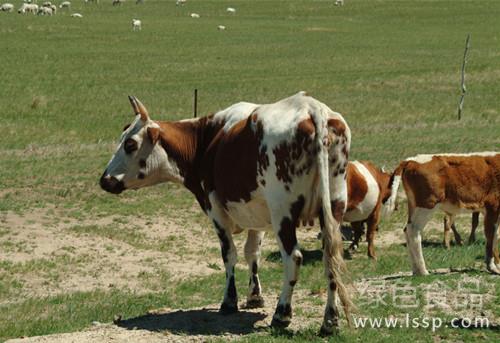
Prevention and Treatment Methods for Pica (Abnormal Appetite) and Indigestion in Cattle That Chew and Eat Foreign Objects
Prevention and Treatment Methods for Indigestion and Pica in Cattle That Chew and Eat Foreign Objects
-

Cause Analysis and Prevention Methods for Abnormal Wool Loss in Sheep
What to Do About Abnormal Wool Loss in Sheep
-
What to Do When Wheat Seedlings Show Abnormal Leaf Color? A Full Analysis of Causes and Solutions
After wheat is sown and the seedlings emerge, various abnormal discolored seedlings often form due to the influence of natural conditions and cultivation practices. To make it easier to manage according to the specific seedling condition and the specific cause, they are introduced separately below: Yellow-leaf seedlings - the causes of yellowing of wheat leaves. First, soil drought. This situation mostly occurs in wheat fields with insufficient subsoil moisture or where moisture escapes through cracks. Its characteristics are: tillers emerge slowly, leaf color is grayish green, the central leaf is short and small, growth is slow or stagnant (people call this "shrunken-heart seedlings"), the middle and lower leaves gradually turn yellow and dry up, and roots are few and fine. Management
-
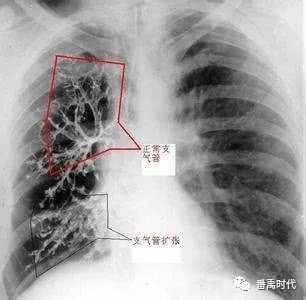
Abnormal lung development falls under the category of insufficient endowment in traditional Chinese medicine.
In Western medicine, abnormal lung development has many descriptions, such as lung agenesis, pulmonary hypoplasia, pulmonary sequestration, congenital bronchopulmonary cyst, hyperlucent lung, congenital pulmonary arteriovenous fistula, congenital pulmonary arteriovenous vascular anomalies, and so on. The lungs and...
-
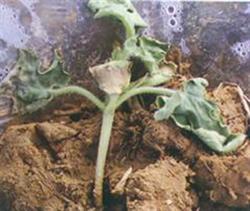
What to Do About Abnormal Watermelon and Melon Seedlings in Spring? A Full Breakdown of Solutions
1. Uneven emergence is mainly caused by uneven ground temperature and humidity in the seedbed. When laying heating wires, a spacing of 3-4 cm at the front edge of the greenhouse and 7-8 cm at the rear edge is advisable, so that the bed temperature is uniform; when large and small seedlings appear, move the large seedlings to the lower-temperature area at the front edge of the greenhouse, so that the young...
条件筛选