Abnormal lung development falls under the category of insufficient endowment in traditional Chinese medicine.
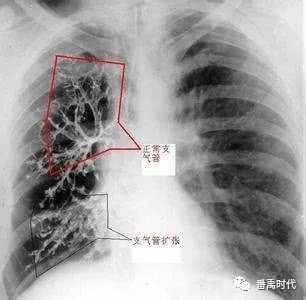
In Western medicine, abnormal lung development has many descriptions, such as lung agenesis, pulmonary hypoplasia, pulmonary sequestration, congenital bronchopulmonary cyst, hyperlucent lung, congenital pulmonary arteriovenous fistula, congenital pulmonary arteriovenous vascular anomalies, and so on. Congenital diseases of the lungs and the whole body's five zang and six fu organs, tissues and organs, etc., are collectively governed in traditional Chinese medicine under "insufficient endowment." That is, the results of poor development caused by inherent elements received from the mother's embryo and various influences during development are all called insufficient endowment in traditional Chinese medicine.
If both lungs fail to develop, then there is no treatment to speak of, because the infant will die shortly after birth due to being unable to breathe. That is, among abnormal lung development cases, if abnormalities in development exist in both lungs, survival is also difficult. Only when abnormal development exists in one lung is there time for rescue and treatment. Clinically, abnormal development of one lung has three types: first, lung absence; second, unilateral lung agenesis; third, pulmonary hypoplasia.
The most common form of lung absence is complete absence of the bronchus, lung and blood supply on the affected side; the most common form of lung agenesis is only a short blind-ending bronchial stump, with no lung tissue or blood supply on the affected side; the most common form of pulmonary hypoplasia is a narrowed main bronchus on the affected side and incomplete development of lung tissue, which may be limited to one lung lobe. Traditional Chinese medicine does not treat disease in a directly visual way, nor does it treat specific abnormal conditions, but rather treats according to macroscopic therapeutic methods such as regulating qi and blood, yin and yang.
All congenital abnormalities of the body are explained in traditional Chinese medicine as insufficient endowment, which refers to being constrained by the genetic foundation and the influence of internal and external environments during embryonic development, causing the fetus during development to form comprehensive and relatively stable characteristics in terms of morphological structure, physiological function, psychological state and metabolism. If phenomena of congenital deficiency and bodily weakness appear, then it is insufficient endowment, which is the internal cause. Endowment can also serve as a general term for all bodily characteristics.