-
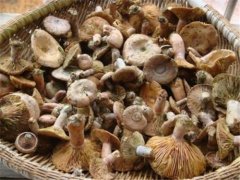
What to Do When Mushrooms Won't Sell? Mushroom Sales Channels and Ways to Find Buyers
Mushroom cultivation is already very widespread now, so when production is good but the mushrooms won't sell, what methods can we use to handle the mushrooms well? First of all, you need a market outlet; if there is no outlet for mushroom cultivation, do not blindly expand production. It is best
-
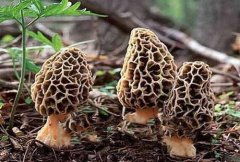
Who should not eat morel mushrooms? Raw-eating poisoning risks and main production areas
The morel mushroom gets its name because its shape closely resembles a sheep's stomach, so it is called morel. Wild morels are distributed in China's Shaanxi, Gansu, Qinghai, Tibet, Xinjiang, Sichuan, Shanxi, Jilin, Jiangsu, Hebei, Beijing, Hunan, Guizhou and other regions. Now
-
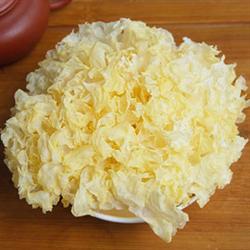
What season is suitable for cultivating white fungus (Tremella fuciformis), and what are the commonly used formulas?
What season is suitable for cultivating white fungus (Tremella fuciformis), and what are the commonly used formulas? Please give an introduction. Cultivating white fungus requires selecting a suitable cultivation period based on its biological characteristics and in combination with the climate environment of the cultivation region. Usually, inoculation and cultivation are arranged in spring from March to April and in autumn from September to October. If temperature can be regulated, it can be cultivated all year round....
-
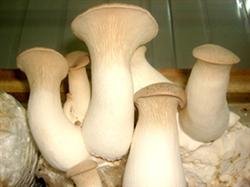
What is the suitable growing temperature for king oyster mushrooms?
Control the environment and try to keep the ambient temperature within the growing range; the growing temperature for king oyster mushrooms is 6°C to 25°C. At 6°C to 15°C, the fruiting body grows slowly, but its tissue is dense and its color is attractive, so high-quality mushrooms can be cultivated. For management during the bud stage, first increase ventilation, as only then can the cap growth be promoted and the stipe growth be inhibited...
-
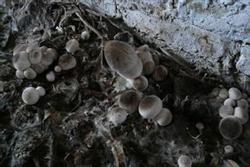
Several key techniques for high and stable yields in straw mushroom cultivation
1. Straw mushrooms prefer a high-temperature, high-humidity environment. After the compost is brought into the mushroom house, its moisture content must be strictly controlled, and over-aged spawn must not be used; keep the mushroom house temperature at around 30°C. 2. Because straw mushrooms are aerobic fungi, they need plenty of water; too much ventilation easily leads to water loss and death, while too little ventilation easily causes excess carbon dioxide and oxygen deprivation...
-

Two rare mushroom varieties suitable for summer and autumn cultivation
1. EC55 long-root mushroom (Oudemansiella radicata). Its fruiting body is tall and upright, beautiful and attractive, shaped like an open sun umbrella, with a cap (pileus) 8-15 cm wide, light coffee-colored, and a stalk (stipe) 20-55 cm tall, 1-2 cm thick, white to light brown, with white flesh, fine and delicate texture, crisp and tasty stalk, and delicious flavor. It has high nutritional and medicinal value, rich in protein, amino acids, carbohydrates, vitamins and various mineral elements. Regular consumption can strengthen the body and boost human immunity, and for patients with high blood pressure
-
Which edible mushroom varieties are suitable for cultivation in autumn and winter?
In autumn and winter, as mid-to-late rice, corn, cotton and sugarcane are harvested, not only is space and labor freed up for developing edible mushrooms, but waste materials such as straw, cottonseed hulls, bagasse, corn cobs and mixed wood shavings are also good raw materials for cultivating edible mushrooms. Therefore, autumn and winter are among the best periods for developing edible mushrooms. The button mushroom, commonly known as the mushroom, can be cultivated in open fields using mid-to-late rice paddies. Wheat straw, corn stalks, rice straw and thatch leaves can be used as raw materials; from composting to fruiting takes about 50 days.
-
Detailed Explanation of High-Yield and Stable-Yield Cultivation Techniques for Tea Tree Mushroom
Tea tree mushroom has a certain cultivation area in Gaochun, Jintan and other places, but in recent years, affected by resources, technology, market and other factors, the cultivation area of tea tree mushroom has continued to decrease. From a technical perspective, the main factors affecting the high and stable yield of tea tree mushroom are: first, strain degeneration. The breeding work of tea tree mushroom is relatively lagging, the source of strains is single, and obvious degeneration has occurred. Second, the formula is unreasonable. In tea tree mushroom production, the substrate formula is highly arbitrary, especially the proportion of nitrogen nutrition is not properly grasped, which seriously affects the yield of tea tree mushroom. Third, the finished bag rate is low. Tea tree
-
Adding table salt to oyster mushroom substrate can increase yields
In oyster mushroom cultivation, using carbendazim to control contamination by foreign fungi is effective, but pesticide residues remain in the mushrooms, which is harmful to human health, and the cost is relatively high. According to experiments: when cultivating oyster mushrooms on raw substrate, adding 1.5 kg of table salt per 100 kg of dry substrate (dissolved in advance in a measured amount of water) and mixing thoroughly can prevent infection by foreign fungi and also bring mushrooms out 5-7 days earlier. At the same time, because table salt is rich in sodium, calcium, magnesium and other metal ions needed for oyster mushroom growth, if a 10% salt solution is sprayed in the early stage of fruiting body differentiation and after each flush is harvested, the mushrooms can be free of pesticide residues and their quality
-
Fresh mushrooms are available in all four seasons. How is that achieved?
In Yangpingsi Town, Zoucheng City, Shandong, fresh mushrooms can be eaten all year round, because the mushrooms here all grow in special mushroom houses. Mushroom houses fitted with shade nets can extend the harvest period of button mushrooms (Agaricus bisporus) into summer. And the mushroom houses kept tightly sealed even in the heat of summer are meant to let straw mushrooms (Volvariella volvacea), which love high temperatures, come to market 2 months earlier. Mushroom houses fitted with air conditioning are meant to maintain a constant temperature and humidity, so that enoki mushrooms (Flammulina velutipes) grow like chives - after one crop is cut, another crop follows. Through technological means, the north-south differences in edible fungus cultivation have been changed, and its
条件筛选