-
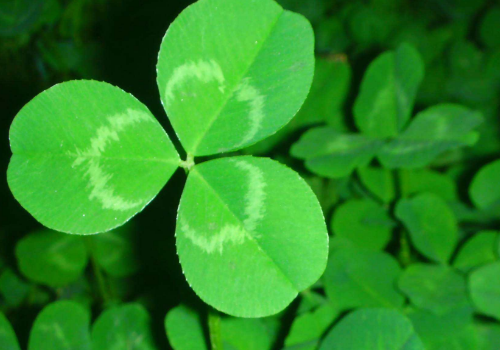
How do you plant clover seeds, and what is the difference between clover and four-leaf clover?
Clover is a kind of plant that many people know. It is quite pretty, and you can grow a whole patch of it. So how do you plant clover seeds? And what is the difference between clover and four-leaf clover: How to plant clover seeds: 1. Sowing and seed treatment. The best time to sow white clover is in spring and autumn.
-
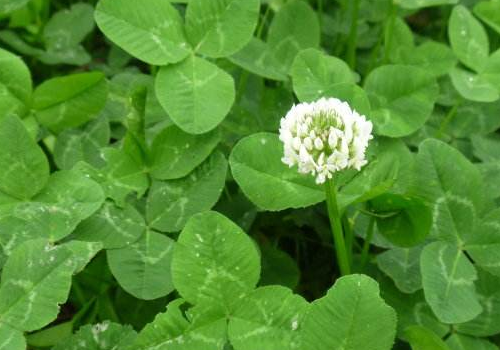
How to plant white clover seeds? A detailed explanation of the difference from shamrock
White clover is one of those plants that a huge number of people love; simply put, it is shamrock. So how do you plant white clover seeds? And the difference from shamrock: How to plant white clover seeds: sowing time, both spring and autumn work, you can sow it alone or in a mix
-
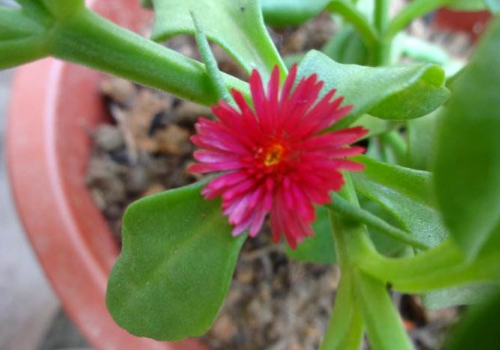
What to Do About Root Rot in Heartleaf Ice Plant? Detailed Explanation of Its Differences from Panax notoginseng
Panax notoginseng is a very precious medicinal herb in China, and it looks somewhat similar to the heartleaf ice plant. What should be done about root rot in the heartleaf ice plant? And what are the differences from Panax notoginseng: What to do about root rot in the heartleaf ice plant: pruning during the winter dormant period. Entering winter, the heartleaf ice plant enters its dormant period, and the leaves stop growing.
-
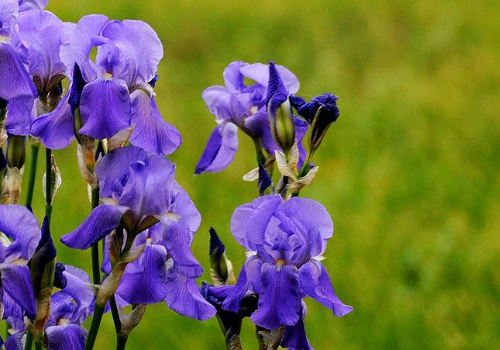
How many years does it take for German iris to bloom? A detailed explanation of the differences from iris
German iris, this is also a kind of plant, it really looks beautiful when it grows, and the flowers it produces are blue. So how many years does it take for German iris to bloom? And the differences from iris: How many years does it take for German iris to bloom: German iris generally blooms in the second year after planting. It blooms in April and May.
-

What is the difference between Solomon's seal (Yuzhu) and Siberian Solomon's seal (Huangjing)? A quick guide to tell the two apart
Yuzhu is the dried rhizome of Polygonatum odoratum, a perennial herb of the genus Polygonatum in the Liliaceae family. It was first recorded in the Shennong Bencao Jing, where it was listed as a top-grade drug under the original name Nülou. The Mingyi Bielu calls it Weirui, and in Hunan it is also called Weishen. Huangjing was first recorded in the Mingyi Bielu and listed as a top-grade drug. There are many botanical sources; broadly speaking, the commercial drug can be divided into two types: chicken-head Huangjing and ginger-shaped Huangjing. Chicken-head Huangjing is the dried rhizome of Polygonatum sibiricum, a few Polygonatum macropodum, and Polygonatum stenophyllum, all perennial herbs of the genus Polygonatum in the Liliaceae family; ginger-shaped Huangjing is the dried rhizome of Polygonatum kingianum, Polygonatum cyrtonema, and Polygonatum cirrhifolium, all perennial herbs of the genus Polygonatum in the Liliaceae family.
-
What is the difference between water pinellia and dry pinellia?
Dry pinellia and water pinellia are both pinellia, and the two are mainly distinguished by the shape of the tuber. The tuber of dry pinellia is spherical or oblate, 0.5-4 cm in diameter, with the bottom and lower half pale yellow, and the bottom or side of the tuber has a "scar" occupying one-third or one-fifth of the tuber surface. Water pinellia has a pointed bottom, shaped like an arrowhead, so water pinellia is also called "arrowhead". Dry pinellia is a "sphere" and water pinellia is a "cone", so the shapes are very easy to distinguish.
-
What is the difference between Panax notoginseng and Gynura segetum? This article teaches you to tell them apart
Also known as red-backed sanqi, soil sanqi, and blood-breaking elixir. The source is the root of the Asteraceae plant Gynura segetum (Lour.) Merr. Plant morphology: perennial herb, 1-1.5 m tall. Stem erect, somewhat succulent, with fine longitudinal ridges. Basal leaves clustered, spoon-shaped, entire or serrate or pinnately divided, purple-green beneath; cauline leaves alternate, oblong, 10-25 cm long, 5-10 cm wide, pinnately divided, lobes ovate to lanceolate, margin shallowly
-
What are the differences between Panax notoginseng and Anredera cordifolia
Anredera cordifolia: The dried tuber of the Basellaceae plant Anredera cordifolia (Boussingaultia gracilis Miers var. pseudobaselloides Bailey). After processing and brief boiling, it is used to counterfeit Panax notoginseng. The medicinal tuber is irregularly spindle-shaped or subcylindrical, some slightly flattened, slightly curved. 3-8 cm long, 1-3 cm in diameter. The whole surface bears numerous wart-like protruding buds and circular scars from breakage. The surface is grayish-brown, with curved longitudinal wrinkles and a few
-
What is the difference between the potato ladybird beetle and the 28-spotted ladybird beetle?
The potato ladybird beetle and the eggplant 28-spotted ladybird beetle are very similar in morphology. As soon as the potato sprouts, adults and larvae gather on vigorous plants to feed on the leaves and cause damage, overwintering as adults. Around April, the overwintered adults lay eggs in the field, and they emerge in July. In spring-planted areas, there is 1 generation per year. The larvae and adults of the 28-spotted ladybird beetle damage the leaves of vegetables such as eggplant, potato, tomato and cucumber, causing wilting. The larvae live on the underside of leaves. In warm regions, the adults have 2 to 3 generations per year, overwinter as adults, and generations overlap. After overwintering, the adults gather
-
What is the difference between the two rice diseases? Explained clearly in one article
In recent years, bacterial brown spot of rice has shown a trend of relatively severe occurrence in some rice areas of our province. Most farmers mistakenly treat this disease as rice blast, which both increases costs and fails to achieve good results. For this reason, the two diseases are specifically distinguished below. 1. Symptoms. The symptoms of bacterial brown spot of rice are that reddish-brown small spots first appear on the upper leaves of the rice starting from the leaf tip and leaf edge, then expand into spindle-shaped, long oval, or irregular strip-like streaks, gradually spreading to the entire leaf, causing local necrosis of the leaf, with no bacterial ooze visible
条件筛选