-
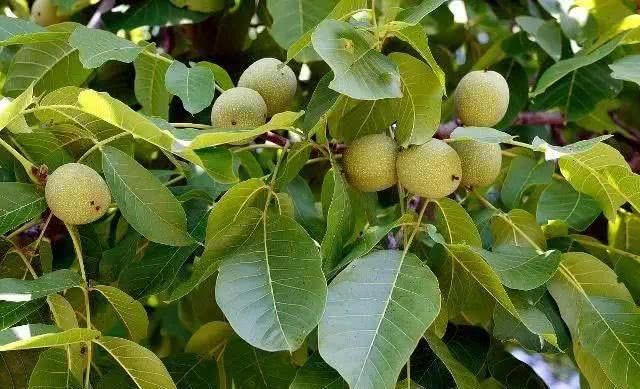
Walnut trees can now bear fruit in just two years, and with good planting, a bumper harvest every year
When I was little, I always thought the walnut tree was a rather magical tree, because not many people in our area grew walnut trees. When I was at school, my deskmate said that a walnut growing well on the tree still has a layer of green skin, and I thought that was especially magical, so I went home and asked my father...
-
A Detailed Guide to Identifying and Controlling Walnut Tree Diseases
Pruning walnut trees while the branches are dormant causes wounds on the branches that bleed sap, leading to a serious loss of nutrients from the tree, weakened vigor, and dieback of branches. To prevent sap bleeding caused by pruning walnut trees, you should know the right pruning period and prune at the proper time. In spring, after the branches and leaves of the walnut tree have sprouted and the leaves have unfurled, this...
-

Methods for protecting walnut trees from the cold in winter: good management for a safe overwintering
Ways to protect walnut trees from the cold
-
How to Spray Foliar Fertilizer on Walnut Trees for the Best Results
How Should Walnut Trees Be Managed in July and August? Please Give Guidance. The management methods for walnut trees in July and August can refer to the following: 1. Water and Fertilizer Management. For trees that have already set fruit, the fruit size has basically stabilized by July and they enter the shell-hardening stage. During this period, no artificial watering is needed. Excessive soil moisture will cause the shell to become mottled white and the fruit tip to...
-
What are the key management techniques for walnut trees in June?
How should walnut trees be managed in June? Please provide an introduction to the management methods. June is the most suitable time for walnut tree growth, but it is also the main period when pests and diseases occur and cause damage. Therefore, doing a good job of management in June is the key to promoting robust tree growth and increasing yield that year. There are four specific management points: management of grafted trees...
-
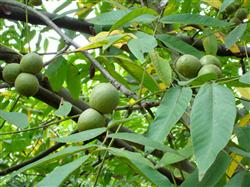
What are the common late-season fruit diseases of walnut trees?
What diseases affect walnut tree fruit in the late season? The following diseases affect walnut tree fruit in the late season: 1. Walnut anthracnose. Disease symptoms: after the fruit is infected, brown to dark brown round or nearly round lesions appear on the rind, with a sunken center and small black dots, sometimes forming concentric rings. When air humidity is high, the lesions bear...
-
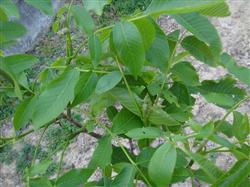
What issues should be noted in walnut tree cultivation?
What issues should be noted in walnut tree cultivation? Please provide an introduction. The following issues should be noted in walnut tree cultivation: Walnuts are widely distributed naturally in China, from southern Liaoning in the north, to northern Fujian in the south, to Shandong and Zhejiang in the east, and to Qinghai, ** and even Sichuan in the west. They can grow normally at altitudes of 500m-2500m...
-
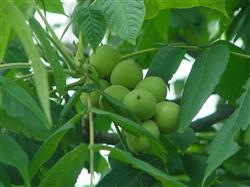
What are the key technical points for summer management of walnut trees?
How to manage walnut trees well in summer? Here are the methods. In summer, walnut new shoots grow fastest and physiological activity is strongest; this is the period with the highest survival rate for bud grafting and the most critical time. Pests such as the yellow slug moth, the walnut fruit moth (walnut black), the walnut yellow weevil, the cloud-banded longhorn beetle, the gypsy moth and the walnut tuft moth begin to emerge and lay eggs. Rot disease...
-
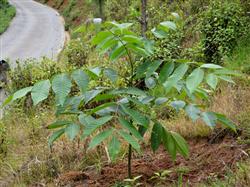
How do you prune a walnut tree? Detailed pruning methods and techniques
How do you prune a walnut tree? Please explain the methods. Walnut tree pruning methods generally vary with tree age; for details, refer to the following: 1. Pruning young trees: this should vary according to the growth and development characteristics of each variety, mainly cutting out weak branches, crossing branches, overlapping branches, parallel branches and diseased branches, in order to...
-
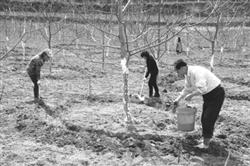
What are the key technical points for managing walnut trees in autumn and winter?
How should walnut trees be managed well in autumn and winter? Please give guidance. Autumn and winter management of walnut trees mainly includes soil, fertilizer and water management, as well as pruning and freeze protection. For detailed operations, you can refer to the following methods: Soil, fertilizer and water management for walnut trees in autumn and winter: For non-bearing trees, after leaf fall and before the soil freezes, deep-till the soil and build tree basins, generally to a depth of 20-25 cm. The base fertilizer should mainly be decomposed organic fertilizer, with an application rate of 25-50 kg per tree, and 2-5 kg of superphosphate can also be added. When fertilizing, the ring trench method can be used, that is, dig a ring-shaped trench 20-40 cm wide and about 30 cm deep around the outer edge of the canopy, placing topsoil and subsoil separately. After digging, put the fertilizer in, then fill in topsoil and mix evenly, and finally fill in an appropriate amount of subsoil to level with the original ground surface.
条件筛选