Walnut trees can now bear fruit in just two years, and with good planting, a bumper harvest every year
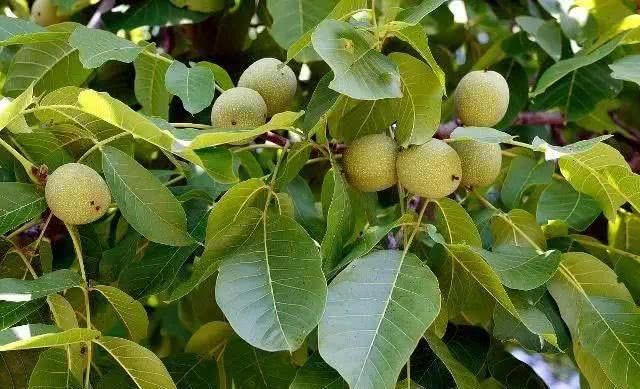
When I was little, I always thought the walnut tree was a rather magical tree, because not many people in our area grew walnut trees. When I was at school, my deskmate said that a walnut growing well on the tree still has a layer of green skin, and I thought that was especially magical, so I went home and asked my father why our family did not plant one. My father said walnut trees do not bear fruit easily, unlike our persimmon tree, which gives us something to eat every year.
From this you can also see that walnut trees do not bear fruit easily, and they need to grow for quite a few years before entering the fruiting stage. But now this is no longer a problem, because by grafting early-fruiting walnut varieties, they can bear fruit within three to five years.
If you want to plant walnuts, you first need to understand the growing habits of the walnut tree.
Walnut trees grow in most parts of our country, with more planted in the south, because walnut trees prefer a warm growing environment and are afraid of frost. They like fertile sandy soil with deep soil layers. They generally grow mostly in mountainous and hilly areas. Generally, walnut trees begin to bloom around May each year, and can be harvested around October each year.
I do not know whether you are planting a walnut tree at home or want to plant on a large scale. Here Science Xingnong will first talk about growing walnut trees at home.
Planting a walnut tree in the courtyard is indeed a good choice. Walnut trees can grow very tall; generally, a walnut tree that has grown for eight or nine years can reach four or five meters tall, and its canopy is very large, so it can also provide shade in summer, making it very suitable for courtyard planting.
Generally, walnut trees are transplanted in spring or autumn. When buying a walnut tree, ask the seller clearly whether it is an early-fruiting walnut, because if it is not an early-fruiting walnut, you will have to wait seven or eight years and still have no walnuts to eat. Then the tree should be well grown, robust, and free of disease.
The planting site must not be low-lying; it is best to have slightly higher terrain, which is beneficial for the growth of the walnut tree. When planting, do not plant too deep, and do not damage the roots. Planting too deep can easily make it hard for the walnut tree to grow vigorously later on. After planting, water thoroughly; generally, in about a month the walnut tree will have established its roots.
In normal care, there is no need to water too frequently; once every two weeks or so is fine, watering thoroughly each time. It is best to spray the walnut tree with some insecticides and fungicides at intervals to prevent pests and diseases in the fruit tree. Generally, if you buy an early-fruiting walnut variety, you can usually see a small amount of fruit in the second year of planting.
Below, I will briefly talk about the points to note when planting walnut trees in an orchard.
First, choose a suitable walnut tree variety according to the actual situation of the planter. The most suitable transplanting time is around November each year; during this period the weather turns cooler and the walnut tree enters dormancy, so root damage is relatively small and the recovery time is longer.
The size of the tree pit is very important. Generally, the tree pit is about one meter in diameter and about 80 cm deep. Add sufficient base fertilizer into the pit; generally about 20 kg of farmyard manure is needed, as well as about 2 kg of phosphate fertilizer, then add matured soil and place the sapling in. Cover with firm soil and water thoroughly. After planting, what remains is the management of the orchard, which will not be described here.
This is Science Xingnong. You are welcome to add a follow and learn together with me.
The original copyright of this article belongs to the Science Xingnong account, and infringement will be pursued.