-
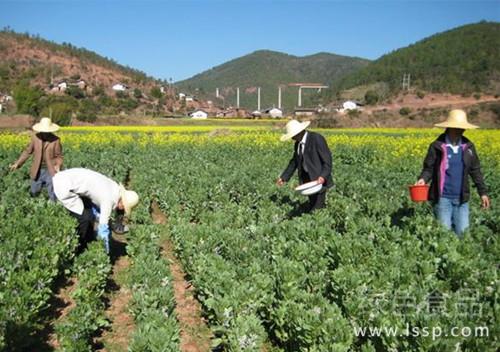
The flowering stage of broad beans is the peak period of fertilizer demand: understanding the fertilizer demand pattern and fertilization methods
The flowering stage is the peak period of fertilizer demand for broad beans: fertilizer demand pattern and fertilization methods for broad beans
-

How to grow hyacinths? Understanding their ecological habits and growing environment requirements
Ecological habits of hyacinths. Hyacinths prefer a sunny and fairly moist environment, and require well-drained, fertile sandy loam. They are relatively cold-tolerant; in regions with fairly warm winters, they root in autumn, new shoots emerge in early spring, they bloom in March, the fruit ripens in late May, and the above-ground parts wither in early June and enter dormancy.
-
What Is Plant Grafting? Understanding Grafting Principles in One Article
Grafting: The advantage is that it allows you to obtain varieties with excellent genetic traits. Grafting is the process of joining the branch or bud of one plant onto the stem or root of another plant. The former is called the scion, and the latter is called the rootstock or stock. The scion generally uses a seedling with 2 to 4 buds.
-
How Do You Propagate Marigolds? Understanding Propagation Methods in One Article
The marigold, which carries an auspicious meaning, has long been regarded as a flower of respect for the elderly. Native to Mexico, it is not demanding about soil and does best in fertile, well-drained sandy loam. It prefers a warm, humid environment with plenty of sunlight. Seed propagation is the main method, though cuttings can also be used. Let's take a look below.
-
Where Is the Place of Origin of the Peanut? Understanding the Cultivation History of Peanuts in One Article
The peanut is a nut with abundant yields and widespread consumption in China, also known as the groundnut, the "longevity fruit," and the earth bean, among other names. It is an annual herbaceous plant of the order Rosales and the family Fabaceae (Leguminosae), best planted in warm climates with moderate rainfall in sandy soil areas, and is mainly distributed in Brazil, China, Egypt, and other places.
-
What are the methods for growing sunflowers? Understanding the key cultivation points in one article
I. Sowing Before sowing the seeds, you should cover the seeds with a wet paper towel for about 1 to 2 days; this is called sprouting. Once the sprouts have formed, you can begin sowing. Because sunflower seeds are relatively small and cannot push up too much soil, when sowing, poke a few holes with your finger that are not too deep and place the seeds in.
-
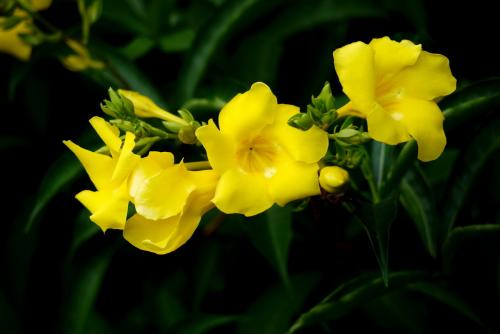
How to Propagate Yellow Oleander? Understanding Propagation Methods in One Article
The first method - sowing. First, collect the seeds of yellow oleander, but the seeds of yellow oleander do not store well, so it is best to sow them right after collecting. The second method - layering. Choose a branch close to the ground, then cut the branch and press it into the soil.
-

Is snapdragon poisonous? Understanding its medicinal benefits and the risk of death from accidental ingestion
Snapdragon - hearing this name, many people might think it is a grass fed to goldfish, but it is actually just a plant that looks like a goldfish. Besides being attractive, the benefits and effects of snapdragon are astonishing: it can not only be pressed to produce nutrient-rich oil, but also has very good therapeutic effects on bruises and sprains. Even so, some people say snapdragon is poisonous
-
How to control broad mites in greenhouses and sheds? Understanding the occurrence pattern is key
In greenhouse fruit and vegetable production, curled and shrunken growing points of plants, deformed and cracked fruits are often seen, causing serious losses to production. Because the temperature and humidity inside the greenhouse are very suitable for the growth and reproduction of broad mites, and fruit vegetables are their main targets, and the mites are extremely small and invisible to people, timely control is impossible. Therefore, in recent years, the area of occurrence and damage has been growing larger and larger, which should attract great attention from producers. Broad mites belong to the class Arachnida, order Acariformes, family Tarsonemidae, and are harmful microscopic pests. They mainly damage cucumbers, eggplants, and tomatoes among greenhouse vegetables.
-
How Is Yellow Tea Produced? Understanding the Origins of Yellow Tea in One Article
The basic process for green tea is fixation, rolling, and drying. When the green tea processing technique is not properly controlled - for example, if after fixation the leaves are not spread to cool and rolled in time, or after rolling they are not dried or pan-fired in time and are left piled too long - the leaves turn yellow, producing yellow leaves and a yellow brew, similar to the yellow tea that appeared later. Therefore, the emergence of yellow tea evolved from improper green tea processing methods. Xu Cishu of the Ming Dynasty recorded this history of evolution in his "Tea Commentary" (1597).
条件筛选