-
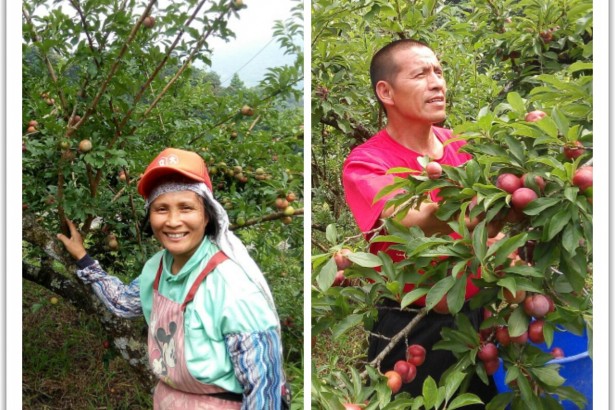
Atayal warrior's "turtle spirit" grows organic red-fleshed plums
Atayal warrior's "turtle spirit" grows organic red-fleshed plums
-
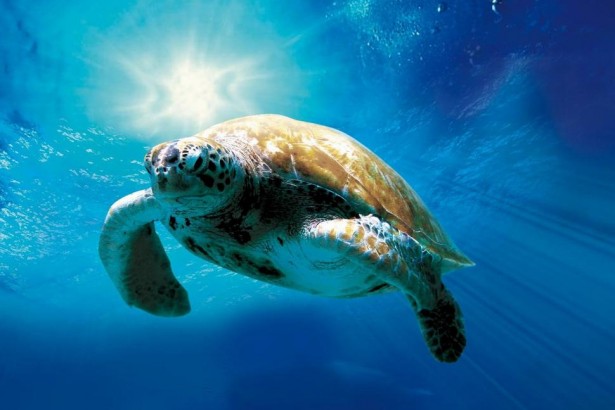
Sea Turtle Film Exhibition, waiting for you to visit from 520 to 523
[520 I love you, 523 I love turtles]Sea Turtle Film Exhibition, waiting for you to soar
-
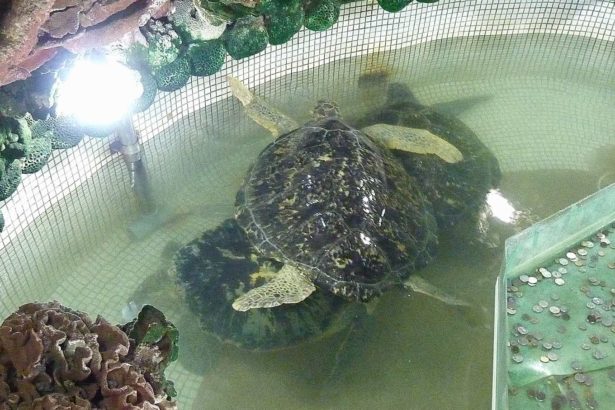
Sea turtles imprisoned in the basement of Penghu Dayi Temple used as a wishing pool, involved in cruelty - what comes of wishing upon a suffering creature?
Sea turtles imprisoned in a basement as a wishing pool, Penghu Dayi Temple involved in cruelty: "What comes of wishing upon a suffering creature?"
-

-

Methods for determining drug dosage in soft-shelled turtle (Pelodiscus sinensis) farming
1. Determination of dosage for external-use drugs (1) Determine the drug concentration to be used (ppm) based on the safe concentration of a certain drug for soft-shelled turtles and the lethal concentration of the drug against pathogens. (2) Accurately measure the volume of the turtle pond or determine the volume of water for immersion bathing. Calculation method for water volume: water volume (m^3) = area (m^2) x average water depth (m). (3) Calculate the drug dosage: dosage (g) = concentration of the drug to be used (ppm, i.e., g/m^3) x water volume (m^3). 2. Internal
-
Construction Methods and Technical Points for Soft-Shelled Turtle Ponds
1. Hatchling turtle pond: Those from just hatched to under 10 grams are called hatchlings. The pond area is 2 sq m to 8 sq m, rectangular, with a depth of 0.3 m to 0.4 m. The water depth is maintained at 0.1 m to 0.15 m, the pond bottom is covered with fine sand, and a shade shed 1 to 1.5 m above the top of the pond is built over it. Resting platforms about 20 cm wide need to be built at both ends. At the junction of the resting platform and the water surface, build a 30° slope so they can climb up and down. 2. Juvenile turtle pond: Those weighing about 10 grams to 100 grams are called juveniles. The pond area is 20 sq m to
-
What practical cold-proof measures are there for fish and soft-shelled turtle farming
1. Pond selection Choose a deep-water (over 2 m) pond sheltered from the wind and facing the sun for natural overwintering. The water in the overwintering pond should not remain stagnant for long periods; usually replace part of the pond water every 20 to 30 days, each time replacing 1/4 to 1/5 of the total pond water, to prevent pond water contamination. 2. Set up windbreak walls and cold-shelter holes On the north side of the pond, a 2 m high windbreak barrier can be built with straw or earth, and on the east and west sides build earthen walls sloping toward the south, forming a winnowing-basket shape, to reduce attacks by the north wind, so that when a cold wave strikes the water temperature will not drop noticeably. Around the pond, drainage
-
Detailed Explanation of Key Technical Points for Disease Prevention and Control in Soft-Shelled Turtles
In zoological classification, the soft-shelled turtle belongs to the phylum Vertebrata, class Reptilia, order Testudines, family Trionychidae, genus Pelodiscus. It has strong adaptability to the external environment and great vitality, and is distributed across temperate and subtropical regions worldwide, as well as commonly found throughout China. The soft-shelled turtle is an amphibian that breathes with its lungs, mainly living in water, occasionally coming ashore to rest, or swimming to the water's surface with its head extended above the water to breathe. The ecological habits of the soft-shelled turtle are characterized by three likes and three fears. First, it likes quiet and fears disturbance; second, it likes sunlight and fears wind; third, it likes cleanliness and fears dirt. The soft-shelled turtle is naturally timid,
-
What are the treatment methods for a cold in adult golden coin turtles?
Clinical symptoms: The appearance seems no different from a normal turtle. The main signs are rapid breathing in the sick turtle, and in severe cases the mouth opens 4 times every 5 minutes, resembling a cough, after which the head droops weakly down to the bottom of the rearing container, and feeding stops. Cause: Caused by temperature differences, especially about 2d after a rainstorm strikes golden coin turtles that are basking, when this disease begins to be found; it is actually an upper respiratory tract infection caused by a cold. Injection method: Intramuscular injection, at the base of the hind limb. On days 1-3, use DK 200,000 IU/kg
-
Detailed Explanation of Prevention and Treatment Methods for Common Diseases in Turtles
Turtles have strong vitality and disease resistance, and suffer from relatively few illnesses. However, under artificial rearing conditions, various diseases can sometimes occur due to the influence of multiple factors such as rearing site, temperature, and feed. Therefore, routine observation is necessary, and once abnormalities are found, timely and targeted treatment should be applied to avoid economic losses. The following is an introduction to the prevention and treatment methods for common turtle diseases summarized over 10 years by Jiang Zhanglin, the "Turtle Farming King" at Longtouge Animal Farm in Yuanhua Town, Haining City, Zhejiang Province: 1. Trauma and Inflammation. Due to the rough surface of the rearing pond
条件筛选