Ecotourism on Sipadan Island
Sipadan Island is a small island off the east coast of Sabah, Malaysia (less than 5 hectares in area). It was declared a bird sanctuary as early as 1933, and because of the large number of sea turtles in the area, a sea turtle nature reserve was established in 1964. However, even after being established as a protected area, due to the lack of economic benefits and weak law enforcement, before the development of ecotourism, local residents made a living by fishing and collecting sea turtle eggs. After 1983, driven by private operators, it gradually became a diving destination.
After becoming a diving destination, in order to maintain tourist safety, naval and police forces entered the area, bringing the previously illegal blast fishing and trawling under regulation. The fish and sea turtle populations in the surrounding waters gradually recovered, but the influx of tourists and the wastewater from resorts built in response changed the surrounding ocean water quality, with visibility dropping from the original 60 m to 20-30 m. To sustain marine resources, the Malaysian government issued a strong directive in January 2005 for all resorts on the island to withdraw from Sipadan Island, and further restricted visitor access to the island (tourists must stay on nearby islands and then take small boats to the local waters for diving activities), with the number of daily divers also set at a limit of 120.
Under these drastic controls, the marine ecology was maintained, but this was accompanied by the unemployment problem of local residents. On the one hand, the Malaysian government compensated local residents for their loss of livelihood through compensation payments; on the other hand, it began establishing Sabah Marine Park and guiding residents to change occupations to become patrol officers and diving ecological surveyors. In order to internalize the external value of the environment into identification with the environment, the Malaysian government set up marine education groups and clean-up groups (kampung clean-ups) in local schools, encouraged residents to participate in the planning of the marine park, and aimed to apply for World Heritage status in order to unite local people's environmental awareness.
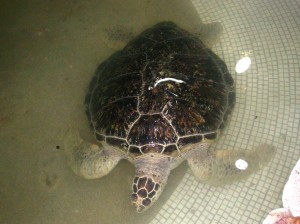
In addition, to protect sea turtle reproduction, the Malaysian and Philippine governments cooperated to designate 3 small islands extending from the southern Philippines to the waters northeast of Sabah: Selingan, Gulisan and Bakkungan Kecil, as the Turtle Islands Heritage Protected Area (TIHPA), beginning conservation research such as turtle egg incubation and tagging and tracking, and working with local organizations to carry out patrol work at sea turtle nesting sites.
Because the environment has been properly maintained, even though reaching Sipadan requires a complex and lengthy three-stage transfer process by plane, taxi and yacht, divers still come in an endless stream. For archipelagic countries, the tourism industry is a major source of income, and its benefits are even far greater than the economic benefits brought by fisheries. According to foreign experience, on average one kilometer of coral reef can bring at least 1 million USD in tourism revenue to the local area each year (the average annual household income in Sabah is 1,300 USD). However, whether marine tourism development succeeds still ultimately depends on the maintenance of the marine environment.