Sea turtles imprisoned in the basement of Penghu Dayi Temple used as a wishing pool, involved in cruelty - what comes of wishing upon a suffering creature?
Dayi Temple in Zhuwang Village, Xiyu Township, Penghu County, is the only temple in the country legally permitted to keep sea turtles, but after gathering evidence, the domestic animal protection group the Taiwan Animal Society Research Association (abbreviated as "Dongshe") pointed out that the temple has failed in its duty to treat the animals well. For thirty years it has kept more than a dozen sea turtles in a sealed basement deprived of daylight and with a harsh environment, put them on public display for people to visit, and even turned the pool into a "wishing pool," inducing tourists to toss coins into it, causing heavy metal contamination in the sea turtles' bodies.
The display permit for Dayi Temple's sea turtles is about to expire at the end of this month (November), and Dongshe held a press conference today (the 29th), calling on the government to intervene and handle the matter as soon as possible, and saying that the Penghu County Government should not issue a display permit until Dayi Temple genuinely improves the keeping environment and space. In response, the Ecology Conservation Section of the Penghu County Agriculture and Fisheries Bureau, the responsible unit, replied that in recent years it has arranged for veterinarians to regularly conduct health checks on the sea turtles at Dayi Temple, and that the test reports show everything is fine and the environment also meets standards.
Dayi Temple held the sea turtles before the Wildlife Conservation Act took effect in the 78th year of the Republic of China (1989). Their source was local fishermen who accidentally caught them and then transferred them there. Because the temple and villagers believed the sea turtles could protect fishermen's safety at sea, they kept them in the temple for many years. After the law was amended in the 83rd year of the Republic of China (1994), keeping protected species required registration according to law, and public display also required applying to the county or city government for a permit each year. The Penghu County Government has issued permits to Dayi Temple every year to date, allowing these sea turtles to be publicly displayed.
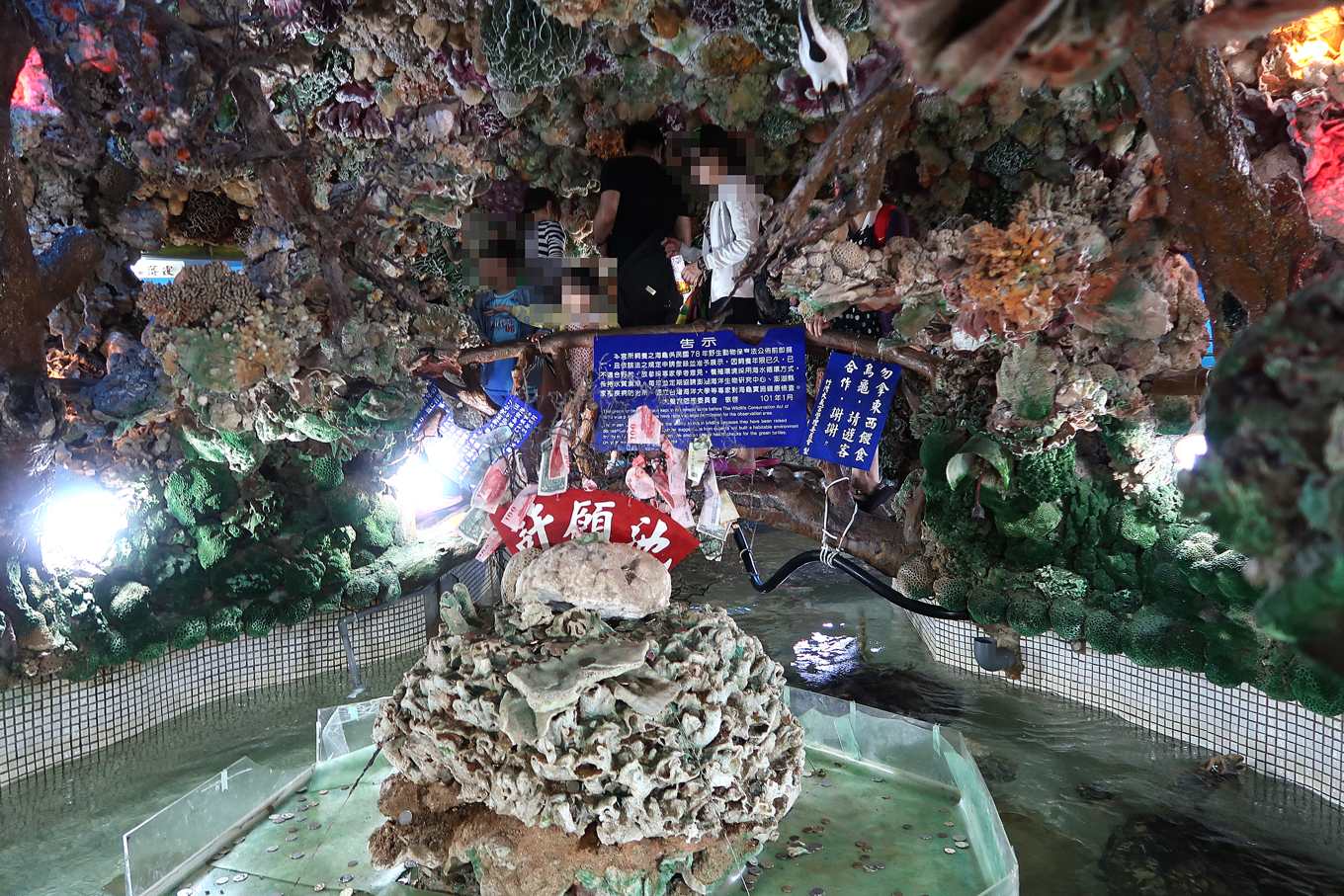
Members of the public:"What comes of wishing upon a suffering creature?"
Members of the public concerned about sea turtle conservation also attended the press conference in support. Member of the public Li Zhenchun said that four years ago he visited Penghu Dayi Temple and personally witnessed several sea turtles squeezed into a narrow pool. "That environment was really dirty. As soon as the sea turtles swam, they stirred up dust. The corners of the sea turtles' eyes were clearly inflamed, and their shells did not look very hard either."
Li Zhenchun usually enjoys snorkeling. He explained that an adult turtle weighs 250 kg on average. In the sea, buoyancy lets them swim easily, but in a small pool without enough water depth, the sea turtles drag their heavy bodies and can barely move. He criticized this directly, saying it is not life education at all: "Biology education would never put living animals in such a harsh environment, let alone - what comes of wishing upon a suffering creature?"
Helpless that years of feedback had produced no result, Li Zhenchun said that over four years he sent more than 400 petition letters to the Penghu County Government, asking the government to intervene and handle Dayi Temple's improper treatment of the sea turtles, yet he has still received no response.
Note: Species such as the green sea turtle, loggerhead sea turtle, hawksbill sea turtle and olive ridley sea turtle are commonly known as sea turtles. They all belong to the "endangered" protected animals under the Wildlife Conservation Act. According to Article 16 of that law, no one may harass, abuse, hunt, kill, trade in, display, exhibit, possess, import, export, keep or breed them.
Article 3 of the Regulations on the Keeping and Breeding of Protected or Dangerous Wild Animals also stipulates that keeping premises for protected species must, according to the animal species and habits, provide appropriate food, drinking water and sufficient activity space, pay attention to the safety, shelter, ventilation, lighting, temperature, cleanliness and other proper care of their living environment, and should avoid environments prone to disturbance. Violators may be fined under law no less than NT$60,000 and no more than NT$300,000.