-

-
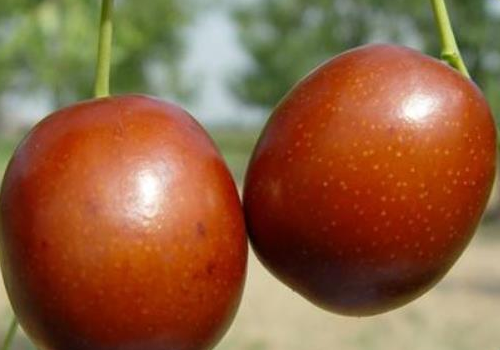
What kind of insect lives on jujube trees, and can they still be grafted?
The jujube tree, many people know about it, a great many people know about it, so what is the insect on the jujube tree called? Can it be grafted? What is the insect on the jujube tree called? The insect on the jujube tree is the slug moth larva. Slug moths are the general name for insects of the family Limacodidae in the order Lepidoptera, with about 500 species. They are distributed worldwide, mostly in the tropics.
-

Pruning and Flower and Fruit Management Techniques for Dense Planting of Apricot Trees
I. Training and Pruning 1. Training The apricot is a light-loving fruit tree; for dense planting orchards, a "V" shape with good ventilation and light penetration is recommended. The training method is as follows: plant at a row spacing of 3 m x 1 m; in the planting year, shorten the trunk by cutting to 40 cm; when new shoots reach 30 cm in spring, select and retain two symmetrically growing branches that extend toward the row middle, grow vigorously, and form a 30-60 degree angle with the trunk as the main branches, and let them grow naturally. Select and retain another 3-4 new shoots as auxiliary nurturing branches, remove the remaining new shoots, and at the beginning of May when the auxiliary nurturing branches are 20 cm long, pinch out the growing tips; in late June
-
How to Treat Jujube Trees with Jujube Witches' Broom Disease? A Detailed Guide to Surgical Treatment Methods
1. Basis. The pathogen of jujube witches' broom disease is a mycoplasma-like organism, which mainly lives in the phloem of jujube trees and is conducted through the tree body via the sieve tube tissue. In winter, the mycoplasma-like organism moves from the aboveground parts to the roots to overwinter, and in the following spring flows back to the branches and trunk with the sap. On this basis, surgical treatment can effectively eliminate the mycoplasma-like organism. 2. Methods (1) Trunk ring sawing. Before leaf fall of the jujube tree and before sprouting the following year, starting from a point 40 cm above the ground on the trunk, use a saw to cut ring-shaped grooves in the trunk of the jujube tree. The requirement is to saw through the cortex, but not to damage the cambium. According to the severity of the disease,
-
Timely Control of White Peach Scale on Cherry Trees
White peach scale on cherry trees is mainly found in cherry-growing areas and occurs commonly. Because the current climate is suitable and field humidity is relatively high, it has occurred quite severely in some fields. The damage has already caused leaves to basically fall off, and the pest population is extremely dense; up close and from a distance it looks completely white. It is estimated that the first-instar nymph stage of white peach scale should be around the end of September. The first-instar nymph stage is the best time to carry out spray control. Growers should strengthen field inspections and apply pesticide control immediately if infestation occurs, keeping the pest population base below the allowable economic level. Control methods
-
The importance of flower and fruit management in jujube trees, which growers must not neglect
The jujube tree is a species that produces many flowers, with a very large amount of flower differentiation, but affected by the tree body and environmental conditions, flower drop and fruit drop are very serious, and the harvested fruit rate is generally only 1-2% of the number of flower buds. The causes of flower and fruit drop in jujube trees are many-sided. First, from the phenological phases of jujube, it can be seen that the bud stage of the jujube tree coincides with the rapid growth period of the fruiting branchlets and the vigorous growth period of the jujube heads; in this period the phenological phases overlap and nutrient competition is very intense. When it enters the initial flowering stage, the jujube heads are still in a vigorous growth stage, while at this time the growth of the fruiting branchlets gradually slows. In the same period, several organs of the jujube tree
-
How to prevent and treat gummosis in peach trees? A detailed guide to practical methods
Peach gummosis is a physiological disease that occurs frequently on peach trees, mainly on the branches and trunk, and in severe cases it has a great impact on the growth and development of the peach tree. Besides peach, stone fruit trees such as apricot, plum, Japanese apricot (ume) and cherry also suffer from it. Symptoms of damage: This disease can occur on any part of the peach tree's branches and shoots. The diseased part swells slightly, the wood tissue turns brown, and then a transparent gum-like substance oozes from the lenticels or wounds; after contact with air it gradually turns yellowish-brown to brown, and finally becomes a black hard lump. The bark of the diseased part is rough and cracked, heals with difficulty, and easily becomes an egg-laying site for the red-necked longhorn
-
The giant winter peach is a new variety among peach trees.
The "King of Chinese Peaches," the "Giant Winter Peach," is the latest new and superior winter peach variety bred by the Zhengzhou Fruit Research Institute of the Chinese Academy of Agricultural Sciences. Its outstanding characteristics are as follows: exceptionally large fruit. The average single fruit weighs more than 400 grams, and the largest single fruit reaches 1200 grams. The fruit is nearly round and is one of the largest peach varieties currently in China. The appearance is brilliant and the quality is excellent. After ripening, the fruit fuzz naturally falls off; the background color of the fruit surface is creamy yellow, and the fruit surface is bright red, very brilliant, in line with internationally popular colors; the flesh is milky white, the texture is dense, tender and firm, and the taste is sweet with a delicate fragrance, with a sugar content of 17
-
How to prevent and treat gummosis in peach trees? A detailed guide to practical methods
1. Distribution: Peach gummosis, also known as resin disease, occurs commonly in all peach-growing regions of our country, and is especially severe in the south. The causes are complex, and it is not easy to completely control. Gumming weakens tree vigor, affects fruit quality, and can even kill branches and trees. 2. Symptoms: This disease mostly occurs on the branches and trunk of peach trees, and is most likely to occur at the main trunk and the forks of main branches. In the early stage, the diseased part swells slightly and gradually exudes a translucent gum, which worsens after rain. Afterwards the gum gradually becomes jelly-like, turns yellowish-brown after losing water, and becomes dark brown when dry. In severe cases, the bark cracks
-
How to prevent and control frost damage to young and newly planted tea trees? These seven methods must be mastered
1. Apply winter manure. Young and newly planted tea trees have relatively weak cold resistance, so before overwintering, a heavy application of winter manure should be combined with earthing up and mounding around the base. The fertilizer should mainly be farmyard manure, stable manure and biogas residue, which have a certain heat-preserving effect, along with a certain amount of cake fertilizer, superphosphate and potassium sulfate fertilizer. Winter manure can not only preserve heat and prevent freezing and enhance the tea trees' freeze resistance, but also lay a good foundation for the tea trees' growth the following year. 2. Earth up and mound around the base. Preventing the root crown from freezing is a key measure for protecting young and newly planted tea trees from frost. Therefore, before young and newly planted tea trees overwinter, they should
条件筛选