-
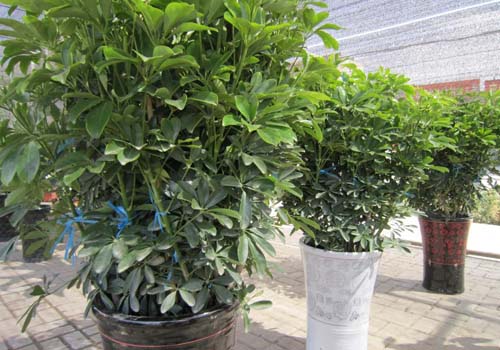
How to grow the Peace Tree? Cultivation methods and precautions explained in one go
The Peace Tree is a foliage plant loved by many flower enthusiasts in recent years. It is an evergreen small tree of the genus Cinnamomum in the Lauraceae family. Its real name is Lanyu cinnamon (Cinnamomum kotoense), and it was originally mostly produced on Lanyu Island. Its other aliases include Hongtouyu cinnamon, Hongtoushan cinnamon, Fanglanshan cinnamon, large-leaf cinnamon, Taiwan cinnamon, etc. After many flower enthusiasts get one,
-
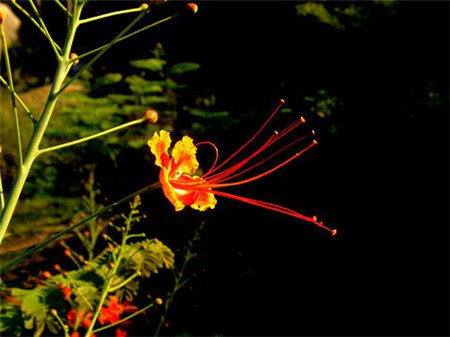
How to grow the Flamboyant Tree? Cultivation and management techniques for the Flamboyant Tree
The Flamboyant Tree (Delonix regia) loves light and is not cold-tolerant, grows rapidly, and has a well-developed root system; it tolerates smoke and dust poorly. Native to Madagascar, it is commonly planted in tropical regions worldwide, and is cultivated in China's Yunnan, Guangxi, Guangdong, Fujian, Taiwan, China and other provinces. Propagation is generally done by seed sowing; after the fruit ripens, collect it and sun-dry it
-

Detailed Explanation of Japanese Pagoda Tree Pod Cultivation Techniques and Management Methods
Cultivation Techniques for Japanese Pagoda Tree Pods
-

A Detailed Guide to Planting Methods and Cultivation Techniques for the Flamboyant Tree
The flamboyant tree (Delonix regia) originates from the tropics and is best suited to growing in hot, humid environments, thriving at temperatures between 20-30°C, which is why late spring to early summer and autumn are its most vigorous growing seasons in China. The flamboyant tree is not cold-tolerant, so plants grown outdoors must be protected from the cold in winter.
-

How to grow a banyan tree? Plus banyan bonsai pictures
How to grow a banyan tree banyan bonsai pictures: banyan bonsai pictures. The banyan tree is a subtropical plant that likes a sunny, well-ventilated, warm and humid environment. It is drought-tolerant and tolerant of partial shade. Placement: it is best placed in a warm, humid, airy, sunny spot. It can adapt to indoor environments and is easy to care for
-

What to do when the leaves of a money tree turn yellow and fall off? Here's the correct way to handle it
A reader asked: what should I do when the leaves of my money tree turn yellow? When money tree leaves turn yellow, first identify the cause and treat it accordingly: 1. Water-yellow: caused by watering too frequently; its characteristic is that the old leaves show no obvious change while the young leaves turn yellow, and watering should be stopped immediately. 2. Drought-yellow: caused by lack of water and drought
-

What are the suitable varieties for protected cultivation of peach trees
1 Zaoxialu (1) Fruit characteristics: average fruit weight 90 g, maximum fruit weight 130 g; fruit round, fruit apex round and flat, two halves symmetrical. The ground color of the skin is light greenish white, with coloration on the fruit apex and sunny side, covering 50-70% of the surface. Down is sparse. Flesh milky white, flavor fairly sweet, aromatic; soluble solids 115%; clingstone, non-cracking pit, hard pit. (2) Growth and fruiting habits: tree habit open, tree vigor moderate. Many compound flower buds, flowers large-flowered type, abundant pollen, long, medium and short fruit branches all can bear fruit, fruit set rate
-
What kind of fruit tree is Java plum? Characteristics and uses
Java plum, also known as Hainan Syzygium, is native to India and the Malay Archipelago. The fruit is dark purple to black, 1.0-2.0 cm long; improved varieties have fruit the size of a chicken egg, with thin skin, thick flesh and abundant juice, slightly sour and slightly astringent, eaten fresh or salted; unripe fruit can be made into vinegar, and ripe fruit can be brewed into wine. It is suited to tropical climates and also grows well on calcareous soils.
-
Detailed Explanation of Key Management Techniques for Apricot Trees in Greenhouses
1. Fertilizer and water management. After covering with plastic film, no more fertilizer is applied as a top dressing. After fruit set and during the pit-hardening stage, spray once with 0.3% urea plus 0.2% photosynthetic micro-fertilizer and 0.3% potassium dihydrogen phosphate. Install drip irrigation pipes inside the greenhouse and water reasonably according to soil moisture. Do not water excessively, to avoid excessive vigorous growth of new shoots, which can cause physiological fruit drop. 2. Training and pruning. For "Y"-shaped training, mainly retain lateral branches, appropriately thin out or utilize upward-growing branches, leave mediocre branches unpruned, cut back drooping branches, and remove overly dense branches, diseased and pest-infested branches, and dead branches. 3.
-
Detailed Guide to Tea Tree Mushroom Cultivation: A Full Analysis of Key Planting Techniques
Tea tree mushroom, also known as the tea plant mushroom, is a rare, precious and delicious edible fungus. Its caps are tender and its stems crisp, with a mellow, delicate fragrance and excellent texture, and it can be cooked into all kinds of delicious dishes. According to testing by the China Food Quality Supervision and Inspection Center, the fruiting bodies contain important nutrients such as glucose, fungal protein and minerals, and include all eight amino acids needed by the human body, among which lysine content is as high as 1.75%. It also has strong kidney-tonifying effects and antitumor activity, making it one of the top ten best-selling mushrooms on the international mushroom trading market, known as the "Chinese divine mushroom." In Japan, Singapore,
条件筛选