How to correctly apply potassium fertilizer to vegetables and fruit trees
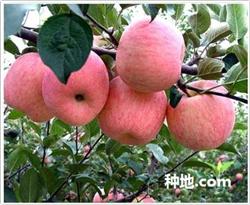
How should potassium fertilizer be applied when growing apples? Need guidance. Potassium is one of the important elements needed by fruit trees, especially for improving apple quality and enhancing fruit quality, where it plays an irreplaceable role, so potassium fertilizer is also called fruit fertilizer. Applying potassium fertilizer at the right time and in the right amount can noticeably increase fruit size, raise sugar content, and improve color. ...
 How should potassium fertilizer be used on vegetables and fruit trees? Need application methods
What is the role of potassium fertilizer for vegetables?
Expert: For example, some years ago the Tianjin Institute of Soil and Fertilizer conducted potassium fertilizer trials on various vegetables, and the results showed that under the condition of combined application with phosphate and potassium fertilizers, appropriately increasing the application of potassium chloride or potassium sulfate raised vegetable yields by 10%-20%, noticeably improved appearance and color, significantly increased vitamin and sugar content, and significantly reduced nitrate content in leafy vegetables.
Which is more effective, potassium chloride or potassium sulfate?
Expert: After continuous application of potassium chloride for 3 years, no adverse effects were seen, but potassium sulfate is more effective. So vegetables are best given potassium sulfate, and for open-field vegetables in areas with more rain or with irrigation conditions, an appropriate amount of potassium chloride can also be applied.
Mr. Guo from Qingzhou, Shandong, is a chemical fertilizer dealer in a vegetable-producing area and wants to know what the application rate of potassium fertilizer for vegetables is and how it should be applied.
Expert: The application rate of potassium fertilizer for vegetables varies greatly. Generally, on the basis of applying organic fertilizer, apply 30-80 kg of potassium sulfate or potassium chloride per mu. Among these, greenhouse vegetables are far higher than open-field vegetables; in terms of application methods, for melons and solanaceous vegetables, potassium fertilizer is mainly applied as a base fertilizer with multiple split topdressings, while for leafy vegetables and vegetables with a shorter growth period it is mainly applied as a base fertilizer. The base fertilizer is applied together with land preparation, and the topdressing is applied with soil covering afterward or dissolved and flushed with water.
Ms. Xie from Baoding, Hebei, asks how potassium fertilizer should be topdressed for greenhouse cucumbers and tomatoes, and whether all the potassium fertilizer can be applied at once as a base fertilizer.
Expert: Generally, starting from when the first cucumber or first fruit sets, apply potassium fertilizer 4-7 times in combination with nitrogen fertilizer, each time applying 8-12 kg of potassium sulfate per mu, with cucumbers using somewhat less than tomatoes. After furrow application, cover with soil or dissolve and flush with water. The base fertilizer and topdressing of potassium cannot be combined and applied all at once, because split application can ensure sufficient potassium supply in the soil throughout the entire growth period; while a single excessive application of potassium will hinder the crop's absorption and utilization of nutrients such as calcium, magnesium, and ammonium nitrogen.
Mr. Liu from Fengcheng, Liaoning, asks how potassium fertilizer should be applied to fruit trees.
Expert: This question is very broad, so it can only be discussed in principle. Most fruit trees are given 20-40 kg of potassium sulfate or potassium chloride per mu, and generally the higher the fruit yield, the greater the application rate; the south and coastal areas are more deficient in potassium than other regions, so the application rate is somewhat higher. The application time is generally divided into 3 times: the most is applied during the fruit enlargement period from May to June, followed by autumn base fertilizer application, and less from February to April before sprouting or flowering, and late-maturing varieties should receive 1 additional application in July and August. The application method is: dig 4-6 trenches or pits more than 30 cm deep along the drip line of the tree canopy, apply together with organic fertilizer or nitrogen and phosphate fertilizers, and then cover with soil.
Ms. Liao from Shaoguan, Guangdong, asks what special significance potassium fertilizer application has for citrus.
Expert: The effect of potassium fertilizer on citrus is the same as on general fruit trees: it can increase yield and improve quality. Its differences are: 1. Citrus has a relatively large fertilizer requirement, 1-2 times that of general deciduous fruit trees; 2. Citrus-growing areas are mostly acidic soils and are generally deficient in potassium; 3. In recent years, citrus-producing areas have repeatedly suffered ice, snow, and low-temperature disasters, and potassium application helps with cold resistance and improves fruit storability.
Mr. Gu from Changzhi, Shanxi, asks whether compound fertilizer containing three elements can be used on fruit trees instead of potassium fertilizer. Expert: Of course it can. Calculated by the amount applied per tree, it is recommended to apply 1.5-2 kg of general-purpose compound fertilizer in autumn, 1-1.5 kg of high-nitrogen-and-phosphorus compound fertilizer before sprouting or flowering, and about 2 kg of high-nitrogen-and-potassium compound fertilizer during the fruit enlargement period.
Mr. Chu from Baoji, Shaanxi, asks whether calcium deficiency in apples is related to fertilization.
Expert: Yes, it is related. For example, a one-time excessive use of potassium fertilizer, continuous soil drought, or waterlogging can all affect the root system's absorption and utilization of soil calcium; long-term failure to apply organic fertilizer, calcium phosphate, and other calcium-containing fertilizers can also cause potassium deficiency in fruit trees. To prevent and control calcium deficiency in apples, in addition to applying calcium-containing fertilizers, you can also spray 0.3%-0.5% amino acid calcium several times from full bloom to before bagging.
Click to get more fruit tree planting techniques
Click to get more vegetable planting techniques
Click to get more nitrogen, phosphorus, and potassium fertilizer application techniques
Click to get more fertilizer application techniques