Applying undecomposed organic fertilizer to fruit trees does much harm, and it cannot be ignored
Organic fertilizer is also called farmyard manure. In fruit tree production, the commonly used types include compost, pen manure, stable manure, green manure, cake fertilizer, river mud, poultry manure, human feces and urine, and miscellaneous soil manure. Most organic fertilizers need to be decomposed by microorganisms before they can be absorbed by the plant's root system, so they are also called "slow-release fertilizers" and can be applied as base fertilizer...
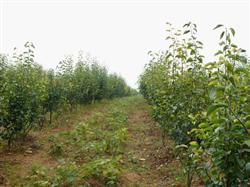 Autumn is the best season to apply base fertilizer to fruit trees, but some fruit growers apply undecomposed organic fertilizer when applying base fertilizer, causing many hidden dangers.
1. Burning the root system. Farmyard manure mostly comes from animal feces. When these organic fertilizers are not decomposed, their nutrient state is slow-release and cannot be directly absorbed and used by the fruit tree root system. If they are applied, during the process of underground decomposition they easily generate heat, causing root burns (commonly known as "root burning") and triggering root rot.
2. Nutrient release and the tree's fertilizer demand are not synchronized. When undecomposed organic fertilizer is applied in autumn, because the soil temperature is low, underground decomposition takes a relatively long time. In the spring of the following year, the tree needs a large amount of nutrients, but the nutrients released by the slowly decomposing organic fertilizer simply cannot meet the tree's needs. At the same time, during the decomposition process, microorganisms will also consume part of the original nutrient elements in the soil around the fruit tree roots (such as nitrogen fertilizer). In this way, the tree often shows nutrient deficiency in spring. After entering summer and autumn, rainfall increases, ground temperature rises rapidly, the decomposition rate of organic fertilizer speeds up noticeably, and more organic nutrients are released. This will cause the tree to grow faster, produce a large number of water sprouts, poor fruit coloring, excessive vegetative growth, and poor flower bud differentiation ability. Someone once dug into the soil of an orchard where raw manure had been applied and found that after 3 years, some of the raw manure was still in its original state.
3. Attracting overwintering underground pests. Because undecomposed organic fertilizer contains a large amount of animal organic matter, it becomes an ideal overwintering site for many fruit tree pests, and is especially likely to attract fruit tree pests such as scarab beetles (white grubs), peach fruit borers, inchworms, larval processionary moths, and pear lace bugs, which is extremely unfavorable for pest control.