-

How to make azalea bonsai more exquisite? Sharing of practical tips
Azalea, also known as yingshanhong or zhaoshanhong, is a deciduous shrub of the genus Rhododendron in the family Ericaceae. It has many branches, which are slender and straight, with simple papery leaves; the flowers grow in clusters of 2-6 at the tips of the branches and are rose-colored, bright red or deep red, with purple spots, and in horticulture there are many other varieties with even richer colors. Its flowering period is from April to June, and the fruit ripens in October. Azalea likes a warm, humid environment, is not cold-tolerant, and is relatively heat-tolerant; it likes acidic soil and grows poorly in alkaline soil and in sticky soil with poor drainage. Its bonsai production and cultivation methods are as follows: (1) Seedling sources
-
How to care for water-and-land bonsai? A full analysis of practical tips
Watering: Water-and-land bonsai are planted in very shallow pots, so special attention must be paid to replenishing water in time. To prevent the potting soil from being washed away when watering, it is best to use a fine-nozzle watering can. When the climate is dry, a sprayer can be used to mist the pot surface, the trees and the rocks to keep the moss growing well. Fertilizing: The soil in water-and-land bonsai is relatively little and nutrients are limited, so attention should be paid to fertilizing to keep the trees growing vigorously. Fertilizing is mostly done by spraying diluted organic fertilizer water onto the soil surface. Granular organic compound fertilizer can also be buried in the potting soil. Repotting: The trees in water-and-land bonsai are generally repotted once every 3 to 5 years, mostly
-
How to choose materials for stump bonsai? Master these selection tips
Generally, plants with graceful forms, peculiar roots and trunks, brilliant flowers and fruits, strong sprouting ability, long lifespans, easy shaping, and strong resistance to adverse conditions are preferred. Plants suitable for stump bonsai are usually divided into three categories: conifers and cypresses, miscellaneous broadleaf trees, and flowering and fruiting trees. 1. Conifers and cypresses: Common excellent choices include five-needle pine, black pine, Buddhist pine, true pine, Japanese red pine, Huangshan pine, Chinese juniper, and creeping juniper. 2. Miscellaneous broadleaf trees: Materials vary from place to place. Common ones include Japanese bush cherry, Xiangfei bamboo, green-white bamboo, Buddha belly bamboo, serissa, boxwood, Chinese elm, trident maple, red maple, and banyan. These trees
-
How to increase the yield of spring-planted shiitake mushrooms? Master these tips for high yields
Raise the temperature of the mushroom bed to create conditions for mushroom growth. Since the mushroom yard is still cold in early spring, natural air temperature can be used together with artificial regulation. The method is: cover the film tightly to increase the ground temperature, and at the same time choose sunny days to spread the shading materials on the shed surface thinly, letting sunlight penetrate into the mushroom yard, increasing the heat source and raising the mushroom bed temperature; at night, cover the film tightly to protect against the cold. The large day-night temperature difference in early spring can promote the occurrence of mushroom buds. Pat the mushroom logs to promote the recovery of mycelial growth. Because the climate is cold in early spring, the mycelium is mostly in a dormant state, producing no mushrooms or very few mushrooms. Generally, patting can be used
-
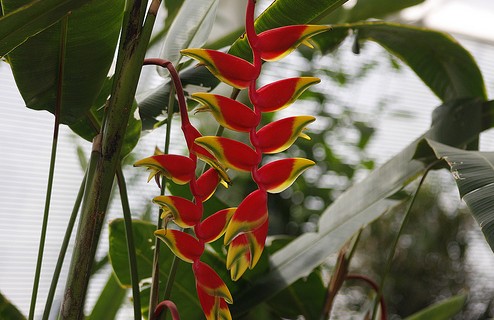
How to Grow Heliconia rostrata? A Complete Guide to Cultivation Methods and Tips
Heliconia rostrata, also known as hanging lobster claw. The plant is tall with an elegant form, and the inflorescence comes in two colors, red and yellow. The leaves resemble banana leaves and are leathery. The spike inflorescence hangs downward in a zigzag shape, the inflorescence axis is red, and the bracts are also red with golden yellow tips, l5~20 of them, arranged in two rows, closely resembling pairs of beautiful little birds
-
Home-style Grilled Pacific Saury: Method and Tips
Ingredients: 3 Pacific saury (or as much as you need). Seasonings: 1 tablespoon liquor, 1 tablespoon salt, a pinch of pepper. Method: 1. Wash the Pacific saury and rub with the seasonings, then marinate briefly (about 10 minutes). 2. Place on a grill rack and cook until done. 3. When eating, squeeze on a little lemon juice. Tips: 1. The fish does not need to be split open; when removing the gills, insert chopsticks to pull out and clean the innards. 2. Brush a little oil on the grill rack before placing the fish, so the skin will not stick when you take it off. 3. During grilling
-
African Violet Home Cultivation Methods and Care Tips
Stop fertilizing during both the low temperatures of winter and the high temperatures of summer. When watering and fertilizing, take care to avoid splashing water or fertilizer on the leaf surface, and do not frequently spray water on the leaves, because when water droplets remain among the leaf hairs for a long time, the leaves will develop unsightly yellow spots or even rot. However, to increase air humidity, you can spray water around the plant; if the air circulates well and evaporation is fast, you may also spray a small amount of water on the leaf surface, and the water sprayed should be close to room temperature, not too cold.
-
Planting Methods and Care Tips for the Maidenhair Yew (Taxus media)
The yew, also known as Taxus, Latin name: TaxusMedia, is an evergreen coniferous plant of the genus Taxus. It is listed as a rare and endangered species in the world, is a national first-class protected plant, and has long been known as "plant gold." The paclitaxel extracted from it has high anticancer activity and can treat many kinds of cancer. The American Cancer Institute believes that paclitaxel is the most effective anticancer drug for humans in the years to come. The Maidenhair Yew (Taxus media) is a hybrid variety with fast growth, high paclitaxel content, and strong adaptability to the environment, with
-
How to treat mushroom flies? These effective control tips really work
Black fungus gnats, eye fungus gnats and other Diptera insects are collectively called "mushroom flies". The damage caused by mushroom flies can reduce shiitake mushroom yields by about 30%. Therefore, effective control of "mushroom flies" can increase shiitake cultivation yields by about 30%. 1. Living habits and outbreak patterns of mushroom flies. Mushroom flies like to reproduce in damp, dirty environments, and fungal mycelium is one of the best food sources for these insects. Their main mode of damage is biting and eating the mycelium, disrupting normal mycelium growth, causing the mycelium to weaken or die, while also creating conditions for contamination by foreign microorganisms, allowing some competitive foreign microorganisms to grow on the mushroom fly
-
English Setter Buying Tips and Precautions
(1) Before buying, you should first read some materials or books about this breed to gain a preliminary understanding of its external appearance and inner characteristics, so as not to be at a loss when buying, or even mistakenly choose an unqualified breed. (2) The shoulder height of this breed should not exceed 70 cm. Since puppies are not yet fully developed, around 60 cm is suitable; the weight should not exceed 30 kg. (3) The head should be relatively long and narrow, the muzzle should be slightly square, the stop should be obvious, and the incisors should meet in a pincer or scissor bite; the nose tip should be black or
条件筛选