-

How to manage shiitake mushrooms in autumn and winter? A full breakdown of practical tips
How to skillfully manage shiitake mushrooms in autumn and winter? What should be noted? Is there any netizen who can help guide? As autumn and winter arrive, Zhongdi Network has compiled the key management points for shiitake mushrooms in autumn and winter, listed below for netizens' reference. Point one, increase the day-night temperature difference: in late autumn and early winter, daytime temperatures are high and nighttime temperatures are low...
-
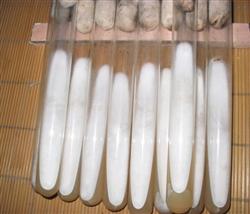
How to choose black fungus (wood ear mushroom) spawn? Master these selection tips
How to choose black fungus spawn? Are there any tips? We'd also like experienced readers to share their advice. The quality of black fungus spawn determines the yield of the mushrooms. Zhongdi Network has compiled methods for selecting black fungus spawn, listed below for readers' reference. Method 1: Superior black fungus mycelium is pure white, like fine wool...
-

How to Select White Tremella? Master These Few Shopping Tips
How to choose white tremella? What should you pay attention to when buying white tremella? Please introduce. White tremella is a traditional delicacy and also an excellent tonic, but once it spoils, it must never be eaten. This is because the toxic substance in spoiled white tremella is Flavobacterium farinofermentans, and there is currently no effective medicine to treat it, so identification is essential. The following introduces how to...
-
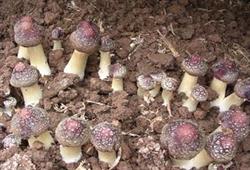
Wine Cap Stropharia Cultivation Tips: How to Case the Substrate Better When Planting?
How should you case Wine Cap Stropharia during cultivation? Here is a method to follow. You can case Wine Cap Stropharia using the following method: spread pre-prepared loam soil over the mushroom bed to a thickness of 2 to 4 cm, no more than 5 cm at most, with about 0.05 cubic meters of soil needed per square meter of mushroom bed. After casing, the moisture of the casing layer must be adjusted, requiring the soil to have a water-holding capacity of 36% to 37%. A simple way to test soil water-holding capacity is to squeeze a soil granule by hand; if the granule flattens but does not crumble and does not stick to your hand, it means the moisture content is suitable.
-
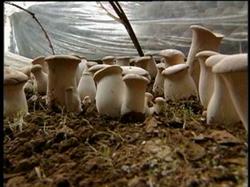
Six Key Tips for Achieving High Yield in Indoor and Outdoor Cultivation of King Oyster Mushroom
The king oyster mushroom (Pleurotus eryngii) has a plump and elongated body, with a thick, smooth stalk measuring 2.5-3 cm in diameter and 10-15 cm in length; the cap is 4-6 cm, slightly depressed in the center, with decurrent yellow gills and neat lines. Because of its snow-white color, it is called snow fungus. And because it contains an almond aroma, the Japanese call it fragrant mushroom. It is a rare mushroom species newly developed in recent years...
-
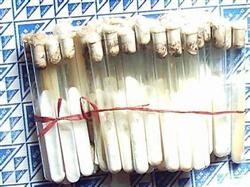
Detailed Guide to Methods and Tips for Selecting Straw Mushroom Spawn
Superior straw mushroom spawn is produced on a straw substrate and overwintered (10-15°C). After overwintering, those proven by early cultivation to be high-quality and high-yielding are selected. Mother spawn (first-generation spawn) is then obtained through tissue isolation and further expanded for culture, to supply spawn for that year's production. Mushroom growers should pay attention to the following points when selecting straw mushroom spawn: 1. Straw...
-

How to Make Braised Bailing Mushrooms in Abalone Sauce and Cooking Tips
Ingredients: Authentic canned "Lingzhi Brand" Bailing mushrooms. Also prepare an appropriate amount of fresh broccoli for lining the plate. Seasonings: an appropriate amount of abalone sauce, Baowei'er beef juice, dark soy sauce, light soy sauce, salt, and German-made golden yellow powder (a food coloring brand). Other: Beat the egg whites with an egg beater into an egg batter, and evenly sprinkle an appropriate amount of salted egg yolk on top for decoration. Method: 1. After removing the Bailing mushrooms, take superior stock, add an appropriate amount of salt, and simmer the Bailing mushrooms over low heat until fully flavored, then set aside.
-
4 Practical Ventilation Tips for Mushroom Bags
Mushroom bag cultivation has low cost, high efficiency and is easy to manage, making it a major method of mushroom production. However, when directly tying the bag opening with string during bag cultivation, poor ventilation occurs, affecting mycelial growth, causing contamination, and even leading to cultivation failure. Here are four ventilation tips: First, the ventilation plug method. Use wheat straw, cotton lint, sunflower stalks, corn cobs, etc. as materials, and tie them at both ends of the mushroom bag to make ventilation plugs. Note that wheat straw and sunflower stalks should be cut into 3 cm long segments; cotton lint should be folded into a cotton column with one flat end and one fuzzy end; corn cobs should be crushed to bean-sized pieces
-
Many Methods for Keeping Edible Mushrooms Fresh: A Few Practical Tips for You
Edible mushrooms generally have a high moisture content, are rich in nutrients, have a tender texture, and undergo intense physiological and biochemical activity, so if they are not sold and processed promptly after harvest, their commercial quality will be seriously affected, causing considerable economic loss. To prevent losses when harvested edible mushrooms cannot be sold or processed in time, mushroom growers must master edible mushroom preservation techniques. Preserving edible mushrooms keeps the flavor of the fresh product basically unchanged, preserves its nutritional value to the greatest extent possible, and offers advantages such as easier storage, processing and transport.
-
How to Supplement Nutrition for Edible Fungi? A Full Analysis of Practical Tips
In the process of cultivating edible fungi, reasonably supplementing various nutrients is an effective measure to increase the yield of edible fungi, but improper supplementation can also backfire. Therefore, the following tips should be noted when supplementing nutrition for edible fungi. Pay attention to the supplementation method. The methods for supplementing nutrition for edible fungi include spraying, pouring, and soaking. The most commonly used method is to prepare a nutrient solution of a certain concentration and spray it on the mushroom bed and mushroom blocks while supplementing water. When spraying during the young bud stage, care should be taken to spray the nutrient solution on areas without mushrooms or near small young buds, and after spraying
条件筛选