Six Key Tips for Achieving High Yield in Indoor and Outdoor Cultivation of King Oyster Mushroom
The king oyster mushroom (Pleurotus eryngii) has a plump and elongated body, with a thick, smooth stalk measuring 2.5-3 cm in diameter and 10-15 cm in length; the cap is 4-6 cm, slightly depressed in the center, with decurrent yellow gills and neat lines. Because of its snow-white color, it is called snow fungus. And because it contains an almond aroma, the Japanese call it fragrant mushroom. It is a rare mushroom species newly developed in recent years...
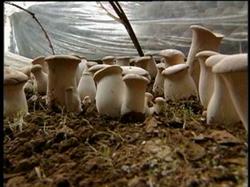
The king oyster mushroom (Pleurotus eryngii) has a plump and elongated body, with a thick, smooth stalk measuring 2.5-3 cm in diameter and 10-15 cm in length; the cap is 4-6 cm, slightly depressed in the center, with decurrent yellow gills and neat lines. Because of its snow-white color, it is called snow fungus. And because it contains an almond aroma, the Japanese call it fragrant mushroom. It is a rare mushroom species newly developed in recent years.
The king oyster mushroom has crisp and tender flesh. Regular consumption can help prevent cardiovascular disease, diabetes and obesity, and it also has health benefits such as intestinal regulation and beauty care. Therefore, when introduced to the market, it is highly favored by consumers at home and abroad, becoming a fashionable delicacy of the mountains.
Below we introduce the "Six Key Tips" for high-yield indoor and outdoor cultivation of king oyster mushroom.
1. Choose the best cultivation season. The king oyster mushroom belongs to the moderate-to-low temperature mushroom category. The optimum temperature for mycelial growth is 23-25°C, and the optimum temperature for fruiting is 12-18°C. According to its mycelial temperature requirements, the cultivation season in the south is best started with inoculation in late October, followed by 45-50 days of mycelial culture, entering the fruiting stage in early December. In the north, inoculation is done in early October, using vegetable greenhouses for cultivation, and fruiting proceeds as normal in winter.
2. Scientifically formulate the culture medium. The king oyster mushroom has strong adaptability, and cultivation materials such as mixed sawdust, cottonseed hulls, corncobs and sugarcane bagasse can all be used. Common formulas include: (1) mixed sawdust 77%, wheat bran or rice bran 16%, corn flour 5%, sugar 1%, gypsum powder 1%; (2) cottonseed hulls 46%, mixed sawdust 35%, wheat bran 15%, corn flour 2%, calcium carbonate 1%, sugar 1%; (3) corncobs 50%, cottonseed hulls 30%, wheat bran 15%, corn flour 3%, sugar 1%, calcium carbonate 1%. In the above formulas, the material-to-water ratio is 1:1-1.2.
The king oyster mushroom is suitable for bag cultivation. Polypropylene bags of 15 cm x 30 cm x 0.04 cm are more suitable as cultivation bags. Mix the culture material thoroughly and evenly, control the water content at 60%, and adjust the pH to 6.5-7 before sterilization. When filling, make the material compact at the bottom and loose at the top, flatten the surface, and poke a hole in the center extending 1/3 into the material. The filled material accounts for 60% of the bag length, with a wet weight of 400-450 grams per bag. The bag opening can be fitted with a ring and cotton plug, or directly tied closed and then folded back and tied tightly. Sterilization of the material bags: high pressure at 1.5 kg/cm2 for 2-2.5 hours; atmospheric pressure sterilization for 18-20 hours. Once the standard is met, unload the bags while hot and cool them.
3. Inoculate at suitable temperature and control temperature during mycelial growth. When the material bags have cooled to below 23°C, place them in an inoculation box or sterile room and inoculate with king oyster mushroom spawn. During inoculation, open the bag mouth and inoculate the spawn into the hole on the material surface, extending slightly downward. Then plug the bag mouth with cotton or tie it closed. Each 750-gram bottle of spawn can inoculate 50-60 material bags. After inoculation, place them in a previously sterilized dry room for mycelial culture. Control the temperature at 23-25°C, not exceeding 28°C at the highest and not lower than 18°C at the lowest. After inoculation, the mycelium colonizes in 5-7 days; after 20 days, metabolism accelerates and the mycelial temperature rises, so the room temperature should be adjusted to 22-23°C as suitable. During the mycelial growth period, control the relative humidity of the indoor space below 70%, ventilate 1-2 times daily, and maintain fresh air.
4. Arrange bags according to local conditions to promote primordium formation. After 40-45 days of culture, the mycelium becomes thick and white and fills the bag, reaching physiological maturity. Promptly move the spawn bags into an indoor mushroom house or an outdoor shade shed for arrangement. The site should be disinfected in advance. For indoor mushroom houses, use shelf-type arrangement, with 5-6 layers per shelf and a layer spacing of 25 cm; for outdoor shade sheds, shape the ground into sunken bed plots to make use of ground temperature and ground moisture. Bend bamboo or wooden strips into arches beside the beds, cover them with plastic film, and stand the spawn bags upright close together. After arranging the bags, untie the bag mouths and straighten the bag film to allow the mycelium to grow in the space inside the bag. Alternatively, after opening, perform scratching on the mycelium around the inside of the bag. After opening, spray once toward the space and the bag surface, with relative humidity required at 80%. For indoor cultivation, cover the bag surface with newspaper and spray water to retain moisture. During the primordium promotion period, maintain the temperature at 15-18°C to stimulate primordium differentiation and hasten the emergence of mushroom buds.
5. Strictly manage each fruiting stage differently. From primordium formation to fruiting body maturity generally takes 13-15 days. During the young mushroom stage, they grow in the microclimate inside the bag. When the fruiting bodies grow to about 2 cm from the bag mouth, remove the newspaper to let the fruiting bodies extend into the space, spray water 1-2 times daily, and maintain relative humidity at 85%-90%; in outdoor mushroom sheds, the natural humidity under the film cover is more suitable, so no spraying is needed, but during drought, spray once daily. Whether sunny or rainy, uncover the film and ventilate for 30 minutes every day. During the fruiting body development and growth period, control the temperature above 12°C and below 18°C. When winter temperatures are low, increase heat for cultivation, but pay attention to removing carbon dioxide. If ventilation is poor and the carbon dioxide concentration exceeds 0.1%, deformed mushrooms will appear. To make the fruiting bodies white and moist with snow-fungus characteristics, shade the area above the mushroom shed to prevent direct strong light from turning the fruiting bodies black. The suitable light intensity is 150-200 lux.
6. Harvest and process at the right time. From inoculation to harvest of the first flush, the king oyster mushroom generally takes 55-60 days. The yield is relatively high. Fruiting bodies grow singly or in clusters, are round at first, and at maturity have a thick, long stalk, a flat cap surface, a depressed center, and slight fuzz on the surface. When harvesting, hold the mushroom stalk with your hand and pull up the entire cluster. After harvesting, clean up residues on the material surface and the environment, stop spraying water, and after 5-7 days of resting and mycelial recovery, continue spraying water, controlling temperature and ventilating to promote the second flush. With proper management, the biological conversion rate of king oyster mushroom reaches 100%. Each bag generally produces 1 mushroom per flush, and some produce 2-3. A single mushroom weighs 50-80 grams, with the heaviest reaching 150 grams. The mushrooms can be exported fresh or sliced, dehydrated and dried for year-round market supply.