-

How to Keep Oyster Mushrooms Moisturized? Learn These Three Techniques
At present, growing oyster mushrooms in rural areas is fairly common, but yields are not high, mainly because after harvesting oyster mushrooms the water content of the substrate is low. But at this point the oyster mushroom mycelium has already spread throughout the entire substrate, making it very difficult to replenish water. How to keep the substrate moisturized and produce more mushrooms has become an important factor in whether oyster mushrooms can achieve high yields. There are three techniques: 1. Wall-style soil covering of mushroom logs for moisture retention. In the shed, lay a ridge of soil 15 to 20 cm thick along the length of the mushroom bags, and remove the plastic bags from the mushroom bags that have fully colonized and are about to fruit (these are called mushroom bags). Arrange the mushroom logs neatly
-
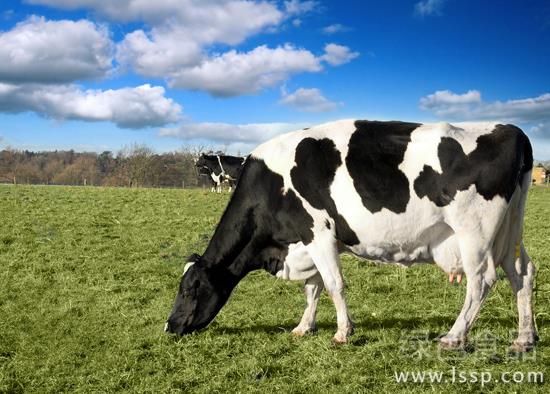
How to do a good job in daily dairy cattle management? Three measures to ensure the healthy growth of dairy cattle
How to ensure the healthy growth of dairy cattle: three measures for daily dairy cattle management
-
Three Major Disease Prevention and Treatment Methods for Pond Fish in Spring and Summer
1 Carp Hemorrhagic Disease 1.1 Symptoms and Causes The scales on the abdomen of the diseased fish, the fin rays and the caudal peduncle become congested and red. The diseased fish float up close to the ice layer or float on the water surface, gather in groups and swim slowly near the pond edge, and gradually die. ① Hemorrhagic septicemia. The diseased fish appear normal on the outside, or the area under the abdominal scales is congested and red. When the diseased fish is dissected, blood-tinged fluid emerges from the body cavity, and the internal organs have petechial hemorrhages. The disease is caused by Aeromonas hydrophila. ② Brown blood disease (hemorrhagic gill disease). The gill filaments of the diseased fish swell and become dark in color, and some gill filaments
-
How to identify a sick rabbit? Three methods to help you tell
First, look: A sick rabbit is listless, emaciated, with bones showing, a ruffled and lusterless coat, and does not shed fur according to the molting season. A healthy domestic rabbit has a strong appetite and eats quickly; a sick rabbit has a poor appetite, eats slowly or refuses food. The droppings of a healthy domestic rabbit are pellet-shaped, oval, uniform in size, with a round, smooth surface. If dry, hard, small droppings appear, it indicates constipation, and more green, succulent feed should be given; if the droppings are tadpole-shaped or soft and loose, this indicates indigestion, and charcoal powder, yeast tablets, etc. should be added to the feed; if the droppings are piled up and
-
For lilies to achieve high yields, doing the three changes well is key
1. Change from using inferior seed bulbs to high-quality seed bulbs. Choose excellent varieties such as Longya lily as seed. Lilies need to be purchased from other regions as seed, which is an important measure for lily rejuvenation. Choosing seed bulbs with little or no virus is the key to high-yield lily cultivation. At the same time, pay attention to choosing thick, plump, and large seed bulbs. Use bulbs propagated from scales or directly use the daughter bulbs from the mother bulb as seed. 2. Change from sowing too early to sowing at the right time. Sowing too early makes it easy to encounter drought, often causing seed rot, and the high temperatures in early August are not conducive to breaking the dormancy period of lily seed bulbs. After sowing, roots often do not grow, and it is prone to
-
Lily Cultivation Method Part Three: How to Carry Out High-Ridge Cultivation
Lily Cultivation Method Part Three: High-ridge cultivation. It is suitable for places with a relatively high groundwater table and more rainfall. For high-ridge cultivation in the south, plow the land after the previous crop is harvested to a depth of about 30CM, and apply 2500KG per mu as base fertilizer together with plowing. Generally, ridges are used for wide beds, with the base of the ridge 60CM wide, about 30CM wide needed, and 25-30CM high. Between the ridges are water furrows with a bottom width of about 30CM. In high-ridge cultivation, topdressing must be carried out throughout the growing period to promote growth and increase yield.
-
Semi-underground three-dimensional cultivation of oyster mushrooms yields high output and good returns
Semi-underground three-dimensional bed-frame cultivation of oyster mushrooms is a new approach explored in recent years to achieve high yields and improve economic returns. According to trials, on an area of 20 sq m, with 2000 kg of substrate, the annual output of oyster mushrooms is about 2500 kg, with a biological efficiency of over 120%. The key technical points are as follows: 1. Building the greenhouse: first dig a pit 1.8 m to 2 m deep and 4 m to 5 m wide, with the length determined as needed, and place the three-dimensional bed frames inside. On top, use bamboo poles and plastic film to build an arched shed, pack the surrounding edges firmly with soil, and cover with straw mats. Leave ventilation openings of about 30 square cm on all four sides, east, west, north and south, and build a small door on the west side for workers to enter and exit.
-
Detailed Explanation of Indoor Three-Dimensional Cultivation Methods for Oyster Mushrooms in Winter
Place the plastic tubes filled with oyster mushroom spawn (cylindrical in shape) indoors or in a mushroom cellar. When the room temperature is 24°C-25°C, they can only be arranged in a single row and single layer for mycelial running. When the room temperature is around 20°C, they can be arranged in two or three rows in a single layer. When the room temperature is 10°C-15°C, they can be stacked to a height of 1 m-1.5 m, and every 10-15 days, the upper and lower positions should be swapped to make the temperature uniform in all parts and the mycelial running consistent. During this period, keep the room as dry as possible. When the indoor humidity reaches above 80%, it is best to adopt the two-level cultivation method of mycelial running above ground and fruiting underground. Maintain
-
Oriental Seed Industry's Rice Breaks World Records Three Times
Just as we were worrying about national food security, news came from Fujian Oriental Seed Industry Co., Ltd.: using the brand-new specific germplasm resources Donghui 6, Donghui 1728, and Donghui 4886 strong dominant restorer lines, they bred the new super rice varieties II You 6, II You 28, and II You 4886 through combination, achieving a historic breakthrough in which rice yield per mu surpassed the 1,200 kg mark, and in 2004, 2005, and 2006, for three consecutive years, with yields of 1,219.9 kg, 1,229
-
How to keep oyster mushrooms moist? Mushroom growers, remember these three tricks
At present, the main reason for the low yield of oyster mushrooms grown in rural areas is that the water content of the growing substrate is too low after harvesting. How to keep the substrate moist and produce more mushrooms has become an important factor in whether oyster mushrooms can achieve high yields. Moisture retention by covering mushroom logs with soil in a wall style: inside the shed, lay a ridge of soil 15-20 cm thick along the length of the mushroom bags, and remove the plastic bags from the mushroom logs that have fully colonized and are about to fruit. Arrange the mushroom logs neatly on the soil ridge. Cover each layer with 3-4 cm of soil, spray water on both sides of the soil and smooth it with mud. Then arrange the second layer of mushroom logs and cover with soil; 6-9 layers can be arranged,
条件筛选