-
There is an art to selecting orchids, and these four key points must be mastered
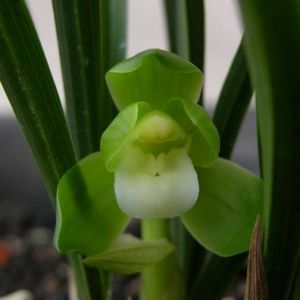
In 1920 it was selected and bred by Yang Zuren of Ningbo. The leaves are obliquely erect, with blunt tips, and the leaf margins curl slightly inward. The leaves are emerald green and glossy. The bracts are light green. The outer three petals of the flower are short and round, with tight edges and narrowed bases, and a thick, glutinous texture. The shoulders are level, the petals are shell-shaped (Bang Ke Peng), and the lip is a pure white large round tongue that curls slightly backward. The flower color is emerald green.
-

How can you make flower spikes grow taller? These care methods are essential to master
When admiring an orchid, you should look at whether the flowers are elegant and whether the leaf posture is graceful. Only when the tall flower scape and the leaves are well matched can it be a truly beautiful sight. For summer-blooming varieties such as Cymbidium ensifolium (four-season orchid), the time from bud formation to flower opening is very short, and the height of the flower spike is determined by the care given before the orchid blooms. Personally, I think these varieties...
-
How to grow anthurium so it blooms? These care tips you need to know
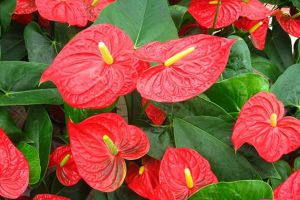
Its appearance makes people mistake it for a fake flower at first glance. The fiery red blooms are always so beautiful that they seem unreal, but they are real flowers! This plant mainly grows in hot and humid regions and likes a hot and humid living environment, but it cannot tolerate harsh sun exposure. Because its flowering period is long-lasting, it is perfectly suited as an ornamental plant. Beautiful as it is, how can it be made to bloom? Let's find out.
-
How to grow Cymbidium lianpan? Master these few care points
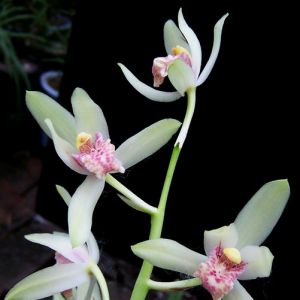
Collected from the wild in 2009, the buds are tender green from bud stage to first bloom, and change color after fully opening; the petals are thick, the flowers large, and the texture as soft as mutton fat - the more it blooms, the more beautiful it becomes!
-
What water should be used to water orchids? These six kinds of water have great nourishing effects
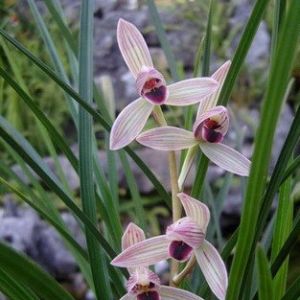
A premium red-tongue variety from Baoshan, Yunnan: Ruyi Red Tongue. The emerging leaves stand upright, and the buds are deep red until the new leaves appear. The flower lip is a ruyi lip and does not curl backward. The color and stripe contrast is vivid, and the light fragrance rises above the foliage. Ruyi Red Tongue is very beautiful among the red-tongue series, and its key advantage lies in the lip and the vivid colors. Moreover, the more the plant rejuvenates, the more beautifully it can bloom above the foliage...
-
How to appreciate plain-colored Chinese orchids? Master these key appraisal points
Plain-colored flowers have only a single pure color (whether white, yellow, pinkish green, peach red, or even entirely black), with no purplish-red stripes or spots. Those with a plain-colored lip are called plain-heart orchids. If color appears at the base of the lip, they belong to the peach-cheek plain type. Plain-colored flowers and plain-heart flowers have the modest, elegant bearing of a gentleman, matching the traditional Eastern cultural value of "prizing the plain." Fragrance...
-
Orchid care in autumn: these five key tips you must master
The crisp, bright autumn season is the second golden season for orchid growing. Autumn orchid growing is the annual link between what came before and what comes next: it is both the harvest season when orchid plants mature and the delightful time when orchid buds burst forth. How well you handle autumn orchid care determines the success or failure of the year's orchid growing, and it is also the key to whether next year's orchid plants will grow vigorously. The author sums up autumn orchid growing as...
-
What are the precautions for watering orchids? Keep these points in mind
First, pay attention to water temperature. In winter, do not water with cold water; the water temperature should be close to room temperature, with 8-10°C being ideal. In summer, do not water with hot water. If water is stored in a water tank, be careful to prevent excessively high water temperature from damaging the orchid plants and orchid roots. The water temperature must not exceed 25-28°C, and do not suddenly water with cold water, so as not to damage the orchid plants. Second, pay attention to...
-
-
条件筛选