-

Six precautions for catching adult fish during high-temperature periods
Production practice has proven that catching adult fish during the hot season should be done at night or in the early morning (before dawn), when the temperature is relatively lower, which helps keep the fish fresh. When catching, the following points should be noted: 1. If using a seine net to catch, preparation work should be done during the day, clearing away debris on the water surface of the fish pond that hinders seining. 2. If using a soft vinylon fishing net, the height of the net should match the water depth of the fish pond as closely as possible. If using a nylon net to catch adult fish in a relatively large fish pond, the mesh size should be about 8 cm; this way
-
Correct methods and operation steps for taking a pig's temperature
A pig's body temperature usually refers to the temperature inside the pig's anus and rectum. The specific procedure is to tie a thin string about 10-15 cm long to the far end of a veterinary thermometer, and tie a small iron clip to the other end of the string for fixing. When taking the temperature, first shake the mercury column of the thermometer down below the 35°C mark with a little force, apply a small amount of lubricating oil to the thermometer, then grasp the pig's tail with one hand, hold the thermometer with the other hand and insert it into the anus slightly toward the dorsal side, and use the small iron clip to clamp and fix it to the hair above the base of the tail. After 2-3 minutes, remove the thermometer and use an alcohol cotton ball
-
Key Technical Points for Cultivating Oyster Mushrooms in the High-Temperature Season
For many years, many mushroom growers have tried to avoid cultivating oyster mushrooms in the high-temperature season, for reasons that are none other than high contamination rates, severe pests and diseases, and drastic market fluctuations. In response to these problems, a set of key points for cultivating oyster mushrooms in the high-temperature season is introduced here. Varieties must be selected accurately: choose varieties of the medium-to-high temperature type with strong stress resistance, pure white and dense mycelium, strong wall-climbing ability, and few aerial hyphae, and resolutely avoid medium-to-low temperature and low-temperature type varieties. The cultivation site must be chosen well: cultivation can be done beside courtyards, under tree shade, or in wild woods, but care must be taken to choose a place with good ventilation,
-
As temperatures rise, oyster mushroom mite control must be carried out promptly
In recent years, when mushroom growers cultivate oyster mushrooms in spring and early summer, much of the raw material used is left over from last year and often carries mites. Mites feed on oyster mushroom mycelium and fruiting bodies, causing reduced yields and, in severe cases, total crop failure. At present, temperatures are gradually rising, which is very suitable for mite growth and development and accelerates their reproduction, so growers should pay attention to control. I. Main pest mites 1. Acarus siro (flour mite) Distribution and damage: This mite is a worldwide species. In edible mushroom production, flour mites often occur in environments contaminated by competing microorganisms; through their activity they spread the contaminants, causing healthy fruiting bodies to become damaged and rot. Flour mites can also directly feed on oyster mushroom mycelium, causing reduced yields or even total crop failure.
-
A Detailed Explanation of the Effects of Low-Temperature Cold Damage on Rice and Defensive Measures
Rice cold damage refers to the disaster in which rice is affected by low temperatures below the minimum critical temperature for growth, resulting in the inability of rice to grow and develop normally and thus causing reduced yields. Depending on the period of damage, it can be divided into delayed-type cold damage, sterility-type cold damage, and mixed-type cold damage. I. Types and Characteristics of Rice Cold Damage 1. Delayed-type cold damage: During the vegetative growth period of rice, and sometimes also during the reproductive growth period, the plant is harmed by relatively low temperatures over a longer period, which weakens the physiological activity of the rice plant, delays its development, postpones heading and flowering, and prevents full grain filling and
-
Pond fish "pond turnover" (mass fish suffocation) occurs mostly in the high-temperature seasons of summer and autumn; early prevention is key
Due to negligence in management, fish ponds often suffer from pond turnover, causing great losses to fish farmers. To prevent pond turnover, the symptoms, causes and control measures are briefly introduced below for the reference of fish farmers. 1 Symptoms: Due to severe oxygen deprivation, pond fish gasp at the surface, scattered throughout the pond, mouths opening and closing, calmly taking in oxygen directly from the air at the water surface; in severe cases they slowly turn over, struggling to keep balance, and after repeating this several times, they die belly-up. 2 Dead fish species
-
Both sunstroke and heatstroke in pigs are caused by high temperatures
In the hot summer, pigs are prone to heatstroke. In fact, heatstroke is the collective term for sunstroke and heatstroke, which traditional Chinese veterinary medicine calls black-sweat wind. Causes The causes of sunstroke and heatstroke differ, but their pathological processes cannot be completely separated. Sunstroke occurs when pigs are exposed to direct sunlight for too long, causing a rise in physiological body temperature and overheating and warming of the skin, which dilates the skin blood vessels. On the other hand, overheating of the head leads to congestion of the brain and meninges, ultimately causing disorders of the cerebral cortex regulatory function and the vital centers in pigs.
-
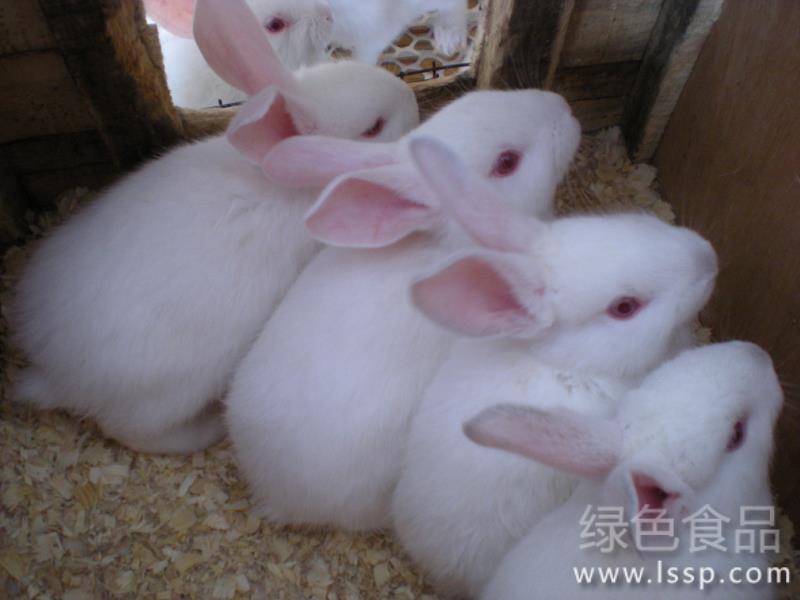
Angora rabbits cannot tolerate high summer temperatures; how can summer management be done well?
Summer heat is unsuitable for Angora rabbits; how can summer management of Angora rabbits be done well
-
Cultivation Technical Points for the New High-Temperature Grey Oyster Mushroom Strain
In the spring of 2001, after our oyster mushroom variety comparison trial ended, when the temperature reached as high as 34°C, several oyster mushroom fruiting bodies successively grew on the waste material pile covered with overgrown weeds. The color ranged from greyish-white to greyish-black, the fruiting bodies grew in clusters, and the largest cluster weighed 2.4 kg. Through directional tissue isolation and fruiting trials using bottle cultivation and bag cultivation methods, it performed well. After 2 years of pilot-scale verification, it was confirmed to be an excellent strain for summer cultivation. By the spring of 2004, virus-free treatment was carried out, making its traits more stable, and it can serve as the dominant strain for summer oyster mushroom production.
-
Key Technical Points for Temperature Management During the Spawn-Running Stage of Oyster Mushrooms
When oyster mushroom mycelium grows thick and vigorous, the spawn-running success rate is high; especially in the sterilized-substrate cultivation process, the mycelium has a lower chance of being infected by contaminant microorganisms than other varieties. However, in the raw-material cultivation process, its temperature requirements during the mycelial growth stage are very strict. Therefore, correctly mastering the suitable spawn-running temperature is the key to ensuring the success of raw-material cultivation of oyster mushrooms. Oyster mushroom mycelium grows vigorously at 20°C-30°C and has strong resistance to contaminant microorganisms; even if occasional contamination occurs, the oyster mushroom mycelium can penetrate and consume it, and the spawn runs quickly, with the mycelium
条件筛选