-
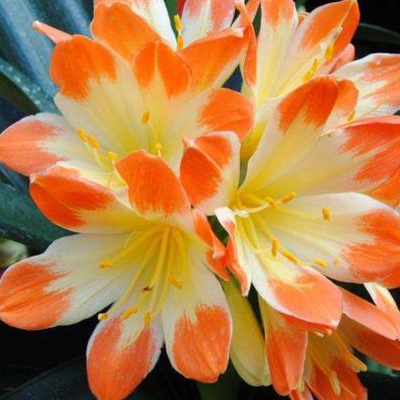
How to care for Clivia in summer? A detailed guide to methods for resisting high temperatures
Clivia (Clivia miniata) is something many people absolutely love, and this Clivia is also quite attractive. What are the summer care methods for Clivia? How should Clivia resist high temperatures in summer: 1. Maintain a ventilated environment: the weather is getting hotter and hotter now, so if you keep a potted Clivia at home
-

Chicken Coop Temperature Control Methods and Precautions
Temperature Control and Precautions for Chicken Coops
-
How to grow fennel? Fennel cultivation methods and suitable temperatures
Fennel is a major development-oriented cash crop in our prefecture, and many people grow fennel. So how do you grow fennel? Do you know? Below we introduce it from three aspects: the environmental requirements for fennel cultivation, the morphological characteristics of fennel, and the key points of fennel cultivation requirements
-
Cultivation requirements for tulip bulbs after 5°C low-temperature treatment
1. Carefully remove the brown outer skin wrapped around the roots before planting. 2. Plant the bulbs in slightly moist soil at the specified number of bulbs per sq m and the correct depth. 3. Provide the recommended temperature conditions at bulb depth and at plant height in the greenhouse. 4. The relative humidity in the greenhouse must never exceed 80%. 5. Keep the soil in the greenhouse at the optimal moisture content. 6. Regularly check the plants, temperature and relative humidity; always use annually calibrated testing equipment. Bulb peeling
-
How to Cope with Low Temperature and High Humidity During the Late Silkworm Stage
When low temperature and high humidity occur during the late silkworm stage, heating should be the main measure, raising the temperature to lower the humidity in the silkworm rearing room. The specific methods are as follows: 1. Heat the silkworm rearing room, and after the temperature rises, open the doors and windows appropriately to ventilate and remove moisture. 2. Prevent the silkworms from eating tender leaves, wet leaves, and immature mulberry leaves; appropriately reduce the amount of mulberry given each time, and do not let leftover leaves accumulate, so as to prevent the silkworm bed from becoming cold and damp. 3. Use more moisture-absorbing and drying materials such as lime to keep the silkworm bed dry. 4. During cold, rainy seasons, after the mulberry leaves are picked, store them for a certain
-
What are the suitable temperature and humidity for pear storage?
The optimal storage temperature for 'Huangjin' and 'Fengshui' pears is 0°C ± 1°C. During storage, the storage temperature should be kept stable, with temperature fluctuations not exceeding ± 1°C. 'Huangjin' and 'Fengshui' pears should be stored at 90%-95% relative humidity; when stored for more than 4 months, the relative humidity should be maintained at 95% throughout. Appendix A-1 Annual Pear Pest and Disease Control Calendar Period Control Target Control Measures Mid-February Spider mites, fruit borers, pear bud moths, yellow whiteflies, scab, globular scale insects After annual or biennial pruning, scrape the coarse bark from the trunk, main branches and scaffold branches, and the rotten bark at diseased scars; the debris
-
Key Points of Off-Season Cultivation Techniques for Oyster Mushrooms During High-Temperature Periods
Off-season cultivated edible mushroom products often sell for 4 to 6 times the price of those in the regular season, yielding quite remarkable returns. To improve off-season edible mushroom cultivation during high temperatures, our institute has explored off-season high-temperature cultivation techniques for oyster mushrooms over the past few years. The results show that off-season oyster mushroom cultivation not only has a high success rate, a short time, fast fruiting and easy management, generally fruiting in 15 to 20 d, with a biological conversion rate of over 90%, but also has a short cycle and significant benefits. It is introduced as follows: 1 Cultivation time arrangement Conventional oyster mushroom cultivation generally stops going to market in mid-May each year.
-
What are the three key checkpoints for high-temperature mushroom cultivation?
Summer mushroom cultivation offers relatively high economic returns. To grow mushrooms well in summer, you must master the "three checkpoints": variety, fermentation, and pest and disease control. 1 Choose suitable high-temperature strains. Currently, the more heat-tolerant mushroom strains include Xincheng 96, Sumo No. 1, and others. Xincheng 96 has a suitable spawn-running temperature of 18-36°C, a suitable greenhouse temperature of 25-33°C, and a fruiting temperature of 20-36°C (optimum temperature 24-33°C). It is currently the most heat-tolerant strain, suitable for spawning in May-June and fruiting in June-September. Its greatest advantage is that the mushrooms do not discolor
-
What harm does excessively high temperature in a snake enclosure in summer do to snakes?
In captive snake breeding, whether in indoor housing or outdoor snake enclosures, the stocking density is generally quite high. In summer, if the temperature inside the snake enclosure is too high, or before and after heavy rain when high temperature and high humidity with poor ventilation easily occur, the snakes being kept will refuse to eat, become inactive, and fail to shed their skin; some may even adopt a passive heat-avoidance strategy and enter "summer dormancy," which will inevitably affect their normal growth and development. Because snakes themselves have no sweat glands, they cannot regulate their own temperature and humidity. When the temperature inside the enclosure approaches 30°C, the snakes' water intake will increase, their breathing will speed up, they will become listless, and their activity will become irregular; in severe cases they will vomit mucus and phlegm (caused by pneumonia), which can lead to death. Diseases contracted by snakes in this season are often highly contagious and tend to cause relatively large economic losses, so medication should be administered promptly for treatment.
-
Rice seedling-stage diseases require careful prevention and control, especially during periods of abnormal temperatures
Seedling-stage diseases are the general term for various physiological and infectious diseases during rice seedling raising, also called seedling rot. Physiological seedling rot refers to symptoms such as seed rot, bud rot, black root, greens wilt and yellow wilt death of seedlings caused by adverse environmental conditions; infectious seedling rot refers to seedling death symptoms caused by the harm of cottony leak and damping-off. During the seedling-raising period in northern rice regions, low temperatures and cold wave weather strikes are common, and the annual incidence rate of seedling rot disease is 10%~23%. Symptom characteristics 1. Physiological seedling rot: 1. Seed rot, refers to seeds rotting before germinating
条件筛选