-

Can Stringy Stonecrop Be Eaten Raw? A Complete Guide to the Precautions
Stringy Stonecrop is a perennial herbaceous succulent plant of the genus Sedum in the Crassulaceae family. It is widely distributed in the central and southern regions of China, and abroad it is mainly found in countries such as North Korea and South Korea. In traditional Chinese medicine in China, Stringy Stonecrop also has the effects of clearing heat and promoting diuresis, and detoxifying and reducing swelling. So
-
How to Grow Stringy Stonecrop? Handling Legginess and Fertilizing Methods
Stringy Stonecrop (Sedum sarmentosum) is a plant that loves moisture; it used to be commonly seen by riverbanks, and now many people grow it at home. It has high value, can be used as medicine and for ornament, so it is deeply loved by people. However, many people, when cultivating it, are not very clear about its specific
-
How to plant Stringy Stonecrop seeds? The latest planting method
Stringy Stonecrop, also known as Gouya Banzhi, Gouya Ban, Shuya Banzhi, Shizhijia, etc., is a perennial herbaceous succulent plant of the Sedum genus in the Crassulaceae family. It generally grows in rock crevices on hillsides, along mountain gullies, and in moist places by riversides. It is extremely easy to cultivate and has no strict requirements for the environment, and can be planted in front of and behind houses
-
How to Grow Stringy Stonecrop? A Detailed Guide to the Latest Cultivation Methods
Stringy stonecrop's excellent traits as a turfgrass and its tolerance of extensive management make it worthy of wide promotion and application in urban landscape projects such as roof greening, ground cover, slope protection, flower beds and hanging baskets, and it can serve as a dedicated turfgrass for roof greening in northern regions, and can be used as courtyard ground
-
A Complete Guide to the Latest Planting Methods for Stringy Stonecrop
Stringy stonecrop is a perennial herbaceous plant in the Crassulaceae family. The whole plant can be used as medicine, and it has the effects of clearing heat and detoxifying, and removing dampness and reducing swelling. In traditional Chinese medicine, it is mainly used to treat conditions such as damp-heat jaundice, gonorrhea, sore throat, eczema, and mouth ulcers. At present, in our country
-
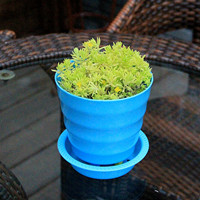
Stringy Stonecrop
Stringy Stonecrop (Sedum sarmentosum), a succulent plant in the genus Sedum of the family Crassulaceae, has creeping stems that root easily; its sterile branches and flowering stems are slender, creeping and rooting at the nodes, continuing up to just below the inflorescence, and 10-25 cm long. Leaves are in whorls of 3, oblanceolate to oblong, 15-28 mm long and 3-7 mm wide.
-
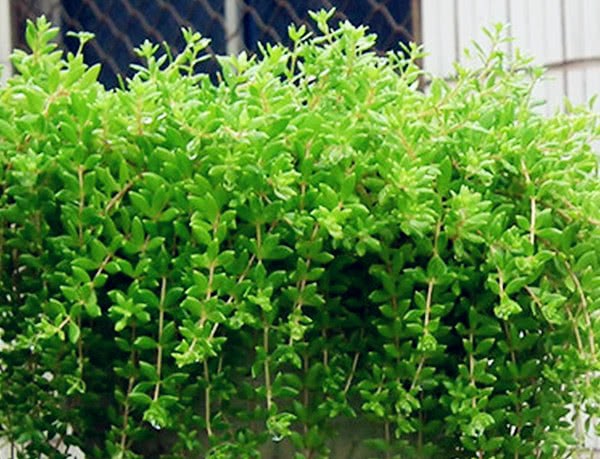
The inconspicuous Stringy Stonecrop by the roadside, when hung up and grown, is more beautiful than a waterfall.
Stringy Stonecrop is also called Kuijingtian, Snake Grass, Dog's Tooth Grass and Stone Vegetable. It is a succulent plant of the genus Sedum in the Crassulaceae family, with creeping stems that root easily; the sterile branches and flowering stems are slender, creeping and rooting at the nodes, extending up to just below the inflorescence, 10-25 cm long. Leaves in whorls of 3...
-
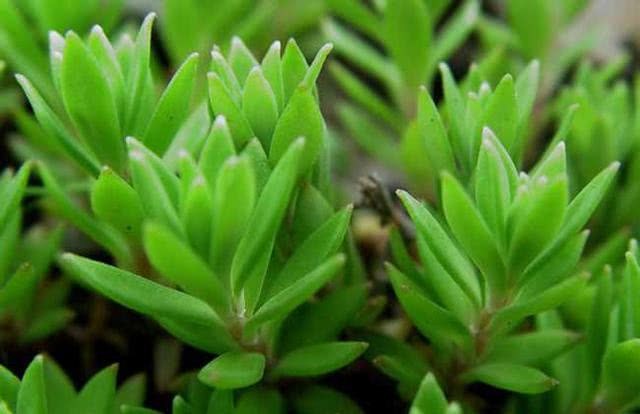
Grow Stringy Stonecrop This Way to Get a Full, Thriving Pot and Fill Your Home with Greenery
Stringy Stonecrop, also known as Dog's Tooth Grass, usually grows in rock crevices on hillsides and in moist places along streams and small rivers. It makes no demands on its environment and can be planted in an open spot in a home courtyard or grown in a pot. In fact...
-

-
What exactly are the differences between Sedum lineare and Stringy Stonecrop?
What exactly are the differences between Sedum lineare and Stringy Stonecrop
条件筛选