What exactly are the differences between Sedum lineare and Stringy Stonecrop?
Sedum lineare, also known as Wanniancao, Fozhijia, and Banzhilian, is a perennial herbaceous plant of the genus Sedum in the Crassulaceae family. Let us take a look below at exactly what the differences are between Sedum lineare and Stringy Stonecrop.
What exactly are the differences between Sedum lineare and Stringy Stonecrop
Stringy Stonecrop
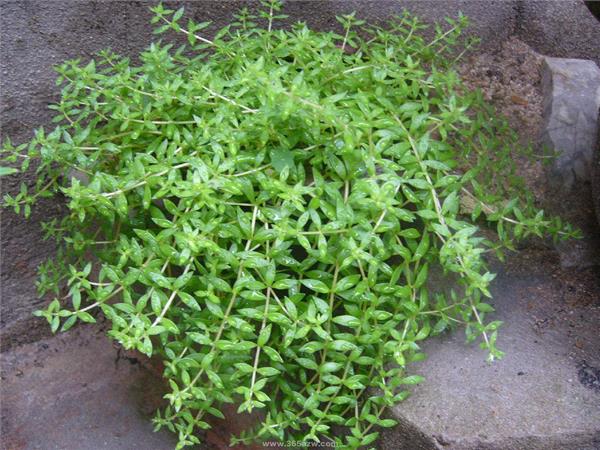
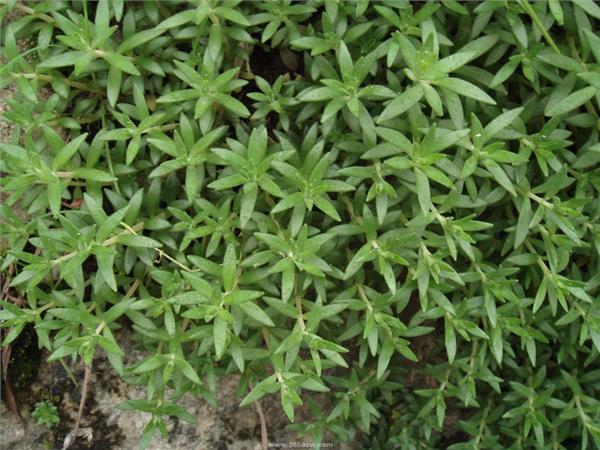
Stringy Stonecrop (Sedum sarmentosum) is a perennial herb of the Crassulaceae family with creeping stems that root easily. Stringy Stonecrop generally grows in rock crevices on hillsides, along mountain gullies, and in moist places by riversides. It is extremely easy to cultivate and has low environmental requirements; it can be planted in front of and behind houses, and can also be grown in pots. It is usually propagated by division. Its flowering period is May to June, and its fruiting period is July to August.
Stringy Stonecrop is a commonly used medicinal herb widely circulated among the people. The whole plant is used as medicine, and it can help us treat many human diseases. Of course, it also has very good health-preserving and wellness benefits, and Stringy Stonecrop has very good effects such as clearing heat and detoxifying, reducing swelling and promoting urination, and discharging pus and promoting tissue regeneration. Therefore, frequently drinking some Stringy Stonecrop tea in our daily lives is also very helpful for our human health.
Sedum lineare
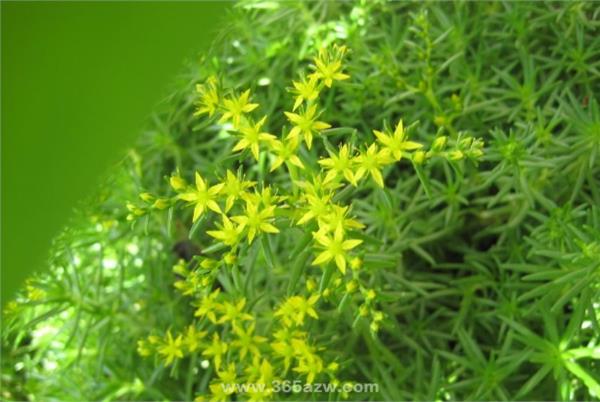
Sedum lineare, also known as Wanniancao, Fozhijia, and Banzhilian, is a perennial herbaceous plant of the genus Sedum in the Crassulaceae family. Its flowering period is April to May, and its fruiting period is June to July. Sedum lineare is a succulent plant with extremely high water content, and the cuticle of its leaf and stem epidermis has an extraordinary ability to prevent water evaporation.
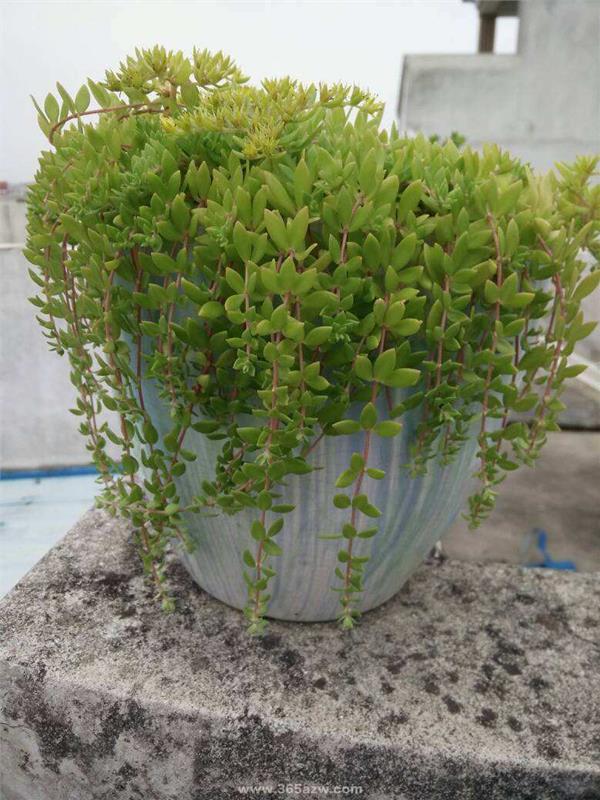
Sedum lineare has strong growth adaptability, is cold-resistant, drought-resistant, salt-alkali-resistant, and barren-resistant, and resists pests and diseases. Its stems are fleshy and juicy, and its small emerald-green leaves resemble jade, neat and beautiful. It can be used both as a potted plant for appreciation and as an outdoor ornamental ground cover. At present, major cities mainly use it for rooftop greening, and its good drought resistance, cooling, and water-saving effects have been confirmed, showing good market prospects.
Sedum lineare has the effects of clearing heat, reducing swelling, and detoxifying. It treats sore throat, carbuncles, furuncles, erysipelas, scalds, snake bites, jaundice, and dysentery.
The differences between Stringy Stonecrop and Sedum lineare
The reason some flower enthusiasts cannot tell Stringy Stonecrop and Sedum lineare apart is that the flowers of both are yellow, and the flower shapes are also very similar, with bright and brilliant colors.
What can be used to tell them apart, then, is the leaves.
Compared with Sedum lineare, Stringy Stonecrop has wide, flat leaves. Sedum lineare has narrow leaves with a somewhat round feel.
People also often take Stringy Stonecrop in daily life. Of course, most people like to drink Stringy Stonecrop tea, which not only tastes very good but is also very helpful for our wellness and health. Moreover, Stringy Stonecrop has very good effects of clearing heat and detoxifying, reducing swelling and promoting urination, so it is deeply loved by people. Above we have also learned about the differences between Stringy Stonecrop and Sedum lineare, and we should remember them.
I. The effects of Stringy Stonecrop
Effects: clearing heat and detoxifying, clearing damp-heat, and lowering alanine aminotransferase.
Indications: clearing damp-heat, detoxifying, damp-heat jaundice, strangury, diarrhea and dysentery, sore throat, carbuncle and sore toxin, eczema, scalds, insect and snake bites, hemoptysis, epistaxis, and hematuria. Acute and chronic hepatitis. Used for damp-heat jaundice. It can detoxify, drain dampness, and relieve jaundice. It is often used together with Yujin (Curcuma aromatica), Yinchenhao (Artemisia capillaris), and Jinqiancao (Lysimachia christinae). Used for carbuncles and sores, venomous snake bites, scalds and burns, etc. It can clear heat and detoxify. The fresh product alone can be washed, mashed, and the juice taken orally. The juice can also be applied externally, or the residue applied externally to the affected area.
II. The actions of Stringy Stonecrop:
Stringy Stonecrop can clear damp-heat and detoxify. Stringy Stonecrop is used for damp-heat jaundice, difficult urination, carbuncles and sores, and acute and chronic hepatitis. Stringy Stonecrop has the effect of lowering alanine aminotransferase. Stringy Stonecrop is used for the active stage of acute hepatitis, persistent hepatitis, and chronic hepatitis.
1. Stringy Stonecrop is used for scalds and burns and carbuncles, swellings, sores, and ulcers: this product has good heat-clearing and detoxifying effects. For scalds and burns, fresh herb can be washed, mashed, and the juice applied externally; for incipient carbuncles, in addition to decocting and taking internally, fresh herb can also be washed, mashed, and applied externally at the same time, which can also reduce carbuncles and swelling.
2. Stringy Stonecrop treats animal bites. Generally, after a venomous snake bite, the wound is first disinfected, and a three-edged needle or thick needle is used to puncture the "Bafeng" acupoints or "Baxie" acupoints between the obviously swollen fingers or toes, draining toxin through needling, and detoxifying medicine is taken internally. Then pre-mashed fresh Stringy Stonecrop is applied externally around the wound, changing the dressing 2 times daily; after several consecutive days of application, it heals.
3. Stringy Stonecrop is used for venomous snake bites: Stringy Stonecrop is good at neutralizing snake venom and is a commonly used folk medicine for treating venomous snake bites. Half a jin of fresh herb can be used alone, washed with cold boiled water, mashed and squeezed for juice to take internally, 1 to 2 times daily; it can also be combined with Banzhilian (Scutellaria barbata), wild chrysanthemum, Guizhencao (Bidens bipinnata), Plantago (Plantago asiatica), raw rhubarb, and other medicines, decocted and taken internally, with fresh herb washed, mashed, and applied externally.
4. Stringy Stonecrop treats scalds and burns, carbuncles and malignant sores, mastitis, mumps, erysipelas, scars and boils, etc. Generally, fresh herb is collected, washed clean, mashed, and applied externally, changed 2 times daily, and it heals within several days.
5. Stringy Stonecrop is used for infectious hepatitis: in recent years, clinically this product alone has been used to treat infectious hepatitis (including acute icteric hepatitis, acute anicteric hepatitis, as well as persistent hepatitis and the active phase of chronic hepatitis), and it has a certain effect on lowering serum transaminase, and can reduce or eliminate the patient's damp-heat symptoms such as bitter taste in the mouth, poor appetite, and dark yellow urine. An appropriate amount of fresh Stringy Stonecrop is mixed with a little each of walnut oil and baijiu, mashed, and applied externally.
6. Stringy Stonecrop treats liver cancer. Stringy Stonecrop, Banzhilian (Scutellaria barbata), Shengwaleng, and Shiyan 30 grams each, Loulu (Rhaponticum uniflorum) and Yiyiren (Coix seed) 15 grams each, Danggui (Angelica sinensis), Danshen (Salvia miltiorrhiza), and Honghua (safflower) 9 grams each, Bayuezha, Baishao (white peony), and Chenpi (dried tangerine peel) 6 grams each, decocted in water 3 times and taken in divided doses, 1 dose daily. It can eliminate symptoms and shrink liver swelling.
7. Stringy Stonecrop reduces inflammation and swelling, used for inflammatory swelling and pain: for cellulitis, Stringy Stonecrop is ground into powder and mixed with Vaseline into a 50% ointment for local external application.
8. Stringy Stonecrop treats leukemia. Stringy Stonecrop and Zhuyangyang (Galium aparine) 30 grams each, Yangti (Rumex japonicus), Goushecao (Tephroseris kirilowii), Zicao (Arnebia euchroma), Shengdi (Rehmannia raw), and Huangjing (Polygonatum sibiricum) 15 grams each, Danggui (Angelica sinensis) and Danshen (Salvia miltiorrhiza). Chishao (red peony) 9 grams each, Chuanxiong (Ligusticum chuanxiong) and Gancao (licorice) 6 grams each, decocted in water 2 times and taken in divided doses. It can achieve complete or partial remission of clinical symptoms. It is suitable for all acute types.
9. Stringy Stonecrop treats nasopharyngeal cancer. An appropriate amount of fresh Stringy Stonecrop is mashed and applied externally to the local area, 1 to 2 times daily. Separately, rushes are mashed and held in the mouth. At the same time use: wild buckwheat, Hanfangji (Stephania tetrandra), and Tuniuxi (Achyranthes bidentata) 30 grams each, all using fresh products, decocted and taken. Continue until the nasopharyngeal mass disappears and symptoms are nearly cured.
10. Stringy Stonecrop treats lung cancer. Stringy Stonecrop and Baiying (Solanum lyratum) 30 grams each, decocted in water, 1 dose daily. Taken persistently, it can improve the condition, basically eliminate clinical symptoms, and gradually shrink the lesions.
the active phase of chronic hepatitis), and it has a certain effect on lowering serum transaminase, and can reduce or eliminate the patient's damp-heat symptoms such as bitter taste in the mouth, poor appetite, and dark yellow urine. An appropriate amount of fresh Stringy Stonecrop is mixed with a little each of walnut oil and baijiu, mashed, and applied externally.6. Stringy Stonecrop treats liver cancer. Stringy Stonecrop, Banzhilian (Scutellaria barbata), Shengwaleng, and Shiyan 30 grams each, Loulu (Rhaponticum uniflorum) and Yiyiren (Coix seed) 15 grams each, Danggui (Angelica sinensis), Danshen (Salvia miltiorrhiza), and Honghua (safflower) 9 grams each, Bayuezha, Baishao (white peony), and Chenpi (dried tangerine peel) 6 grams each, decocted in water 3 times and taken in divided doses, 1 dose daily. It can eliminate symptoms and shrink liver swelling.
7. Stringy Stonecrop reduces inflammation and swelling, used for inflammatory swelling and pain: for cellulitis, Stringy Stonecrop is ground into powder and mixed with Vaseline into a 50% ointment for local external application.
8. Stringy Stonecrop treats leukemia. Stringy Stonecrop and Zhuyangyang (Galium aparine) 30 grams each, Yangti (Rumex japonicus), Goushecao (Tephroseris kirilowii), Zicao (Arnebia euchroma), Shengdi (Rehmannia raw), and Huangjing (Polygonatum sibiricum) 15 grams each, Danggui (Angelica sinensis) and Danshen (Salvia miltiorrhiza). Chishao (red peony) 9 grams each, Chuanxiong (Ligusticum chuanxiong) and Gancao (licorice) 6 grams each, decocted in water 2 times and taken in divided doses. It can achieve complete or partial remission of clinical symptoms. It is suitable for all acute types.
9. Stringy Stonecrop treats nasopharyngeal cancer. An appropriate amount of fresh Stringy Stonecrop is mashed and applied externally to the local area, 1 to 2 times daily. Separately, rushes are mashed and held in the mouth. At the same time use: wild buckwheat, Hanfangji (Stephania tetrandra), and Tuniuxi (Achyranthes bidentata) 30 grams each, all using fresh products, decocted and taken. Continue until the nasopharyngeal mass disappears and symptoms are nearly cured.
10. Stringy Stonecrop treats lung cancer. Stringy Stonecrop and Baiying (Solanum lyratum) 30 grams each, decocted in water, 1 dose daily. Taken persistently, it can improve the condition, basically eliminate clinical symptoms, and gradually shrink the lesions.