-

Why peach blossoms are called a good spring medicine
In the third month of spring, peach blossoms are in full bloom. Besides being ornamental, peach blossoms also have fairly high medicinal value. They contain kaempferic acid, coumarin, trifolioside, naringenin, and vitamins A, B, and C, among other components. They are bitter in taste and neutral in nature, non-toxic, and suitable for treating illness both internally and externally. Traditional Chinese medicine holds that the peach is sweet and warming in nature, with a pungent and sour taste, and has the effects of improving complexion and relieving consumptive fever. Fresh peaches tonify the middle and boost qi, and promote fluid production to quench thirst. For patients with high blood pressure, eating one peeled fresh peach morning and evening each day is beneficial for keeping blood pressure stable; for patients with iron-deficiency anemia and iron deficiency, regularly eating fresh peaches has a certain
-
How to prevent and control bee diseases in spring? A detailed explanation of integrated control measures
The occurrence of bee diseases is directly related to beekeeping and management techniques. Once a disease breaks out, it will inevitably affect colony growth and economic returns. Especially in northern China, where the temperature difference between early and late spring is large and nectar and pollen sources are scarce, bee colonies are most prone to bee diseases. Therefore, in spring, the measure of "prevention first, treatment as a supplement" should be used to control the occurrence of bee diseases. Selection and treatment of apiary sites The basic conditions for beekeepers when choosing a site should be shelter from the wind, facing the sun, and dry terrain. In spring, choose low mountain areas or cutover land with many willow species and mainly Aceraceae plants. Only
-
Spring Care Methods and Precautions for Pet Dogs
In this season, many families with pets surely also hope their beloved fur babies can stay healthy and well, but recently they keep finding that their pets are either coughing or having diarrhea, which worries pet owners terribly, so here we introduce some knowledge about spring pet care. 1. Transmission routes of spring diseases 1. Airborne transmission; in spring, the wind in Beijing is relatively strong, and there are often sandstorm days. Pet feces, after being weathered over a winter, become relatively dry, while infectious diseases, parasites, and parvovirus, etc. can still remain infectious within a year. The wind will blow animal feces far away, expanding the range in which animals can become infected.
-
What is good to feed rabbits in spring and summer? Don't miss these three treasures
Garlic, dried tangerine peel and chili pepper are common seasonings in home cooking and are known as the "three treasures of the kitchen". Because they contain a variety of nutrients, are non-toxic and have no side effects, do not easily cause harmful residues in livestock products, and also have disease-prevention and therapeutic effects, they are also called the three treasures of pure natural agriculture and forestry breeding. In recent years, the author has used the three treasures in domestic rabbit production and achieved good results. 1. They can increase rabbits' appetite. Adding an appropriate amount of garlic powder, dried tangerine peel powder and chili powder to the feed can mask the unpleasant odor of certain feed ingredients, increase aroma, and improve the feed
-
Ten early technical measures for spring tea management
Good spring tea management is the key to ensuring a bumper tea harvest throughout the year. Practice has proven that applying the "ten early" techniques in spring tea management gives very good results. 1. Apply base fertilizer early. Apply base fertilizer early after the tea season ends to replenish the nutrients consumed by that year's tea growth, so that the tea plants have sufficient nutrient reserves, while also strengthening the tea plants' activity in autumn and winter, enhancing their photosynthetic capacity and improving their cold resistance through the winter, which helps the next year's spring tea sprout early and grow vigorously. Base fertilizer should be applied before the autumn equinox, when the root rapid-growth period arrives, and no later than the end of September. Organic fertilizer should be the main type; for mature
-
After spring tea is picked, the tea plant branches and stems need even more protection
Whether or not tea plants are managed after the spring tea harvest makes a big difference, because after the spring tea harvest the plant body has already consumed a large amount of nutrients. If management cannot keep up at this time, it will not only affect the yield and quality of summer and autumn tea, but also affect the yield and quality of next year's spring tea. Based on our farm's practical experience, the following key points should be carried out after the spring tea harvest: 1. Reasonable topdressing. According to measurements, producing every 50 kg of dry tea requires absorbing about 2.5-3 kg of nitrogen, 0.9-1.2 kg of phosphorus, and 1.1-1.5 kg of potassium from the soil. Between the tea plants, 30 cm
-
How to carry out early-stage spring tea management? A detailed explanation of nine steps
Spring tea is the tea crop with the highest yield and the best quality of the year, fetching high prices and delivering good economic returns. Practice has proven that doing a good job of early-stage spring tea management plays a major role in increasing spring tea yield and improving spring tea quality and profitability. Therefore, it is essential to promptly complete tea garden management before the Spring Festival. 1. Apply additional and early topdressing. The time for applying the bud-forcing fertilizer is generally 15-30 days before the tea plant buds break, that is, before the end of February, applying 25-30 kg of urea per mu or 50-60 kg of ammonium bicarbonate or 50 kg of special compound fertilizer for tea plants.
-
After spring tea harvesting, attention should be paid to summer management of the tea garden.
After spring tea harvesting is finished, summer tea garden management work should be done promptly. 1. Fertilize in time. Apply 15-20 kg of urea per mu, or 25 kg of Zhongcha No. 1 fertilizer. Do not apply compound fertilizer with a high proportion of phosphorus and potassium, otherwise it will accelerate the reproductive growth of tea plants. During midsummer, carry out foliar topdressing. 2. Cultivate and weed. After June, apply chemical weed control once every 25 days. Commonly used herbicides include 10% glyphosate and 25% paraquat aqueous solution, etc. In July, deep-plow the tea garden once, which can both
-
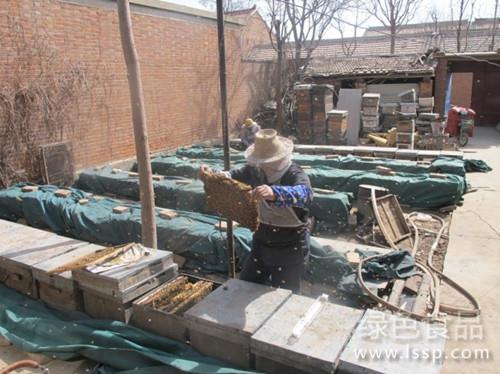
Key points for spring bee management: how to restore colony strength and make use of nectar sources
How to restore colony strength and make use of nectar sources: key points for spring bee management
-
How to restore a weak ox's condition in spring? Sharing practical experience
1. Dissolve 200 g of white sugar or brown sugar per ox per day in an appropriate amount of warm water and give it to drink, continuously for 1 week. 2. Per ox per day, use 250 g of okara (tofu dregs), 50 g each of rice bran and wheat bran, and 10 g each of fishmeal and salt, mix evenly, and feed before grazing in the morning, continuously for 2-3 weeks, with remarkable results. 3. Use 100 g each of soybeans and corn, add water and grind them into a paste, then add 250 g of rice bran and an appropriate amount of salt, mix well, and feed once daily after the working ox finishes grazing, continuously for 1 week. 4. Cook
条件筛选