-

Detailed Explanation of Key Techniques for Rapid Mycelial Growth of Oyster Mushrooms in Spring
In spring, temperatures are low and oyster mushroom mycelium grows slowly. Measures such as increasing the amount of lime, bagging directly, increasing the inoculation amount, creating multiple holes for oxygen supply, stacking bags for mycelial growth, raising the greenhouse temperature, and regularly turning the stacks can ensure successful mycelial growth. Generally, the mycelium fully colonizes the bags in 20 days, primordia form in about 1 month, and fresh mushrooms can be harvested and brought to market in about 35 days. 1. Increase the amount of lime. When mixing the substrate, increase the lime amount to 5%, bringing the pH of the substrate to 8-9, so as to inhibit the growth of contaminating microorganisms and increase the mycelial growth rate. 2. Bag directly. After the raw substrate is mixed, bag it directly without fermentation
-
Key Management Techniques for Spring Mushrooms in Log Cultivation of Shiitake
In spring, temperatures rise slowly, relative air humidity is high, and the temperature difference between day and night is large, creating favorable climatic conditions for shiitake production. Spring mushroom production is much the same as autumn mushroom production. When the spring rain season arrives, lay the logs that have long been in a dry state down on the ground, let them catch rainwater and absorb enough moisture; at this time the mycelium activity within the logs also becomes increasingly active, and you can prepare to enter spring mushroom management. In early spring, the mushroom yard should be tidied up, clearing small shrubs and dead branches so as to ensure good ventilation, avoid excessive dampness in the yard and the spread of contaminating fungi, and facilitate harvesting and management. Whether new
-
Key Points for Winter and Spring Management and Stimulation Techniques of Shiitake Mushrooms
Winter and spring management of shiitake mushrooms is the management of the fruiting period, which determines the level of economic benefit. The fruiting period is a transitional stage from mycelial development to fruiting body development. When management shifts from the spawn-running room to the fruiting period, the mycelium must reach physiological maturity. The standards for maturity are: first, a slight trembling sensation when holding the mushroom bag in the hand; second, the amount of wart-like growths accounts for 3/4 of the bag surface area and they become soft and elastic; third, pigment secretion covers 2/3-1/2 of the bag surface; fourth, the cultivation time must be 60-70 days, with an effective accumulated temperature of 1200°C. At the
-
How to increase the yield of spring-planted shiitake mushrooms? Master these tips for high yields
Raise the temperature of the mushroom bed to create conditions for mushroom growth. Since the mushroom yard is still cold in early spring, natural air temperature can be used together with artificial regulation. The method is: cover the film tightly to increase the ground temperature, and at the same time choose sunny days to spread the shading materials on the shed surface thinly, letting sunlight penetrate into the mushroom yard, increasing the heat source and raising the mushroom bed temperature; at night, cover the film tightly to protect against the cold. The large day-night temperature difference in early spring can promote the occurrence of mushroom buds. Pat the mushroom logs to promote the recovery of mycelial growth. Because the climate is cold in early spring, the mycelium is mostly in a dormant state, producing no mushrooms or very few mushrooms. Generally, patting can be used
-
Key Technical Points for Over-summering Management of Spring Bag-cultivated Shiitake Mushrooms
After the color change of spring bag-cultivated shiitake mushrooms is completed in mid-June, the high-temperature season begins. Shiitake mycelium is intolerant of high temperatures and drought; when the temperature exceeds 35°C and persists for 4 hours, the mycelium begins to die, or even self-lyse. The following are the key technical points for ensuring that mushroom bags safely over-summer in production, for the reference of mushroom growers: 1. Cooling. Use shade, ventilation, sprinkling water on the ground, hanging clean wet burlap pieces and other methods to lower the temperature, so that the substrate temperature does not exceed 30°C. On sunny summer days, close doors and windows from 9 o'clock until sunset to prevent hot air from entering the room. 2. Shading. Thicken the shading
-
Key Management Techniques for Spring Mushrooms in Bag-Cultivated Shiitake (Lentinula edodes)
Spring management of shiitake mushrooms must be tailored to local climate conditions. The spring climate in Jiangnan is characterized by low temperatures, overcast and rainy weather, and high humidity. Once the daily average temperature exceeds 12°C, spring mushroom management can begin. Spring is the peak season for outdoor shiitake production, accounting for 30%-60% of the annual shiitake yield (depending on the variety and how early or late the substrate logs were made). Before management begins, water supplementation should be carried out separately according to the number of fruiting flushes, the degree of water loss, and contamination conditions. (1) Water supplementation: After 2-3 harvest flushes in autumn, the water content of the substrate logs gradually decreases as the number of fruiting bodies increases, the management period lengthens, and the sawdust decomposes and nutrients are consumed. By early spring, the water content of the substrate logs is only 30%-35%, and the mycelium is in a semi-dormant state. Therefore, water supplementation is essential to meet the moisture demands for primordium formation.
-
Key Technical Points for Disaster Resistance and Mitigation and Spring Management of Edible Fungi
1. Clear away ice and snow, dig ditches for drainage. Promptly remove accumulated ice and snow from the top and surroundings of mushroom sheds (houses) to prevent them from collapsing. Dig drainage ditches around the mushroom sheds (houses) to keep drainage smooth and avoid rain and snowmelt attacking the mushroom substrate. 2. Stop spraying water and keep the substrate surface as dry as possible. Because at low temperatures the mycelium of edible fungi enters a dormant state, and spraying water can easily cause death. 3. Strengthen heat preservation management of mushroom sheds (houses). Small arched tunnels can be set up inside the greenhouse, and coverings such as plastic film and straw curtains can be added outside the shed for insulation and dehumidification. Use plastic
-
Detailed Explanation of Mushroom House Management Techniques in Winter and Spring
In winter, the variety and quantity of fresh vegetables decrease, and edible fungi begin to sell well on the market. Overwintering mushroom house management must be strict; a slight carelessness can cause relatively large losses. When the temperature of a mushroom house cultivating edible fungi drops below 10°C, autumn mushroom production has already ended, and the overwintering management period begins. During this period, the main focus is to prevent the casing soil particles on the mushroom bed from becoming excessively dry, the mycelium from shriveling and shrinking, and the indoor waste gas from becoming too abundant, which can freeze the spawn to death and cause reduced spring mushroom yields. Water spraying and topdressing should be done at fixed times and in fixed amounts. In winter, the climate is dry, and the evaporation from the bed surface is high, so as
-
How to reduce contamination in spring cultivation of white fungus
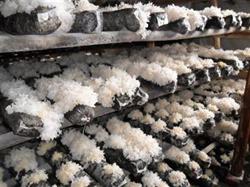
In spring white fungus cultivation, most damage is caused by green mold, with some contamination by Rhizopus and Mucor, while Neurospora is rare. Green mold, Mucor and Rhizopus often occur at the edges of the inoculation holes in the fungus bags, or when the mycelial rings of two holes meet 9-10 days after inoculation, appearing at the front of the mycelium, and also on the bag walls. Green mold also occurs on the fruiting bodies, causing the fungus fronds to rot. Neurospora mostly occurs at the gaps where the bag openings are tied. The main causes of contamination are incomplete sterilization of the substrate bags, lax aseptic technique, holes in the bag film, impure spawn carrying contamination, or contamination of the environment.
-
Key Techniques for High-Yield Cultivation of King Oyster Mushroom in Winter and Spring
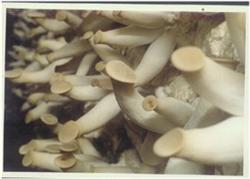
Cultivating king oyster mushroom in winter and spring is not only easy to achieve high yields, but the mushrooms also have thick, tender flesh, a delicious taste and rich nutrition, making them highly popular with consumers. The main techniques for high-yield cultivation of king oyster mushroom in winter and spring are as follows: 1. Cultivation time. From spawning to fruiting takes about 50 to 60 days. Generally, bag preparation and cultivation can be scheduled from October of the current year to February of the following year, and fruiting can occur from November of the current year to March of the following year. Cultivation can be done indoors or in outdoor greenhouses.
条件筛选