-

Which six diseases should be prevented when keeping dogs in spring?
Spring is a period of high incidence for various dog diseases. Therefore, it is very important to do a good job in the prevention and treatment of dog diseases in spring. Specifically, the prevention and treatment of the following six diseases should be carried out well. 1. Rabies Rabies, commonly known as mad dog disease and hydrophobia, is an acute, contact zoonotic disease caused by rabies virus, mainly invading the central nervous system. Preventive measures: The principle of prevention is mainly to do a good job in "prevention, inspection, elimination, and treatment." 1. Prevention: Make sure vaccination is done well. Dilute each bottle of vaccine with 10 ml of sterile water. After fully dissolving, inject 1 ml subcutaneously or intramuscularly into each dog.
-
What are the key points for raising spring piglets?
Sows are mated and conceive in October to November, and the piglets born in February to March of the following year are called spring piglets, also known in some places as twelfth-month piglets. Choosing to raise spring piglets can bring relatively good economic returns. This is because sows have a high conception rate when mated in October to November, the outside temperature is relatively low in late pregnancy, the sows have a strong appetite, and the embryos can obtain rich nutrition, so the piglets born are heavy and have a high survival rate. In addition, because the sows have a strong appetite, they produce plenty of milk of good quality, the piglets develop robustly, have a heavy weaning weight, and accordingly gain weight quickly.
-
How to prevent and control bee diseases in spring? A detailed explanation of integrated control measures
The occurrence of bee diseases is directly related to beekeeping and management techniques. Once a disease breaks out, it will inevitably affect colony growth and economic returns. Especially in northern China, where the temperature difference between early and late spring is large and nectar and pollen sources are scarce, bee colonies are most prone to bee diseases. Therefore, in spring, the measure of "prevention first, treatment as a supplement" should be used to control the occurrence of bee diseases. Selection and treatment of apiary sites The basic conditions for beekeepers when choosing a site should be shelter from the wind, facing the sun, and dry terrain. In spring, choose low mountain areas or cutover land with many willow species and mainly Aceraceae plants. Only
-
Spring Care Methods and Precautions for Pet Dogs
In this season, many families with pets surely also hope their beloved fur babies can stay healthy and well, but recently they keep finding that their pets are either coughing or having diarrhea, which worries pet owners terribly, so here we introduce some knowledge about spring pet care. 1. Transmission routes of spring diseases 1. Airborne transmission; in spring, the wind in Beijing is relatively strong, and there are often sandstorm days. Pet feces, after being weathered over a winter, become relatively dry, while infectious diseases, parasites, and parvovirus, etc. can still remain infectious within a year. The wind will blow animal feces far away, expanding the range in which animals can become infected.
-
What is good to feed rabbits in spring and summer? Don't miss these three treasures
Garlic, dried tangerine peel and chili pepper are common seasonings in home cooking and are known as the "three treasures of the kitchen". Because they contain a variety of nutrients, are non-toxic and have no side effects, do not easily cause harmful residues in livestock products, and also have disease-prevention and therapeutic effects, they are also called the three treasures of pure natural agriculture and forestry breeding. In recent years, the author has used the three treasures in domestic rabbit production and achieved good results. 1. They can increase rabbits' appetite. Adding an appropriate amount of garlic powder, dried tangerine peel powder and chili powder to the feed can mask the unpleasant odor of certain feed ingredients, increase aroma, and improve the feed
-
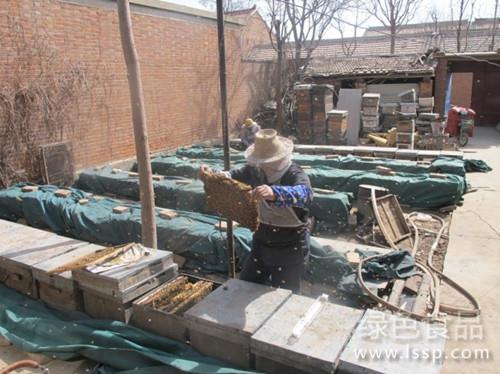
Key points for spring bee management: how to restore colony strength and make use of nectar sources
How to restore colony strength and make use of nectar sources: key points for spring bee management
-
How to restore a weak ox's condition in spring? Sharing practical experience
1. Dissolve 200 g of white sugar or brown sugar per ox per day in an appropriate amount of warm water and give it to drink, continuously for 1 week. 2. Per ox per day, use 250 g of okara (tofu dregs), 50 g each of rice bran and wheat bran, and 10 g each of fishmeal and salt, mix evenly, and feed before grazing in the morning, continuously for 2-3 weeks, with remarkable results. 3. Use 100 g each of soybeans and corn, add water and grind them into a paste, then add 250 g of rice bran and an appropriate amount of salt, mix well, and feed once daily after the working ox finishes grazing, continuously for 1 week. 4. Cook
-
Swine spring diarrhea is swine dysentery; early prevention and early treatment are key
Swine dysentery is an intestinal infectious disease caused by Brachyspira hyodysenteriae. It occurs mostly in growing pigs, with few cases in piglets and adult pigs. It spreads slowly, has a long epidemic period, a high incidence rate, and a low mortality rate, and can harm pig herds over the long term. Affected pigs pass feces mixed with large amounts of mucus and blood, often in a jelly-like form. Drug treatment for this disease is effective, but relapse is easy after withdrawal, making it difficult to cure completely. Drugs such as mequindox, berberine, bacitracin, olaquindox, and tetracycline can be selected for treatment. If the therapeutic effect is found to be poor, the drug should be switched as soon as possible.
-
Detailed Explanation of Key Technical Points for Spring Broodstock Cultivation
After the beginning of spring, the water temperature gradually rises back up, especially during the pre-spawning stage from March to April, when fish activity intensifies, development accelerates, and food intake increases accordingly. This stage is an important period for gonadal development of broodstock. Practice has proven that the quality of spring broodstock cultivation is the key to the success or failure of artificial breeding of Chinese carp, therefore, the following points must be well implemented. 1. Feeding: Grass carp broodstock are mainly fed grass and concentrated feed. According to the availability of grass, generally grass is fed in the morning and concentrated feed in the afternoon, both of which should be fed at fixed feeding platforms. When green feed is scarce in early spring,
-
What are the four key points to get right for fish farming at the start of spring?
1. Fertilization: In early spring, when the pond water temperature stabilizes at 8°C-10°C, start applying supplemental fertilizer to cultivate natural food organisms in the water. The amount of fertilizer should be determined according to the fertility of the water quality and the quality of the fertilizer. Generally, apply 60-90 kg of human excrement and urine per mu; or 100-150 kg of livestock manure. If chemical fertilizer is used, follow a nitrogen-to-phosphorus-to-potassium ratio of 1:1:0.5. When applying, first crush and mix with water, then splash evenly over the whole pond, with a total amount of 3-7 kg per mu, and an interval of 5-10 days between each application. Keep the pond water quality yellow-brown or yellow-green, with a transparency of 30 cm
条件筛选