-
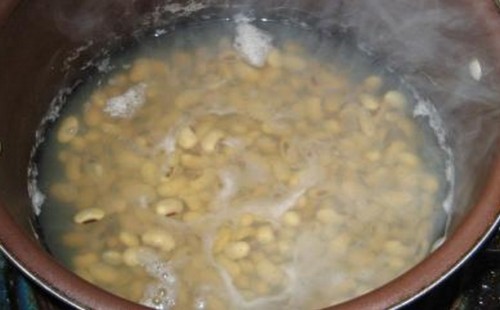
Is it good to soak soybeans in water and use it to water flowers? Disease prevention methods you need to master
Scientific and reasonable water and fertilizer intake is an effective means of promoting the growth of potted flowers and plants, and it is also the most basic and commonly used care measure. Whether potted flowers and plants grow well depends to a large extent on whether water and fertilizer management is done properly
-

How to grow spring-planted soybeans in Northeast China? A detailed explanation of the technical guidance
In the autumn and winter of last year, precipitation in Northeast China was lower than normal, soil moisture was insufficient, and drought was relatively severe. This spring there has been more rain and snow, temperatures began to rise rapidly in early April, and temperature and precipitation are close to normal. The Soybean Expert Steering Group of the Ministry of Agriculture, together with the National Agricultural Technology Extension Service Center, based on full investigation, proposed the following technical guidance for spring soybean planting: 1. Strictly select excellent varieties. Because of the dry climate last autumn, soybeans may not have matured normally physiologically at harvest, and mechanical threshing increased the possibility of damage to the seed embryo
-
The Correct Method for Spraying Nano Magnetic Energy Liquid on Soybeans
This year, driven by the market, farmers across our province have shown exceptionally high enthusiasm for planting soybeans, adopting high-yield practical cultivation techniques and increasing their inputs, achieving uniform, complete and vigorous seedlings, laying a solid foundation for a large-scale bumper harvest. Recently, many farmer friends have called to ask how Nongwang Nano Magnetic Energy Liquid should be sprayed. Here is a brief introduction: 1. Foliar spraying: What does Nongwang Nano Magnetic Energy Liquid do? Nano Magnetic Energy Liquid is a non-chemical product, a magnetic liquid prepared using the method of magnetic drug bioengineering.
-
How to Grow High-Yield Soybeans? A Detailed Guide to the "Four Changes and One Addition" Cultivation Technique
Traditional drill sowing of soybeans results in narrow rows and overcrowding, and along with various other factors, yields have long hovered around 100-150 kg. Through years of experimental research, we have developed a new approach that can increase soybean yields by more than 40%, namely the "Four Changes and One Addition" technique. The usual measures for increasing soybean yields include, besides selecting new high-quality, high-yield varieties, paying attention to crop rotation. According to experiments, after years of continuous cropping, soybeans show slow growth, short plants, yellowing lower leaves, early leaf drop, and few pods with small seeds. Experiments
-
How to grow soybeans in Northeast China? Main recommended high-oil, high-yield varieties and techniques
The Northeast high-oil, high-yield soybean demonstration project implemented by the state, after two years of development, has introduced a group of excellent high-oil soybean varieties and advanced production techniques, which are gradually being widely applied in large-scale production. On this basis, the Northeast high-oil, high-yield soybean demonstration technical expert group offers the following recommendations for the seed and techniques used in high-oil soybean production in the region in 2004: In 2004, Heilongjiang Province and its reclamation areas can, according to the accumulated temperature and production conditions of different regions, continue to use the high-oil varieties that had already been successfully promoted in large-scale production in 2003,
-
Detailed Explanation of Key Techniques for Staged Sowing of Soybeans
Staged sowing can stagger the harvest period of fresh soybeans from that of corn, which helps extend the supply period, expand market capacity, and avoid the phenomenon of excessive supply caused by large-scale concentrated market entry, where large volume leads to low prices and increased production without increased income. It can also alleviate the labor conflict during the busy farming season to a certain extent. To do a good job in staged sowing, the key is to achieve the following four points. 1. Observe local market conditions. When growing fresh soybeans and corn, high yield is not the goal; high efficiency is what matters. "Rare things are precious," and market prices are always inversely proportional to
-
Key Cultivation and Management Techniques for High-Yield Soybeans
Seed treatment. Generally, seed selection by hand is adopted, removing small, mixed, diseased, and insect-damaged seeds to achieve uniform hilum color. Before sowing, conduct 1-2 germination tests; a germination rate above 95% qualifies the seeds for planting. Before sowing, for each kilogram of seed, use 1-2 grams of ammonium molybdate dissolved in 30 grams of warm water and mix into the seed; after drying in the shade, mix in soybean rhizobium fertilizer at 5% of the seed weight; after drying in weak light, the seeds can be sown, mixing and using as you go. Field selection. Generally choose plots following corn, sorghum, millet, and similar crops, avoiding continuous cropping and adjacent cropping. Land preparation. Harrow the land in mid-March.
-
How to grow pothos with soybeans? Practical care methods shared
Pothos is a very easy-to-grow green plant. Because of its strong sprouting ability and easy care, it is very suitable for beginner growers to practice with. But for newly bought pothos, how to make it grow lush is a problem many beginner growers face. So, how do you make pothos grow lush?
-
New High-Yield Cultivation Technique for Soybeans: "Four Changes and One Addition"
With the traditional tillage and sowing method for growing soybeans, the rows are narrow and the plants too dense, and combined with various other reasons, yields have long hovered around 100-150 kg. Through years of experimental research, we have worked out a new approach that can increase soybean yields by more than 40%, namely the "Four Changes and One Addition" technique. The usual measures for raising soybean yields, besides selecting new high-quality, high-yield varieties, also include paying attention to crop rotation. According to experiments, after many years of continuous cropping, soybeans show slow growth, short plants, yellowing lower leaves, early leaf drop, and few pods with small seeds. Experiments have also proven that continuous cropping (monocropping) for more than 3 years can reduce yields by 20%-30%, or even more, and 2 years of continuous cropping following a one-year break can reduce yields by more than 30%. Therefore, crop rotation and changing to a different crop are of great significance in soybean production. To achieve high-yield and super-high-yield soybean cultivation, the new "Four Changes and One Addition" cultivation technique should be implemented on this basis. The specific methods of "Four Changes and One Addition" are:
-
How to Achieve High Yield and High Efficiency in Soybeans? Six Measures to Help You Get There
Matching superior varieties with good methods. While planting existing high-yield, high-quality soybean varieties in the project area, new and superior varieties such as Jidou No. 12, Handou No. 3, Jihuang No. 13, and Japanese high-oil soybean were introduced according to local conditions through a combination of introduction, demonstration, and promotion, bringing the coverage rate of superior varieties in the soybean project area to 100% and laying the foundation for matching superior varieties with good methods. Seed dressing with molybdenum fertilizer to increase the pod-setting rate. In high-yield soybean areas, use 3 grams of ammonium molybdate per mu, dilute with water into a 2% solution, and dress 1 kg of soybean seed. According to multi-site trials, soybeans treated with molybdenum
条件筛选