-
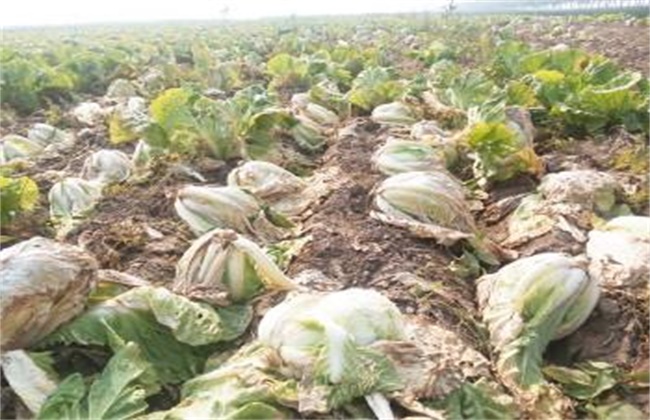
What are the symptoms and control methods of Chinese cabbage soft rot?
Symptoms and control methods of Chinese cabbage soft rot
-

Detailed Explanation of Potato Soft Candy Processing Technology
A high-grade soft candy made with potatoes as the main raw material has excellent taste and color, is moderately soft, sweet and delicious, and is very popular among consumers. It also features simple equipment, easy production, and high profit. 5 kg potato paste, 3 kg white sugar, 1.3 kg edible gelatin, 2.5 kg water, 10 g sodium benzoate, an appropriate amount of flavoring, 2.4 g sodium sulfite, an appropriate amount of edible coloring, and citric acid with the amount adjusted according to pH. 1. Material selection: select potatoes that are not moldy, deteriorated, frost-damaged, or blackened for processing.
-
How was the disease-resistant, fragrant and soft rice variety Jiuqi Xiang No. 1 bred?
I. Breeding process 1. Parent selection The internationally renowned rice variety Basmati, a superior rare fragrant-soft line obtained by mutation of Basmati original seed through solar radiation at this institute, and Xiangsimiao No. 2 were mixed and used as the male parent, with the conventional short-stalked, high-yielding, good-resistance and widely adaptable Qingzhen No. 8 as the female parent. 2. Progeny selection After a single plant was selected in the late season of 1991, various types of single panicles with medium-short stalks and plant-grain type similar to Xiangsimiao were selected respectively from the segregating materials of the F2 and F3 generations, then multi-generation selection and propagation and single-plant line comparative trials were carried out.
-
How to Make Sweet Potato Soft Candy and Key Technical Points
Soft candy is a type of candy that is soft and slightly elastic, available in transparent and semi-transparent forms. Soft candy has a relatively high moisture content, generally 10%-20%. The vast majority of soft candies are made in fruit flavors, while some are made in milk flavors and refreshing flavors. Their shapes are divided into rectangular or irregular forms depending on the molding process. 1. Process flow: preparing starch milk -- scalding the slurry -- boiling the sugar -- cooling -- molding -- packaging 2. Ingredients: 12 kg starch, 40 kg starch syrup, 50 kg white sugar, citric
-
How to Make Crispy Sweet Potato Cakes, Crispy Outside, Soft Inside, Sweet and Delicious
Ingredients: 500 g sweet potatoes, 250 g cake flour, 10 g baking powder, 20 g sugar, 250 g water, 20 g lard (or salad oil). Method: (1) Wash and peel the sweet potatoes, cut into thin slices and set aside. (2) Put the flour in a basin, add the sugar and baking powder, and mix into a batter, then add the lard and mix into a thick batter. (3) Using chopsticks, pick up a sweet potato slice, dip it into the batter, and fry it in a warm oil wok until cooked and golden brown. Characteristics: crispy outside, tender inside, sweet and pleasant.
-
Detailed Explanation of the Processing Technology and Production Method of Ginger Juice Soft Candy
This product sells well on the market because the soft candy carries the flavor of ginger. The processing technology is as follows: 1. Raw material processing: select fresh young ginger, remove rotten ginger, and peel it by manual scraping or rubbing; chop it and put it into a pulping machine to make a slurry. The amount of water added depends on whether the ginger is old or young; older ginger can have a little more water added, while young ginger should have a little less water added. 2. Juice extraction by filtration: use pressing or a cloth bag to remove the residue and obtain ginger juice. The ginger residue can be comprehensively utilized after drying. The ginger juice is heated for sterilization and set aside. 3. Gelling agent treatment: the soft candy uses
-
Rapid and Efficient Softening Cultivation Techniques for Ginger Sprouts
In recent years, we have achieved success in cultivating softened ginger sprouts by adopting measures such as keeping them indoors away from light and controlling temperature and humidity. This method has a short production cycle; the sprouts can be harvested 40 to 45 days after the ginger seed is placed in the bed. Moreover, as long as temperature, humidity and ventilation are kept within suitable ranges, production can be carried out all year round. The rapid and efficient cultivation techniques for softened ginger sprouts are described below: 1. Seed selection Select white-fleshed ginger seeds with a high sprouting rate, plump buds, suitable size, good color and no pests or diseases. To increase the sprouting rate, it is best to divide the whole piece of ginger by each bud and sow them separately. According to trials
-
Detailed Explanation of High-Efficiency Cultivation Techniques for Softened Ginger Shoots
Softened ginger shoots are rich in nutrients, sweet, crisp and tender, easy to store, and pollution-free. They can be harvested 40-45 days after the ginger seed is placed in the bed, and as long as temperature, humidity and ventilation are kept within a suitable range, they can be cultivated all year round. 1. Seed selection: It is advisable to choose white-fleshed ginger seeds with a high sprouting rate, plump buds, suitable size, proper color, and no pests or diseases. It is best to break the whole piece of ginger apart by the buds before sowing; each kilogram of ginger seed can produce 32 shoots. 2. Sprout promotion: Immediately dip the ginger pieces broken apart by the buds in a layer of plant ash for disinfection, then choose a sunny day to dry them in the sun for 1-2 days,
-
Detailed Explanation of the Soft-shelled Turtle-Rice Rotation Ecological Farming Model
Generally, after 2 to 3 years of raising soft-shelled turtles, one season of rice is planted. In mid-May, juvenile soft-shelled turtles are stocked, with a size of about 180 g body weight and a stocking density of 500 to 1000 turtles per mu. They are fed soft-shelled turtle compound feed together with live fish, and are caught before the end of July the following year. After catching the turtles, late rice is planted from late July to early August. During the rearing process, aside from using quicklime and other drugs to clear and disinfect the pond, no antibiotics, chlorine preparations, or other chemical drugs are used. For disease prevention, Chinese herbal medicines such as Banlangen (Isatis root) are mostly used. Regarding rice cultivation techniques,
-
Detailed Explanation of Key Technical Points for Soft-shelled Turtle-Rice Ecological Rotation
In recent years, China's soft-shelled turtle farming industry has developed rapidly. Adopting the soft-shelled turtle-rice rotation model can achieve rice cultivation without fertilization, while planting rice can also improve the bottom substrate of turtle ponds and reduce the occurrence of turtle diseases. Zhejiang Qingxi Soft-shelled Turtle Industry Co., Ltd. began conducting soft-shelled turtle-rice rotation experiments in 1999, and in practice summarized the ecological rotation model of "raising soft-shelled turtles for 2-3 years, planting one season of rice," which has been promoted and applied in production. 1. Construction of Rice-Planting Turtle Ponds. Each pond has an area of more than 3 mu, with the largest reaching
条件筛选