-

UN cuts China corn production forecast by 2%
Sina US Stocks News, Beijing time 27th, FT reports: The United Nations Food and Agriculture Organization (FAO) is preparing to cut its forecast for China's corn production in the current crop year by 2%, due to severe drought in northern China. The agency had previously expected that China's corn production in 2015-16 would reach
-
Asian Citrus' second-half winter orange output falls 71% year-on-year
Sina Finance news, November 7 - according to Caihua News Agency, Asian Citrus (00073-HK) announced that the average selling price of the winter orange harvest from the group's Xinfeng plantation is expected to increase by about 2.6% compared with last year. However, the expected average selling price at the Hepu plantation will decrease by about 40.2% compared with last year,
-
China Agri-Products issues 1.4 billion yuan in 2016 and 2019 bonds
Sina Finance News, October 6 - according to Hong Kong Economic Journal, China Agri-Products (00149) announced the separate issuance of 200 million to 400 million yuan of bonds maturing in 2016 and 1 billion to 1.2 billion yuan of bonds maturing in 2019, with annual interest rates of 8.5% and 10% respectively. If subscriptions for the 2016 bonds total less than 200 million yuan
-
What is the difference between glufosinate and glyphosate?
The use of pesticides in agricultural cultivation has become unavoidable, and today there is a great variety of pesticides, with specialized pesticides available for various common crop pests and diseases. Many farmer friends, when using pesticides, always confuse glufosinate and glyphosate
-
How to grow Ardisia crenata? Detailed planting methods and care tips
Ardisia crenata is an evergreen dwarf shrub of the genus Ardisia in the family Myrsinaceae. Its drupe is round like a pea, initially light green and bright red when ripe, remaining on the plant for a long time and looking very beautiful. So, how do you grow Ardisia crenata? 1. How to grow Ardisia crenata? Harvest the ripe fruit
-
What Is the Glufosinate Dilution Ratio with Water? A Detailed Guide to the Correct Dilution Method
Glufosinate is a very good herbicide that can effectively remove wild wheat, fescue, jointed goatgrass and other annual and perennial dicotyledonous and grass weeds commonly found in orchards and vineyards, but when using glufosinate, it must be diluted with water, so what is the glufosinate dilution ratio method
-
What Is the Difference Between Glyphosate and Glufosinate? Understand the Comparison in One Article
Glyphosate and glufosinate are both herbicides. Although their names differ by only one character, they are fundamentally different, and many people confuse them. Here we explain the differences between glyphosate and glufosinate. 1. Glyphosate is an amino acid type that inhibits enolpyruvylshikimate phosphate synthase, interfering with protein synthesis. It is systemic and translocates within the plant, mainly killing roots; glufosinate is a phosphinic acid type that accumulates ammonium and acts by contact, inhibiting glutamine synthesis. It is primarily contact-acting with weak systemic activity, killing leaves first and translocating within leaves.
-
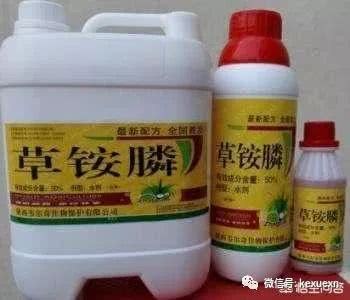
Glyphosate and glufosinate differ by only one character in Chinese - where exactly is the difference? Only by understanding it can you use them well
Although glyphosate and glufosinate are both "phos*phos" herbicides, differing by just one character, their compositions are actually very different. Glyphosate's chemical formula is C3H8NO5P, while glufosinate's chemical formula is C5H15N2O4P. However, although the two have different chemical formulas...
-
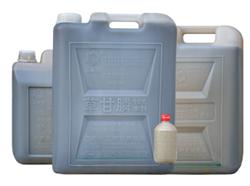
What is the difference between glyphosate and glufosinate? Explained clearly in one article
What is the difference between glyphosate and glufosinate? Compared with glyphosate, glufosinate acts faster, and it can also control some weeds that have developed resistance to glyphosate. Glufosinate is a phosphinic acid non-selective contact herbicide and a glutamine synthetase inhibitor with partial systemic activity. After application...
-
Identification and control methods for Apophylia thalassina
Scientific name Apophylia thalassina (Faldermann), order Coleoptera, family Chrysomelidae. Also known as wheat stem leaf beetle, wheat golden flower beetle. Its distribution runs from Heilongjiang and Inner Mongolia in the north, its southern limit does not cross the Huai River, and it reaches Gansu and Qinghai in the west. It is becoming increasingly serious in Shanxi, Gansu and Hebei. Hosts include wheat crops, corn, goji berry, thistle, willow, etc. Damage characteristics: the larvae bore into the wheat stem from 1.5cm below the soil surface to cause damage, resulting in dead hearts, dead seedlings, white heads and ineffective tillers, causing large areas of wheat fields to have missing plants and broken rows
条件筛选