-
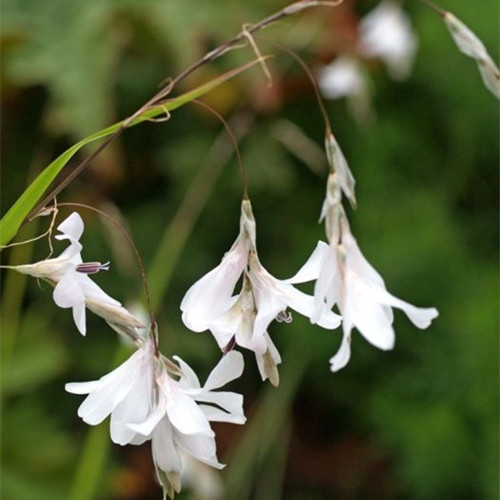
A Detailed Guide to Growing Angel's Fishing Rod
Angel's Fishing Rod is very beautiful and also a bit strange-looking. How do you grow this flower? What does it actually look like? Angel's Fishing Rod, a plant in the Iridaceae family, is native to South Africa. Mature Angel's Fishing Rod plants like sun and warmth, and are suitable for planting in well-drained sandy soil
-
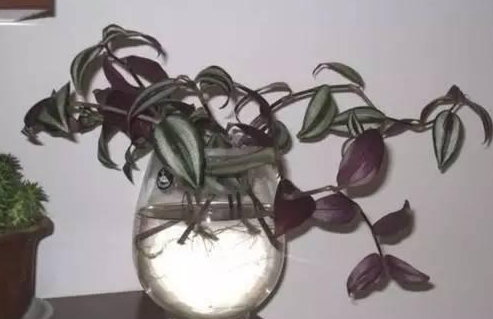
What to Do When Hydroponic Plants Get Root Rot: Root Washing, Water Cuttings, and Removing Offshoots
Hydroponic plants are very suitable for indoor growing, and the methods for growing them are very simple. Let's look at what to do when hydroponic plants get root rot. 1. Master the water-changing technique: change the water regularly according to the different flower species and how well they adapt to hydroponic conditions. Some flowers, especially aquatic or water-loving flowers
-
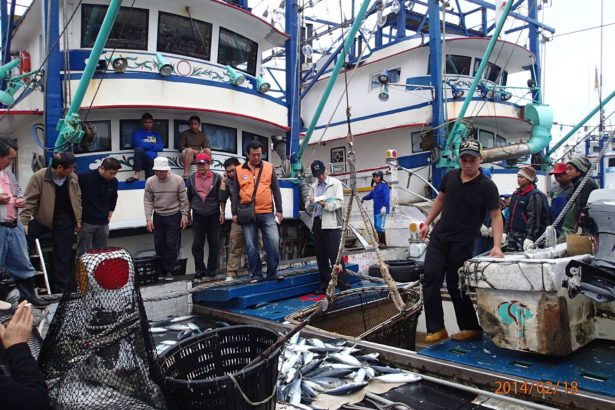
After nearly five years of fishing moratorium, mackerel body length has recovered, and the Fisheries Agency plans to open the "Honghuoxin fishing ground" to fishing boats of 100 tonnes and above for mackerel fishing
After nearly five years of fishing moratorium, mackerel body length has recovered, and the Fisheries Agency plans to open the "Honghuoxin fishing ground" to fishing boats of 100 tonnes and above for mackerel fishing
-
2019 New Taiwan Fishery Policy Introduced, Fishing Vessel Management Moves Toward Modernization
Fishery development is getting better and better, and in terms of policy, the treatment of fishermen is also getting better and better. So which of the latest policies is newly introduced? Let's take a look together. In December last year, the Fisheries Agency gave advance notice of amendments to the "Regulations on the Permission and Management of Employing Non-ROC Nationality Crew Members Abroad"
-

Key Technical Points and Precautions for Establishing a Jujube Orchard
The jujube tree belongs to the Rhamnaceae family. It is resistant to drought and waterlogging, tolerant of saline-alkaline soils, and highly adaptable to the soil in which it is planted. However, if it is planted on plots with better soil conditions, it can grow even better. At the same time, the yield and quality of the fruit will improve accordingly, so the selection of the orchard site should also be given attention when planting jujube trees. When selecting the plot for establishment, the following important factors should be considered. First, soil texture: where conditions permit, sandy soil is best, especially "sand over gold" (about 20cm of sandy soil on the surface with red soil below
-
How to feed finishing pigs so they grow faster
--Environmental conditions cannot be ignored. The role and influence of environmental factors on pigs are increasingly valued by people. Only by creating good living and production conditions for pigs can the effect of obtaining more and better-quality products with the minimum amount of feed input be achieved. Environmental factors include temperature, humidity, density, ventilation, harmful gases in the barn, lighting and noise, etc. 1. Temperature: Pigs have a poor ability to regulate their own body temperature; only very few sweat glands can regulate it in hot weather, and only very few bristles resist the cold of winter
-
Detailed Explanation of the Fishing Techniques and Methods for Protosalanx hyalocranius
1. Introduction In 1995, after the Ministry of Agriculture and the Ministry of Water Resources jointly issued the "Notice on Accelerating the Promotion of Icefish Transplantation and Proliferation Technology," a nationwide upsurge in large icefish transplantation was set off. Over the past decade, the transplantation and proliferation of large icefish has been widely developed in northern regions, especially in Inner Mongolia, and good transplantation results have been achieved in both lakes and reservoirs. When the large icefish in the transplanted waters have reached fishery effectiveness, that is, when the large icefish have formed a high-quantity and relatively stable population, become naturalized
-
Comprehensive Analysis of Key Technical Points for Establishing an Apricot Orchard for Kernel Production
Apricot trees are fruit trees that love sunlight, tolerate drought, and fear waterlogging and frost. Therefore, the orchard should be established in a sunny and high, dry location, and must not be established on shady slopes, waterlogged lowlands, or valley bottoms where cold air easily settles. Apricot trees are long-lived fruit trees; generally, even 100- to 200-year-old trees still bear abundantly, so the planned spacing between plants and rows should be relatively large. However, considering the need for early high yields, temporary trees can be set up at the time of orchard establishment, and gradually thinned out or transplanted as the trees age. The spacing for permanent rows can be designed at 4 m x 6 m, and for temporarily densified orchards at 2 m x 3 m, with temporary trees dealt with promptly by around 10 years of age. When planning, soil and fertilizer-water conditions must also be considered.
-
A Detailed Explanation of Tuna Fishing Methods and Operational Procedures
There are quite a few methods for catching tuna, and the most popular one today is longline fishing. Longline fisheries are divided into three types: surface longline, bottom longline, and midwater longline. Tuna longline fishing gear is mainly composed of a main line, branch lines, floats, float lines, and hooks, that is, a tool for catching tuna by hanging several hooked branch lines from an extended main line. Several floats are tied to the main line, and the float lines between the main line and the floats as well as the length of the branch lines serve to adjust the fishing depth. The hooks need to be baited. The bait mainly includes frozen saury, squid, sardine
-
Detailed Explanation of Key Techniques for Enclosure Fishing in Large Water Bodies
For enclosure fish farming in large water bodies, due to the large area and difficulty of catching fish, most farmers currently still drain the water to catch fish during New Year's Day and the Spring Festival each year, which not only wastes water but also affects profits because fresh fish flood the market at the same time. To resolve this contradiction, technicians at the aquaculture farm of Jiangsu State Farms Linhai Farm, through years of practice, have developed a new technique for fishing in large-water-body enclosure aquaculture. This technique takes advantage of fish's habit of swimming against the current: at the water exchange inlet of the fish pond, a fishing pool 3 m wide, 5 m long and 2.5 m deep is built, with a 1 m wide outlet on the side facing the fish pond.
条件筛选