What to Do When Hydroponic Plants Get Root Rot: Root Washing, Water Cuttings, and Removing Offshoots
Hydroponic plants are very suitable for indoor growing, and the methods for growing them are very simple. Let's look at what to do when hydroponic plants get root rot.
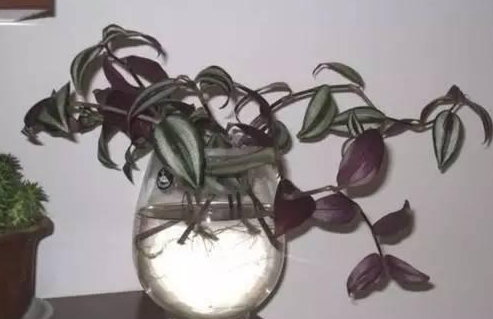
1. Master the water-changing technique:
Change the water regularly according to the different flower species and how well they adapt to hydroponic conditions.
Some flowers, especially aquatic or water-loving flowers, adapt very well to hydroponic conditions and can quickly grow new roots after being transferred to water, growing well. For these flowers, the interval between water changes can be longer.
But some flowers do not adapt very well to hydroponic conditions after being transferred to water, grow rather slowly, and some may even get root rot.
For these flowers, in the initial stage after entering the hydroponic environment, the water should be changed and sterilized frequently, even once every 1-2 days, until the hydroponic flowers grow new roots and resume normal growth, after which the frequency of water changes can be gradually reduced.
2. Water cutting method:
This is the simplest and relatively easy method to succeed with. Cut part of the stem or branch from a selected mother flower plant, insert it into water, and under suitable conditions it will take root, sprout and grow into a new plant.
When cutting the branch, cut it 3-5 mm below a node, and the cut surface should be smooth with no vertical cracks. When cutting a branch that has aerial roots, the aerial roots should be protected and inserted into the water.
Golden pothos, lucky bamboo and others are all suitable for this hydroponic method.
3. Root washing method:
Choose flowers with ornamental value, relatively robust growth, and already formed under soil cultivation, remove the soil, wash the roots clean, and then grow them hydroponically. When washing the roots, it is best to use running water.
Plant the washed flowers in a prepared container and add tap water until it covers half or more than half of the root system, but do not fill it completely.
At first, change the clean water once a day, and wash the roots and container at the same time; after one week, reduce the number of water changes.
When the cultivated flowers grow new roots in the water, it shows they have adapted to the hydroponic environment, and the water can be changed once every 7-10 days, or even longer.
4. Offshoot (niè) removal method:
This is suitable for flowers with a strong ability to produce offshoots, such as clivia and bromeliads. The method is simple and the survival rate is high.
Choose a larger offshoot, remove the upper soil to expose the part connecting it to the mother plant, and use your hands or a sharp blade to detach the offshoot from the mother plant (protecting the offshoot's roots), wash off the soil attached to the roots, and cultivate it hydroponically.
5. Removing small plantlets from runners:
Some flowers produce runners during growth, and the runners bear one to many small plantlets, most of which have a small amount of fully developed roots. Spider plants and bromeliads with runners both have this characteristic. Taking advantage of this feature of the flowers, picking off the formed small plantlets for hydroponic growing is very convenient.
There is no need to worry if hydroponic plants get root rot; these methods can solve it. Hurry up and try these methods to make your hydroponic plants even more beautiful.
Hydroponic Flowers
I. Definition of hydroponic flowers
Hydroponic flowers use modern bioengineering technology and employ physical engineering, chemical engineering and bioengineering means to domesticate and induce ordinary flowers, enabling them to grow normally in water, thus forming a new generation of high-tech agricultural projects. It uses original modern biological improvement technology to allow flower plants originally adapted to terrestrial environments to quickly adapt to aquatic environments through short-term scientific domestication, improvement and cultivation. In hydroponic flowers, the upper part is full of flowers and lush leaves, while the lower part has fish playing, giving strong ornamental value; you can enjoy the flowers, view the roots and watch the fish. Green, environmentally friendly, clean and trouble-saving, hydroponic flowers are therefore also called "lazy person's flowers."
II. Research on seedling raising of hydroponic flowers
The process of hydroponic cultivation of flowers is actually a process of aquatic mutagenesis, referring to the process of promoting the formation of aerenchyma between the plant and root tissues under the stress of an anaerobic environment. Under the stress of an anaerobic environment, the unique molecular mechanisms and physiological and biochemical processes within the plant are rapidly triggered, thereby achieving a process of forced adaptation and active adaptation. In this process, the creation of anaerobic signals is the key signal for closing and opening the formation of aerenchyma, the formation of metabolic mechanisms, and physiological and biochemical changes. Oxygen free radicals, ethylene signals, hormone signals and other signals are all direct signals or cascade reaction signals produced under anaerobic conditions. Under the action of these signals, the expression of related genes is initiated, thereby realizing the plant's adaptive transition from a terrestrial to an aquatic environment and the transformation of metabolic forms.
Common woody flowers in Hunan include: sago palm, gardenia, happiness tree, hibiscus, rubber fig, jasmine, Malabar chestnut, dragon tree, weeping fig, osmanthus, camellia, kumquat, dwarf umbrella tree, croton, bamboo palm, ivy, redleaf photinia, and five-needle pine.
Herbaceous flowers mainly include: 1. Foliage flowers: monstera, snake plant, asparagus fern, golden-striped lucky bamboo, spotted dumb cane, giant taro, golden pothos, arrowhead plant, and spotted dieffenbachia. 2. Perennial root flowers: carnation, asparagus fern, African daisy, chrysanthemum, calla lily, Chinese rose, and gladiolus. 3. Bulbous flowers: hyacinth, cyclamen, tulip, narcissus, calla lily, tuberose, clivia, etc. 4. Succulent flowers: Christmas cactus, mountain shadow palm, cactus, gem flower, etc., and kalanchoe. 5. Others: dancing lady orchid, Chinese cymbidium, spider plant, inch plant, ribbon grass, phalaenopsis, and fuchsia.
Herbaceous and woody hydroponic flowers are mainly concentrated in the following families: 1. Araceae: golden pothos, Aglaonema modestum, Dieffenbachia picta, Aglaonema 'Silver King', Aglaonema 'Golden Queen', Philodendron 'Congo', Calathea 'Peacock', mini monstera, monstera, Alocasia, green gem, Philodendron, Philodendron panduriforme, Philodendron 'Green Emperor', arrowhead plant, giant taro, anthurium, jade gem, etc. 2. Commelinaceae: purple heart, Rhoeo spathacea, Lophatherum gracile, inch plant, etc. 3. Liliaceae: aloe, aloe, Haworthia fasciata, spider plant, Cordyline fruticosa, dragon's blood tree, Madagascar dragon tree, snake plant, agave, golden-striped lucky bamboo, sea onion, silver-edged dieffenbachia, silver-edged lilyturf, etc. 4. Crassulaceae: Aeonium, Sedum spectabile, silver jade, gem flower, mother of thousands, etc.
III. Induction of hydroponic roots in hydroponic plants
Hydroponic technology is the process of inducing the formation of plant hydroponic root systems and enabling them to grow and develop normally in nutrient solution, so the formation and growth of hydroponic roots is the core of this technology. Hydroponic flowers use comprehensive technical measures such as modern physics, chemistry and biotechnology to place different flower varieties in a rooting-promoting substrate; rooting speed is greatly affected by environmental conditions and the plant's own biological characteristics. First, the difficulty of forming hydroponic roots differs among plants: herbaceous plants are fast and easy, while woody plants are slow and difficult; plants with large intercellular spaces are easy, while those with slow growth and tightly arranged cells are difficult; shade-loving wet terrestrial plants are easy, such as Araceae plants, while sun-loving drought-tolerant terrestrial plants are difficult, such as peach trees. The forms of hydroponic roots also differ among plants, but there are regular similarities. Compared with terrestrial root systems, hydroponic roots are mostly fibrous root systems, and root hairs are few or degenerated; this is because the aquatic environment causes physiological changes in the plant. Therefore, creating a suitable aquatic environment is the focus of our technology. Only in a suitable aquatic environment can the continuous formation and development of hydroponic root systems be promoted. For example, dissolved oxygen in water is a necessary condition for root respiration; once oxygen is lacking, hydroponic root formation will be inhibited and may even turn brown and rot, so during the mutagenesis process oxygen must be monitored and controlled in real time by computer.
In addition, suitable water temperature and appropriate nutrient solution concentration and water level all affect the cultivation of hydroponic roots, and these must be achieved through computer control. These technologies are the core of hydroponic cultivation for all plants. Without computer control, it is difficult to achieve hydroponic root cultivation, especially for mutagenized plants. Root induction under hydroponic conditions results in relatively high root activity. The central cylinder of terrestrial plants does not change significantly under aquatic conditions, but the cells of the cortical parenchyma produce cracks, forming aerenchyma similar to rice roots, to adapt to the aquatic environment. The morphological structure and physiological activity of aquatic-induced roots change accordingly under partially submerged conditions, to adapt to normal growth under hydroponic conditions. Induction methods mainly include the use of treatments of temperature, light, water, regional dissolved oxygen, and nutrient solution and hormones, to find the most suitable induction environment. Different flowers also differ in the difficulty of aquatic mutagenesis.
IV. Induction methods in root induction include:
(1) Substrate treatment: through research on the stomatal parameters of spider plant under treatment conditions of ceramsite drenched with nutrient solution, perlite drenched with nutrient solution, pumice drenched with nutrient solution, general nutrient solution hydroponics, and soil cultivation, the experimental results show that the stomata of spider plant leaves are elliptical or round, and the guard cells are half-moon shaped. Stomata distributed near the leaf tip and middle are clearly more numerous than those at the leaf base and leaf margin; the degree of stomatal distribution is relatively small at the leaf base, and from leaf tip to leaf base the stomatal density gradually decreases, showing: leaf base, leaf middle, leaf tip. Comparing different substrate cultivations for the stomatal parameters of the lower epidermis of the middle section of spider plant leaves: the area of a single stoma in soil cultivation is the smallest, clearly lower than general nutrient solution hydroponics, pumice drenched with nutrient solution, and ceramsite drenched with nutrient solution treatments; the maximum stomatal index of the middle leaf section in the soil cultivation treatment is significantly higher than nutrient solution hydroponics, pumice drenched with nutrient solution, and ceramsite drenched with nutrient solution treatments.
(2) Plant growth regulator treatment: natural plant hormones and synthetic hormones are organic substances with similar physiological effects, so synthetic hormones have been widely used in horticultural plant production in controlling plant growth, preserving flowers and fruits, increasing yield value, preserving freshness and storability, promoting cutting rooting, and improving grafting survival rates, playing a quite important role in these aspects. Commonly used hormones include NAA (naphthaleneacetic acid), IAA (indoleacetic acid), IBA (indolebutyric acid) and ABT (rooting powder), etc. Research shows: and are the optimal treatment concentrations for hydroponic ivy cuttings; newly synthesized phosphonate compounds and can significantly increase the rooting rate, root number and root length of cut chrysanthemums; the best effect on hydroponic rooting of hibiscus. Among the plants often used in hydroponic experiments are Aglaonema modestum, oleander, phalaenopsis, anthurium and many other plants. At the same time, root pruning, shading and water level also have a certain influence on root induction. During the hydroponic process of succulent flowers, the roots induced after cutting off the original main roots are more suitable for the hydroponic environment than untreated original roots, and roots induced with root shading grow better than those induced without shading.
(3) Water cutting method: generally used for plant species that root easily and grow relatively quickly under aquatic conditions, such as monstera, green gem, lucky bamboo, red gem, Dutch iron, giant taro, five-color iron, golden pothos, ribbon grass, gardenia, spider plant, narcissus, etc. Select healthy, pest-free, robust branches, wipe them with an alcohol cotton ball, use scissors to cut diagonally at a node below the branch, insert into water, and grow hydroponically after rooting. When cutting branches, if the branch has aerial roots, the aerial roots should be well protected and inserted into the water. The root system of water cuttings grows in water; the roots are complete and robust, attractive in color, not easy to rot, and grow relatively vigorously.
(4) Root pruning method: this method is mostly used for already formed plants. Different root removal methods are adopted according to the difficulty of rooting of the plant, including: complete root removal, root removal, and no root removal. Among them, some species are difficult to root in water, such as palms, dwarf coconut, and bottle palm. Larger plants such as monstera and giant taro, and flowering plants such as azalea, camellia, daphne, kalanchoe, amaryllis, lycoris, calla lily, and crown of thorns often do not have their roots removed. Choose flowers with ornamental value, healthy plants, robust growth, and already formed under soil cultivation or other media, move the potted plant with roots to another pot, remove the soil, then rinse the soil off the roots with water and cut off part of the roots and all rotten roots, then grow hydroponically. When washing the roots, it is suitable to use running water, then soak in potassium permanganate solution, benzalkonium bromide or carbendazim and other surface disinfectants for several minutes to sterilize. Finally, use stones or perlite to fix the plant in a prepared container and add water that does not cover the roots. At the beginning, change the water once a day to maintain the dissolved oxygen in the water, and wash the container and roots at the same time, 1/2--1/3; after one week, the frequency of water changes can be reduced, until the cultivated flowers grow white hydroponic roots, indicating they have adapted to the aquatic environment, after which the water can be changed once a day or even less often. For plants that root relatively easily, such as Chinese trumpet creeper, the roots can also be removed after washing, then disinfected and grown hydroponically. For cactus balls, after complete root removal, dry them and place them over a container filled with water; the bottom of the cactus ball must not touch the water, and new roots are induced by relying on the evaporation of water from the container.
(5) Offshoot removal method: suitable for plant flowers that easily sprout offshoots at the root crown, such as rhododendron, boxwood, privet, oleander, phalaenopsis, bromeliads, etc. The method steps are simple and the survival rate is relatively high. Choose robust and healthy offshoots, cut them off along the root crown with a knife; buds longer than cm are all usable, cut into a horseshoe-shaped cross-section, retain the tip and leaves, protect the integrity of the offshoot roots, wash off the soil attached to the roots, put the root part into water for cultivation, leaving it exposed above the water.
(6) Stolon collection method: some flower plants can produce multiple stolons during growth, and these stolons bear nodes, which in turn grow roots and buds, such as strawberry, spider plant, bromeliads with runners, etc. Taking advantage of this characteristic of flower plants, cutting off the small plantlets on the stolons for hydroponic growing is especially convenient.
3 little tricks, and hydroponic flowers need not fear root rot!
Introduction: Nowadays many people like to grow some potted plants hydroponically in the office or at home for enjoyment, and the thing hydroponic flowers fear most is root rot. How to grow hydroponic flowers so they do not get root rot is one of the questions flower lovers discuss most often. Below, the editor of First Agricultural Economics also shares a few little hydroponic flower care tricks with everyone!
1. Water cutting method:
This is the simplest and relatively easy method to succeed with. Cut part of the stem or branch from a selected mother flower plant, insert it into water, and under suitable conditions it will take root, sprout and grow into a new plant. When cutting the branch, cut it 3-5 mm below a node, and the cut surface should be smooth with no vertical cracks. When cutting a branch that has aerial roots, the aerial roots should be protected and inserted into the water.
Hydroponic golden pothos
Golden pothos, lucky bamboo and others are all suitable for this hydroponic method.
2. Root washing method:
Choose flowers with ornamental value, relatively robust growth, and already formed under soil cultivation, remove the soil, wash the roots clean, and then grow them hydroponically. When washing the roots, it is best to use running water.
Plant the washed flowers in a prepared container and add tap water until it covers half or more than half of the root system, but do not fill it completely. At first, change the clean water once a day, and wash the roots and container at the same time; after one week, reduce the number of water changes.
When the cultivated flowers grow new roots in the water, it shows they have adapted to the hydroponic environment, and the water can be changed once every 7-10 days, or even longer.
3. Offshoot (niè) removal method:
This is suitable for flowers with a strong ability to produce offshoots, such as clivia and bromeliads. The method is simple and the survival rate is high.
Hydroponic clivia
Choose a larger offshoot, remove the upper soil to expose the part connecting it to the mother plant, and use your hands or a sharp blade to detach the offshoot from the mother plant (protecting the offshoot's roots), wash off the soil attached to the roots, and cultivate it hydroponically.
Summary:
Nowadays many flower-growing enthusiasts like to try hydroponic flowers, and some buy them directly from the market. But whether bought or cultivated yourself, for hydroponic flowers, frequent water changing and root washing are especially important. Some flowers do not adapt very well to hydroponic conditions after being transferred to water, grow rather slowly, and some may even get root rot. For these flowers, in the initial stage after entering the hydroponic environment, the water should be changed and sterilized frequently, even once every 1-2 days, until the hydroponic flowers grow new roots and resume normal growth, after which the frequency of water changes can be gradually reduced.