-

How to choose eucalyptus seedlings? You need to know these selection tips
How to choose eucalyptus seedlings? What seedling-raising methods are there for eucalyptus seedlings? What varieties of eucalyptus are there? Please give an introduction. Eucalyptus seedlings can be selected from the following points for reference. Selecting by seedling-raising method: 1. Tissue-cultured seedlings: also called gene seedlings, refers to those produced using modern technology in the laboratory by utilizing cell totipotency through asexual reproduction...
-
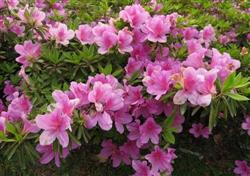
What fertilizer is best for azaleas? Fertilizer selection and application methods
What fertilizer is best for azaleas? Please give guidance. Azaleas are fertilizer-loving plants. In addition to the main nutrients nitrogen, phosphorus and potassium, they also need trace elements such as boron, copper, molybdenum and zinc. For azaleas, fertilizers with mild strength and long-lasting effect are suitable. For home azalea growing, ox horn, ram horn and animal hoof pieces can be used; these fertilizers contain 12%-15% nitrogen and 0.2%-8% phosphorus, and also contain a small amount of potassium and trace elements. Thin hoof pieces take effect 1 month after application, while thick hoof and horn pieces show fertilizer effect after 2 months, and the fertility can last 6-8 months. When using them, they can be buried at the edge or bottom of the pot along with repotting or changing pots. Cake fertilizer is also a relatively complete fertilizer in terms of nutrition. The nutrients in cake fertilizer generally contain 2.1%-7.6% nitrogen, 0.54%-3.3% phosphorus and 0.5%-2.7% potassium. Generally speaking, soybean cake and peanut cake contain more nitrogen, while rapeseed cake and cottonseed cake contain more phosphorus. They must be fully fermented before application. Fertilizer made by composting livestock manure and tree leaves can be mixed into the growing medium when repotting.
-

How to Choose Special Fertilizer for Orchids? A Complete Guide to Selection Tips
How to Choose Special Fertilizer for Orchids?
-
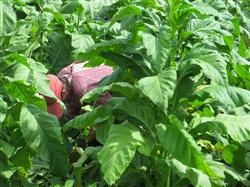
Which herbicides can be selected for weed control in tobacco fields?
Which herbicides can be used for weed control when growing tobacco? Please explain. Tobacco seeds are small, and seedlings grow slowly, so they are often harmed by weeds. The main weeds include: green foxtail, Chinese sprangletop, late barnyardgrass, goosegrass, shortawn foxtail, cocklebur, flatsedge, cleavers, common chickweed, plantain, dandelion, and others. Weed control in tobacco fields...
-

How to Choose a Phalaenopsis Orchid? Master These Selection Tips
How do you choose an ideal pot of Phalaenopsis? Generally speaking, the best ones have glossy leaves with thickness, abundant leaves and neat arrangement. You should also check whether the leaves are firm and pointing upward, because only then can you tell whether its vitality is strong. If possible, it is best to gently pull out the roots and take a look. If the roots are fresh, or if there are new roots sprouting, this kind of orchid's vitality is reassuring. Next, look at the flowers. First look at the number of flowers. Phalaenopsis orchids are graded by flower count, and the more flowers the better. Buds between 8 and 11,
-
Practical Tips for Selecting Bonsai Tree Stumps in Winter
1. Types of tree stumps. From a cultivation standpoint, they should tolerate pruning and be easy to wire; from an aesthetic standpoint, the stump's appearance should meet conditions such as small leaves, curved branches, abundant flowers and bright fruit. Common evergreen types include: Ilex aquifolium (bird-lime holly), Quercus acutissima (sawtooth oak), Syzygium buxifolium (boxleaf syzygium), Elaeagnus pungens (thorny elaeagnus), Mahonia fortunei (Chinese mahonia), Nandina domestica (heavenly bamboo), Pyracantha fortuneana (Chinese firethorn), etc.; common deciduous types include: Euonymus alatus (winged euonymus), Adina rubella (Chinese buttonbush), Sageretia thea (Chinese sweet plum), Lagerstroemia indica (crape myrtle), Acer buergerianum (trident maple), Ligustrum quihoui (waxyleaf privet), Ulmus parvifolia (Chinese elm), Wisteria sinensis (Chinese wisteria), etc. Deciduous types can be purchased in both winter and spring. 2. Vitality of the tree stump. ① Scrape the rough outer bark of the trunk; if the inner layer is greenish and fine water droplets seep out, it is a fresh stump;
-
How to choose bonsai material? A detailed guide to material selection techniques and methods
The selection of tree bonsai material mainly refers to the choice of two aspects: the tree species and the appearance of the stump material. When choosing a tree species, besides considering the factors that make it suitable for bonsai creation, one should also fully take into account the aesthetic tastes and individual preferences of the maker or the viewer (consumer). Because everyone's level of education, appreciation habits, and aesthetic views differ, some love evergreen conifer and cypress species; some prefer deciduous trees rich in seasonal changes; and some are devoted to dazzling flowering and fruiting trees. Therefore, the selection of bonsai tree species must first be people-oriented and fully
-
How to choose materials for stump bonsai? Master these selection tips
Generally, plants with graceful forms, peculiar roots and trunks, brilliant flowers and fruits, strong sprouting ability, long lifespans, easy shaping, and strong resistance to adverse conditions are preferred. Plants suitable for stump bonsai are usually divided into three categories: conifers and cypresses, miscellaneous broadleaf trees, and flowering and fruiting trees. 1. Conifers and cypresses: Common excellent choices include five-needle pine, black pine, Buddhist pine, true pine, Japanese red pine, Huangshan pine, Chinese juniper, and creeping juniper. 2. Miscellaneous broadleaf trees: Materials vary from place to place. Common ones include Japanese bush cherry, Xiangfei bamboo, green-white bamboo, Buddha belly bamboo, serissa, boxwood, Chinese elm, trident maple, red maple, and banyan. These trees
-
Key Technical Points for Site Selection and Land Preparation in Lily Cultivation
Well-drained, deep sandy loam soil should be chosen. For cultivation in hilly areas, gentle slopes with a gradient below 5 degrees should be selected. Continuous cropping is taboo. Continuous cropping of lilies leads to severe pests and diseases and reduced yield. After selecting the site, soil chemical treatment should be carried out in conjunction with soil plowing to reduce pests and diseases. Use 2.5-5 kg of Jialiu powder or 2-2.5 kg of carbofuran per mu to kill underground pests. Use 1 kg of 50% carbendazim wettable powder diluted in 500 kg of water per mu to spray the soil for sterilization. Deep plow and prepare the land, adapt to local conditions, and apply sufficient base fertilizer. Per
-
A Detailed Guide to Selecting and Disinfecting Lily Bulbs
Before planting, according to the natural growth of the seed bulbs, carefully separate the small bulbs growing joined together (one bulb can consist of 2-5 small bulbs) with a bamboo knife or by hand, and grade them by size. The large ones are sold, the small ones are kept for continued bulb propagation, and the medium ones are used as seed bulbs. The size of seed bulbs varies by variety; generally 3-5 cm in diameter and about 35-50 g in weight. You should also choose bulbs free of pests and diseases, damage, and deformities as seed bulbs, and do not damage the existing root system when separating the bulbs. Disinfection method: soak in a 1:500 benomyl or captan solution for 20-30 minutes.
条件筛选