-

How to Plant Russian Olive? Latest Planting Techniques and Methods Tutorial
Russian olive is a fairly well-known fruit tree in northwest China, with very wide uses; it can not only be eaten but also used to feed livestock, and it is widely loved in the northwest region. Because the location it grows in receives year-round sunlight, its fruit has a very high sugar content and tastes very
-
Differences Between Xinjiang Russian Olive and Sea Buckthorn: Price, Benefits and Dietary Taboos
The Russian olive is also known as qilixiang, xiangliu, ciliu, guixiangliu, yinliu, yinliu hutuizi, yageda, hongdou, zejimaodao, and gejiegedai. It is a deciduous tree or small tree of the genus Elaeagnus in the family Elaeagnaceae. So, are the Russian olive and sea buckthorn the same species? How much is the price
-
Is the large Russian olive an evergreen tree or a deciduous tree?
Russian olive is also known as Qilixiang, Xiangliu, etc. Its petioles are slender and silvery white; the fruit is oval and pink; the flesh is milky white and mealy. So is the large Russian olive an evergreen tree or a deciduous tree? 1. Is the large Russian olive an evergreen tree or a deciduous tree? The large Russian olive is deciduous
-
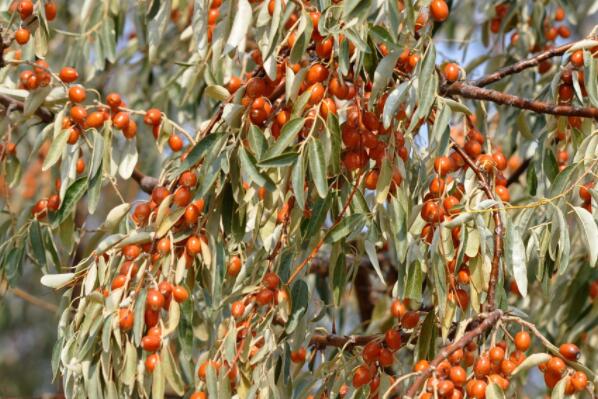
What Does the Russian Olive Tree Look Like? A Complete Guide to Sapling Prices, Planting Methods and Benefits
The Russian olive tree is also known as silver willow, fragrant willow, cassia willow and qilixiang. It has extremely strong vitality and is characterized by drought resistance, wind and sand resistance, salt and alkali tolerance, and tolerance of poor soil. So what does it look like? How much does a sapling cost? What are the planting benefits? What are the methods? According to the Ningxia sapling base
-

A Detailed Guide to the Benefits and Cultivation Methods of Russian Olive
The Benefits of Russian Olive and How to Grow It
-
How Are Russian Olive Foods Developed and Utilized? A Full Explanation of Pathways and Value
Russian olive (Elaeagnus angustifolia L.), also known as Guixiang willow, silver willow, or Qilixiang, belongs to the Elaeagnaceae family, genus Elaeagnus. It is an evergreen shrub. Russian olive is light-demanding, cold-tolerant, highly resistant to wind-blown sand and saline-alkali conditions, grows fast, has wide uses, and holds high economic value. Russian olive is distributed in Shaanxi, Gansu, Inner Mongolia, Ningxia, **, Qinghai and other places; in ** it is found in the Taklamakan Desert and along the banks of various rivers, and it is also distributed in Yili, Toksun and other places in northern **. Russian olive is a "treasure tree" of desert saline-alkali land; its edible value and medicinal value are both very high, and it has great potential for development into green foods.
-
Identification and Control Methods of the Russian Olive Psyllid
Scientific name Trioza magnisetosa Log. Homoptera, Psyllidae. Hosts: Russian olive (Elaeagnus angustifolia), jujube. Damage characteristics: adults and nymphs pierce and suck the sap of young buds, tender twigs and leaves; infested young buds often die, infested leaves mostly curl toward the underside, and in severe cases the twigs and shoot tips die, weakening the tree's vigor, with heavy flower and fruit drop. Morphological characteristics: adult body length 2.5-3.4 mm, dark green to yellowish brown. Compound eyes large, protruding, reddish brown. Antennae filiform, 10 segments, the terminal 2 segments black
-
What plant is the Russian olive (silverberry)? Introduction to its main characteristics
Russian olive (silverberry): Elaeagnaceae family, Elaeagnus genus, native to North America and Europe. Naturally distributed in the Caucasus and Central Asia; also found in the southeastern and southern parts of European Russia, Crimea, the Caucasus and Central Asia. Deciduous small tree or large shrub; buds, young branches, leaves, flowers and fruits are all covered with silvery-white scales; flowers pale yellowish-white, fragrant; fruit a drupe, elliptical or spherical. Light-loving, drought-tolerant, tolerant of saline-alkali soils and sand burial. Fast-growing, shallow-rooted, roots bear root nodules, very vigorous. A good ornamental garden plant
-

Key Points and Methods of Russian Olive Tree Planting Techniques Explained
Russian Olive Tree Planting Techniques
-
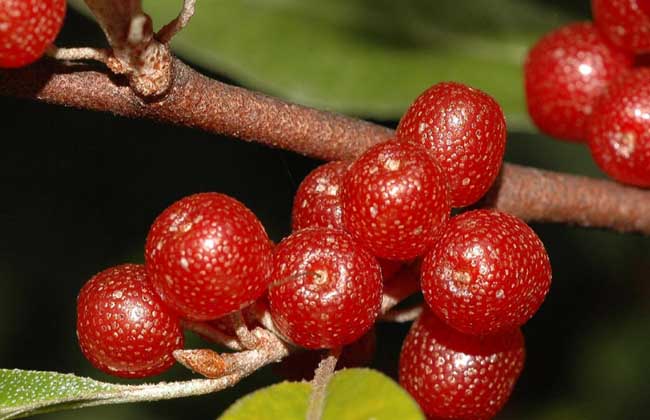
Where are the main production areas of the Russian olive fruit?
Where is the Russian olive fruit produced?
条件筛选