A Detailed Guide to the Benefits and Cultivation Methods of Russian Olive
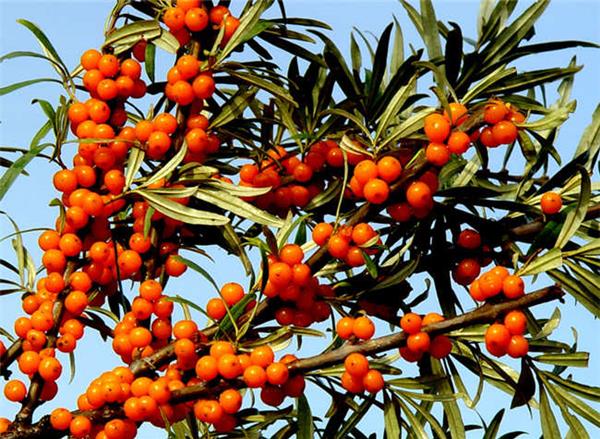
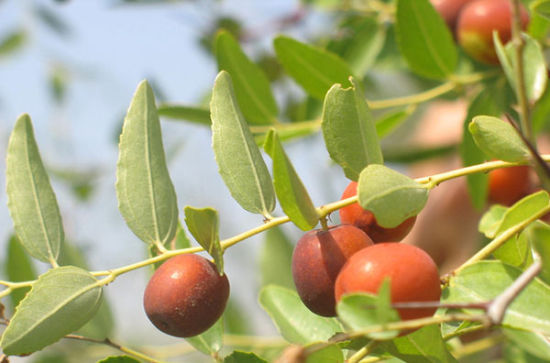
The Russian olive tree (Elaeagnus angustifolia) is a rather unusual plant. Its trunk is not as straight as that of ordinary fruit trees, and its leaves are not as emerald green as ordinary foliage. Although its fruit is called a "jujube," it lacks the crisp sweetness of a jujube; instead, it has a soft, powdery texture, tasting somewhat like mung bean cake. The Russian olive is a specialty of the northwest region, and probably many people have never seen it, or even heard of it. So let's introduce this plant below.
I. The Habits of Russian Olive
The Russian olive is a deciduous tree. It has strong vitality, grows rapidly and propagates easily, and has characteristics such as drought resistance, wind and sand resistance, salt-alkali tolerance, and barren-soil tolerance. Natural Russian olives are distributed only in desert and semi-desert areas with precipitation below 150 mm.
II. The Benefits and Functions of Russian Olive
1. The Ornamental Value of Russian Olive
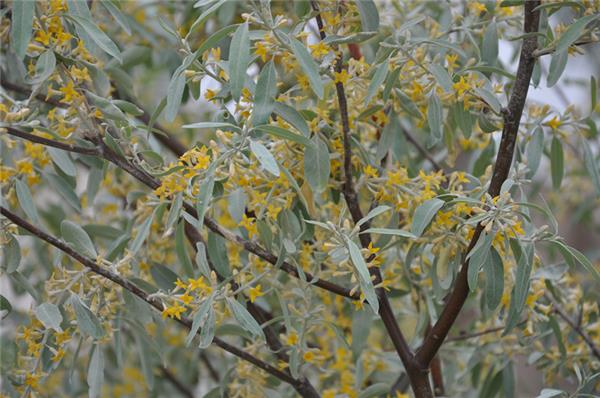
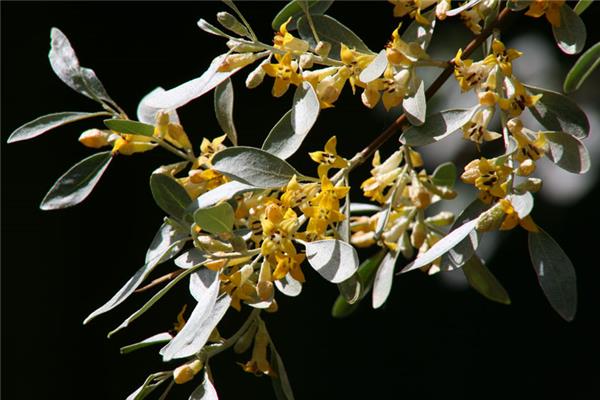
The Russian olive is a plant grown for its buds and is suitable for use as a cut flower, often paired with poinsettias, narcissus and the like around the Spring Festival.
2. The Medicinal Value of Russian Olive
The fruit of the Russian olive is used medicinally. Ripe fruit is harvested in autumn, washed and used fresh, or dried for later use; it is sweet, sour and astringent in taste and neutral in nature; it has the effects of strengthening the body, calming, consolidating essence, strengthening the stomach, stopping diarrhea, regulating menstruation and promoting urination, and is mainly used to treat stomach pain, diarrhea, physical weakness and cough due to lung heat. The concentrated gum and tannin extracts made from the fruit of the Russian olive have anti-inflammatory effects; in animals with artificially induced diarrhea, it can inhibit the motor function of the small intestine, so it can be used for enteritis.
3. The Economic Value of Russian Olive
Both its leaves and fruit contain the nutrients needed by livestock, making them high-quality feed for livestock. Russian olive powder can also be used to brew wine, brew vinegar, and make soy sauce, jam, etc., and the residue can still be used as feed. The Russian olive flower is fragrant and is a very good nectar source plant; it contains aromatic oil, from which essence and spices can be extracted. The tree sap can be used to make Russian olive gum, a substitute for gum arabic. The many economic uses of the Russian olive have received widespread attention, and it has become one of the main afforestation tree species in the northwest region.
4. The Greening Role of Russian Olive
Besides being used as feed, the Russian olive is also a very good tree species for afforestation, greening, fuelwood, wind protection and sand fixation.
III. Notes on Growing Russian Olive
1. Raising Seedlings
The seedling-raising methods for Russian olive include sowing and cuttings.
Sowing: Sowing is mostly done in spring. For spring sowing, the seeds must be treated in December of the previous winter. The method is to wash the Russian olive seeds clean, mix them evenly with an equal amount of fine sand, and place them in a pre-dug seed treatment pit (80 cm deep, 100 cm wide, with the length depending on the amount of seed), or pile them on the ground in a layer 40-60 cm thick, surround them with sand built up into a ridge, and water thoroughly (with 10-20 cm of water standing above the seeds); after the water has seeped away or frozen, cover with 20 cm of sand to overwinter. For seeds that have not been stored over winter, before sowing they can be soaked in warm water at 50-60°C for 2-3 days, then removed and mixed with horse manure and placed in a sunny spot, kept moist to promote germination; once 30-40% of the seeds have split open, they can be sown. Seeds sown in autumn do not need germination treatment.
Cuttings: Select one-year-old branches with good lignification, no pests or diseases, and plump lateral buds for use as cutting wood. From the branches collected in the field, cut them into cuttings 15-20 cm in length. The lower cut of the cutting is horseshoe-shaped, with a cutting angle of 45° being suitable, though a flat cut may also be used. When cutting the stems, special care must be taken to protect the first lateral bud at the upper end of the cutting; the upper cut is made flat, about 1 cm above the first bud, and the lower cut should be chosen at the base of a bud. Cuttings are mostly done in spring, though autumn cuttings are also possible. Spring cuttings should be done early, generally before the axillary buds sprout, and autumn cuttings before the soil freezes.
2. Temperature and Humidity: The optimum temperature for rooting Russian olive cuttings is 20°C-30°C, and after cutting, the relative humidity of the air must be maintained at 75-85%.
3. Light: After cutting Russian olive, 50-80% of the sunlight must be blocked; after the root system has grown, gradually remove the shade net. On sunny days, remove the shade net at 4:00 pm each day and cover it again before 9:00 am the next day.
3. Pruning: After the forest becomes dense and shaded, clear away the sprouting branches at the roots, prune the lateral branches on the lower 1/2 of the trunk and the upper lateral branches that affect the growth of the trunk, and thereafter, depending on the growth vigor of the forest, appropriately thin by rows and by individual trees, and prune and shape the trees.
4. Pest and Disease Management
Diseases: Russian olive brown spot is one of the important diseases of Russian olive seedlings and young forests. The spots occur on the leaves; on the upper surface of diseased leaves, brown to withered-yellow spots form, starting small at 2-3 mm and gradually expanding to 5-8 mm. They are nearly round or irregular in shape and often merge with one another into large spots, and the diseased leaves dry up and fall off. Scattered on the spots are small yellow-brown to dark-brown dots, namely the pycnidia. On the underside of the leaves, because of the dense white tufts of hair, the spots are not prominent.
Pests: The Russian olive inchworm, the Russian olive psyllid, and the Russian olive mealybug are common Russian olive pests and diseases. For protection, first, protect and use natural enemies such as spiders and the two-star ladybug, which prey on adults, and the tetrastichus wasp, which parasitizes nymphs; second, strengthen fertilization, watering and other tending management to enhance insect resistance; third, in winter or early spring, whitewash the base of the trunk or apply a 200-fold dilution of 60% D-M mixture to the trunk.
So, through the introduction above, have you gained a deeper understanding of this originally unfamiliar plant? Although the Russian olive seems unsuitable for indoor cultivation, if you have a courtyard or terrace at home, you might as well give growing Russian olive a try.
So, through the introduction above, have you gained a deeper understanding of this originally unfamiliar plant? Although the Russian olive seems unsuitable for indoor cultivation, if you have a courtyard or terrace at home, you might as well give growing Russian olive a try.